
Dogs are often called “man’s best friend,” but what about being “baby’s best friend”? Many parents question whether it’s safe to have dogs and newborns living together. The good news is that with proper preparation, supervision, and training, dogs can become wonderful companions for children—even from their earliest days.
In this guide, we’ll examine whether dogs are suitable around babies, discuss the benefits and risks, and explain how to ensure the introduction is a positive and safe experience for everyone involved.
The Benefits of Having a Dog Around a Baby

When managed properly, the bond between dogs and babies can be incredibly positive.
1. Emotional Bonding
Dogs often develop strong attachments to all family members, including the newest additions. This can foster lifelong friendships and a sense of protection.
2. Enhanced Immune System
Research shows that babies raised with pets tend to have stronger immune systems and a reduced risk of allergies or asthma. Early exposure to pet dander and bacteria helps build immunity.
3. Teaching Empathy and Responsibility
As your baby grows, observing how you care for your dog teaches them compassion, empathy, and the fundamentals of responsibility.
4. Built-in Playmate
When your child is old enough, having a dog encourages outdoor play, exercise, and social interaction.
Potential Risks to Consider

While the benefits are genuine, there are important risks to be aware of:
1. Accidental Injuries
Dogs may accidentally knock over or scratch a baby, especially during excited play.
2. Protective Behaviour
Some dogs become overly protective of babies, which can lead to guarding behaviours and aggression toward perceived threats.
3. Unpredictable Reactions
Even the calmest dogs can be startled by sudden movements, loud cries, or unfamiliar scents.
4. Hygiene Concerns
Dogs can bring dirt, bacteria, or parasites indoors, which may pose risks for newborns with developing immune systems.
Choosing the Right Dog Personality for Baby Life

Not every dog breed—or individual dog—is ideal for life with a newborn. It’s less about breed and more about temperament. Look for dogs that are:
-
Calm and tolerant
-
Well-socialised with children
-
Responsive to training commands
-
Comfortable with noise and activity
Breeds often recommended for families include Labrador Retrievers, Golden Retrievers, Cavalier King Charles Spaniels, and Poodles—but with proper training and socialisation, any breed can be suitable around babies.
Preparing Your Dog Before Baby Arrives

Success begins with preparation well before your baby comes home.
1. Reinforce Obedience Training
Commands such as sit, stay, leave it, and down are vital for safe interactions. Consider using our dog clicker or vibrating dog collars to support training.
2. Introduce Baby Sounds and Smells
Play recordings of baby crying at a low volume to help desensitise your dog. Bring home a blanket or clothing item with your baby’s scent before the actual introduction.
3. Adjust Your Dog’s Routine Gradually
If your dog’s walking or feeding schedule will change, start making adjustments weeks before the baby arrives to avoid sudden disruptions.
4. Establish Boundaries
Decide which rooms or furniture are off-limits and train your dog to respect these boundaries.
The First Introduction

When introducing your dog to your baby for the first time:
-
Keep the environment calm and controlled. Avoid overly excited greetings.
-
Have another adult present. One person should focus on the dog while the other attends to the baby.
-
Use a lead if needed. This helps maintain control if your dog becomes too excited.
-
Reward calm behaviour. Use treats and praise to help your dog associate the baby with positive experiences.
Supervision Is Essential
No matter how gentle your dog is, never leave them alone with a baby. Even accidental harm—such as a paw swipe or sudden jump—can be dangerous for an infant.
Always supervise during:
-
Tummy time on the floor
-
Nappy changes if the dog is nearby
-
Any moment when your baby is at dog-level
How to Encourage Positive Interactions
1. Reward Calmness
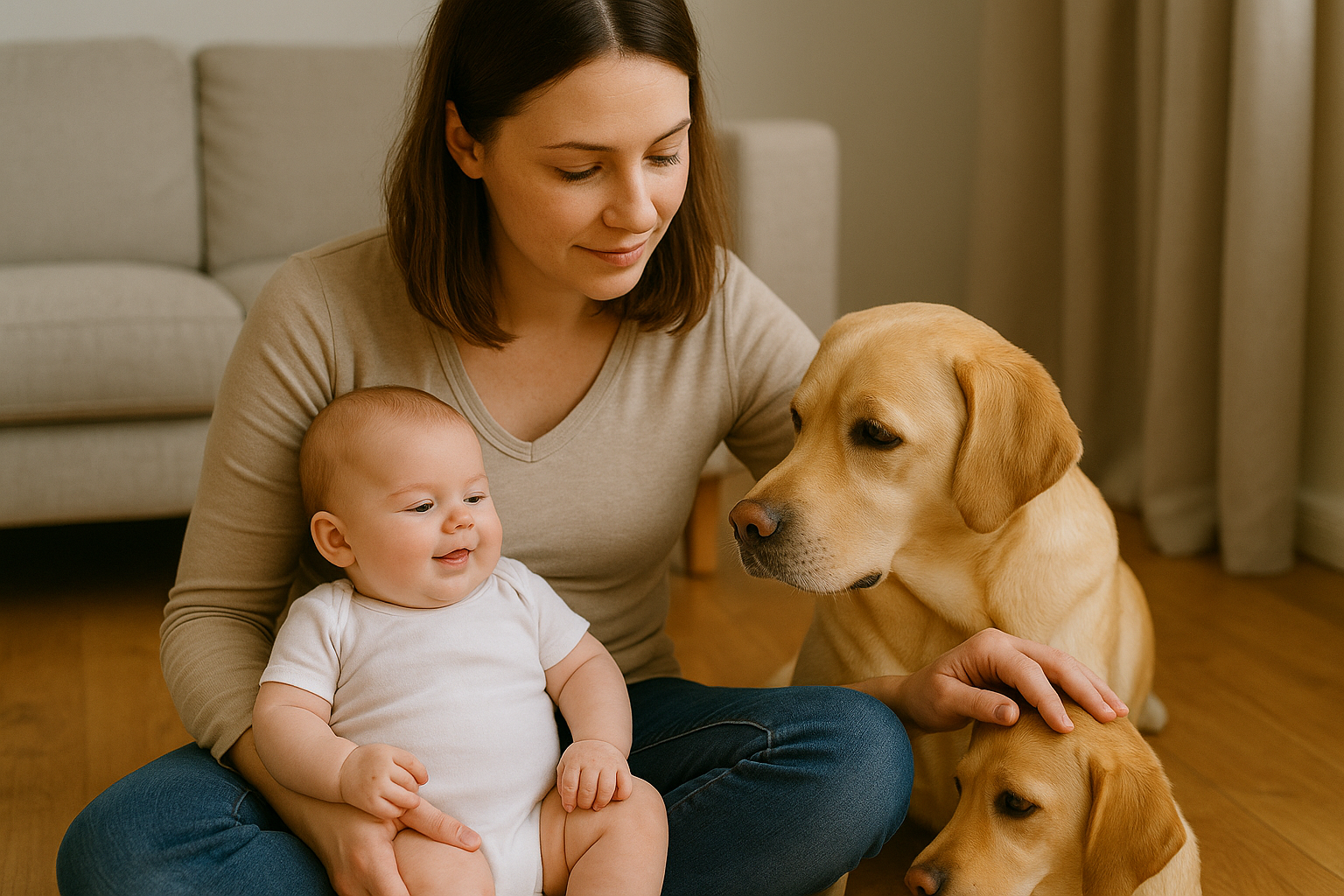
Whenever your dog calmly observes or interacts with your baby, reward them with treats or affection.
2. Include Your Dog in Routines
Encourage your dog to sit beside you during feedings or join you on pram walks.
3. Avoid Punishment Near the Baby
If your dog associates the baby with scolding, it may cause tension. Instead, use gentle redirection.
Signs Your Dog Is Uncomfortable Around the Baby
Learn to recognise early signs that your dog is stressed:
-
Lip licking
-
Yawning
-
Turning head away
-
Ears pinned back
-
Stiff body posture
-
Low growl or prolonged staring
If you notice any of these signs, calmly remove your dog from the situation and provide a safe space for them to relax.
When to Seek Professional Help
If your dog displays aggression, anxiety, or extreme protectiveness around the baby, contact a professional dog trainer or behaviourist immediately. Early intervention is crucial to maintaining harmony in your home.
Real-Life Success Stories
Many families discover that their dogs not only adapt to life with a baby but flourish as gentle protectors. From Labradors guarding the crib to mixed breeds sharing afternoon naps on the couch, these bonds can be truly magical—when built on trust, patience, and clear boundaries.
Final Break: Are Dogs Good Around Babies?
The answer is yes—dogs can be wonderful companions for babies, providing emotional, developmental, and health benefits. The key lies in preparation, supervision, and respecting both your dog’s needs and your baby’s safety.
By investing time in training, socialising, and carefully introducing your dog, you can establish a foundation for a relationship that will enrich your family for years to come.
Frequently Asked Questions
Here are some common questions dog owners may have about this topic.
Can all dogs be good around babies, or does it depend on the breed?
While some breeds like Labradors and Golden Retrievers are commonly known for their gentle nature, what matters most is the individual dog’s temperament. Calm, tolerant, and well-socialised dogs, regardless of breed, are generally better suited to being around babies.
What are the main benefits of having a dog around a baby?
Dogs can help foster emotional bonds and protection, support babies’ immune system development, and later encourage empathy and responsibility as the child grows. They also provide a built-in playmate promoting exercise and social interaction.
What precautions should parents take before introducing their dog to a newborn?
Parents should prepare their dog through training and socialisation, ensuring the dog is comfortable with noise and activity. Supervised introductions and establishing boundaries help prevent accidental injuries and reduce stress for both baby and dog.
How can parents manage a dog’s protective behaviour around their baby?
It's important to observe and train dogs to prevent guarding behaviours. Consistent commands, positive reinforcement, and professional advice if needed can help ensure the dog remains calm and non-aggressive towards others near the baby.
Are there any hygiene concerns to be aware of with dogs and newborns?
Yes, dogs may bring in dirt, bacteria, or parasites that could affect a baby’s developing immune system. Regular grooming, cleanliness, and limiting the dog’s access to the baby’s sleeping and feeding areas can help maintain hygiene.