

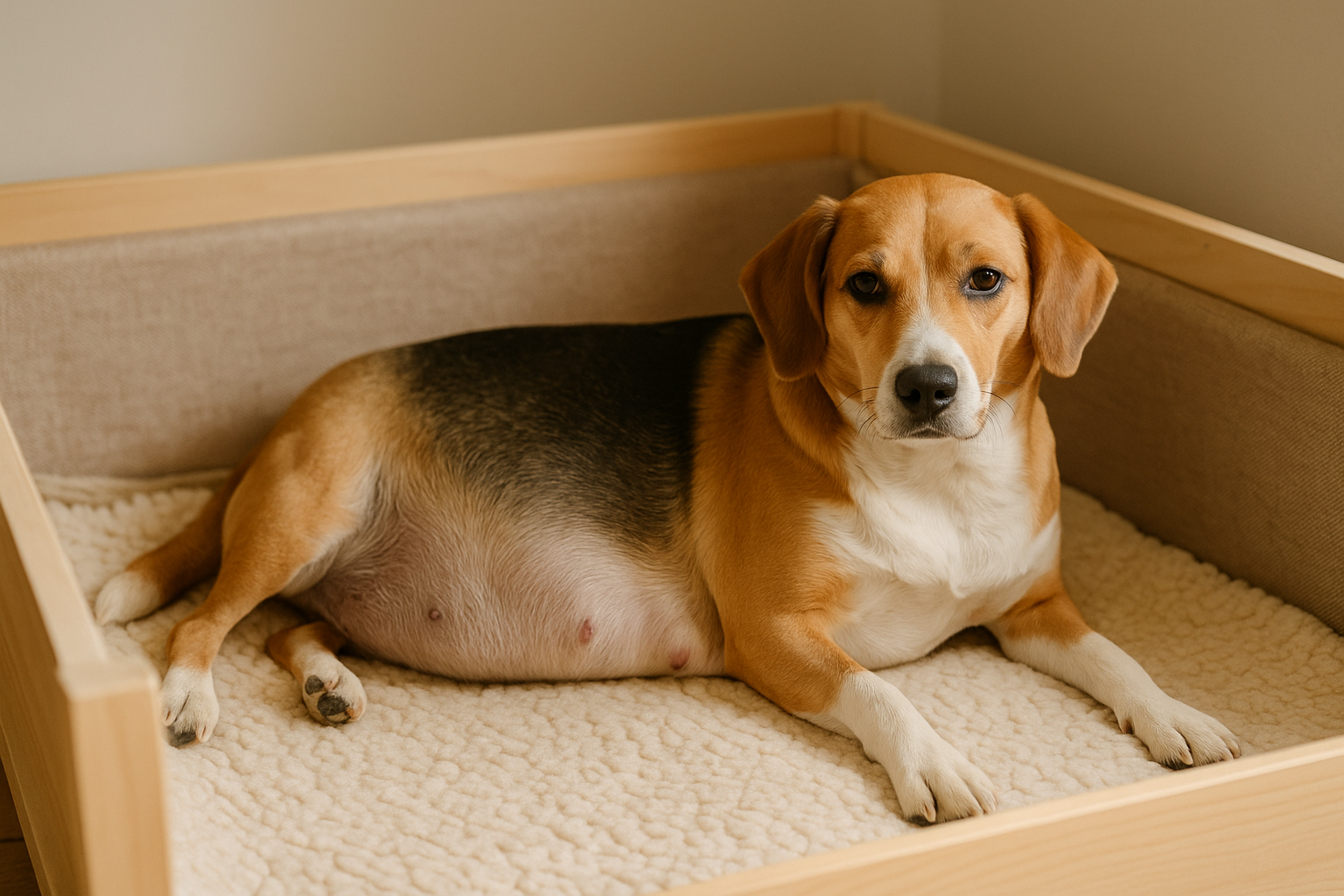
Dog Pregnancy Timeline at a Glance (9 Weeks / ~63 Days)
-
Week 1 (Days 0–7): Fertilisation occurs; no visible signs yet.
-
Week 2 (Days 8–14): Embryos implant in the uterus; slight changes in appetite may appear.
-
Week 3 (Days 15–21): Hormonal shifts begin; your dog might experience mild morning sickness.
-
Week 4 (Days 22–28): Pregnancy can often be confirmed by a vet; nipples may start to enlarge slightly.
-
Week 5 (Days 29–35): Puppies’ organs begin forming; calorie requirements start to increase.
-
Week 6 (Days 36–42): Abdomen becomes noticeably rounder; appetite grows.
-
Week 7 (Days 43–49): Coat and nails develop; nesting behaviours may begin.
-
Week 8 (Days 50–56): Puppy movements become visible; colostrum might be present.
-
Week 9 (Days 57–63): Prepare for whelping; a temperature drop typically occurs just before labour.
Always consult your veterinarian for personalised advice—especially regarding diet, exercise, and supplements during pregnancy.
Week-by-Week Care Guide

Week 1 (Days 0–7): The Quiet Beginning
What you’ll notice: Usually no obvious signs. Maintain a calm and consistent environment.
Care tips:
-
Continue her regular complete diet; no need to increase calories yet.
-
Provide gentle exercise only—avoid introducing strenuous activities.
Supplements: Consider discussing dog prenatal vitamins with your vet now to ensure early nutrient support.
Week 2 (Days 8–14): Implantation & Hormonal Changes
Signs: Slight appetite fluctuations; mild fatigue.
Care tips:
-
Minimise stress and ensure she stays well hydrated.
-
Start weekly weigh-ins to monitor steady, healthy weight gain.
Nutrition: Maintain maintenance calorie levels focusing on quality protein and omega fatty acids.
Supplement focus: Include folic acid to support neural development. Continue daily prenatal vitamins for dogs.
Week 3 (Days 15–21): Early Pregnancy Symptoms
Signs: Mild queasiness (“morning sickness”) and occasional picky eating.
Care tips:
-
Offer smaller, more frequent meals if her appetite decreases.
-
Avoid unnecessary medications and chemical flea or worm treatments without veterinary approval.
Supplements: Include B-vitamins to support energy metabolism and zinc for normal development.
Week 4 (Days 22–28): Time to Confirm

Signs: Nipples may enlarge and pinken; abdomen changes remain subtle.
Vet: This is a common time to confirm pregnancy via ultrasound, as advised by your vet.
Care tips:
-
Start preparing a whelping area that is quiet, warm, and easy to clean.
-
Keep exercise light to moderate.
Nutrition: Gradually switch to a high-quality, energy-dense diet.
Supplements: Continue prenatal pills for dogs to ensure micronutrient coverage.
Week 5 (Days 29–35): Growth Spurt Begins
Signs: Body shape starts to change; appetite may increase.
Care tips:
-
Divide daily food into 3–4 smaller meals to ease stomach pressure.
-
Maintain calm routines and avoid rough play.
Nutrition: Caloric needs rise; focus on high-quality protein.
Supplements: Include iron (for red blood cell production), folic acid, and zinc—all typically found in dog prenatal vitamins.
Week 6 (Days 36–42): Clearly Pregnant

Signs: Abdomen rounds noticeably; weight gain becomes visible.
Care tips:
-
Keep her clean and brushed; gently check nipples and skin.
-
Short, frequent walks are ideal.
Nutrition: Gradually increase calories under veterinary guidance.
Supplements: Consider adding DHA (omega-3) to support brain and eye development—consult your vet. Continue using a complete prenatal vitamin for dogs.
Week 7 (Days 43–49): Nesting & Final Trimester

Signs: Nesting behaviour, increased restlessness, and more frequent naps.
Care tips:
-
Finalize the whelping box: ensure it’s warm, draft-free, and has clean bedding.
-
Trim hair around nipples for long-coated dogs to maintain nursing hygiene.
Nutrition: Provide high-quality food in frequent, smaller meals.
Supplements: Continue prenatal pills and ensure sufficient calcium intake from diet (avoid high-dose standalone calcium unless directed by your vet).
Week 8 (Days 50–56): Almost There

Signs: You may see or feel puppy movements; mammary glands become fuller; colostrum may be present.
Care tips:
-
Begin temperature charting (a drop to about 37.2°C often signals labour within 24 hours).
-
Keep toileting areas easily accessible; avoid travel.
Nutrition: Provide maximum energy intake now.
Supplements: Maintain consistent levels of folic acid, iron, and zinc through her dog prenatal vitamins.
Week 9 (Days 57–63): Whelping Preparation
Signs: Restlessness, scratching, hiding; temperature drops before labour; appetite often decreases just before whelping.
Care tips:
-
Prepare a whelping kit: include your vet’s contact, clean towels, puppy scale, heat source as recommended, disinfected scissors/clamps (only if trained), and gloves.
-
Maintain a calm, quiet environment; supervise closely.
Aftercare: After whelping, consult your vet about nursing nutrition and postnatal support.
Why Use Prenatal Vitamins for Dogs?
Even with a balanced diet, pregnancy increases the need for specific micronutrients. A well-formulated dog prenatal vitamin helps fill common nutritional gaps:
-
Folic Acid – supports healthy fetal neural development.
-
Iron – aids oxygen transport and energy production.
-
Zinc – promotes normal growth and immune function.
-
B-Complex Vitamins – support energy metabolism and appetite.
-
Optional Vet-approved DHA – supports brain and eye development.
Recommended: Calmdogs® Prenatal Pills for Dogs — gentle, daily support to help your dog stay strong throughout pregnancy.
Note: Supplements should complement, not replace, a vet-approved diet. Always consult your veterinarian before starting any supplement, especially if your dog has underlying health issues or is taking medication.
Exercise, Grooming & Hygiene
-
Exercise: Daily gentle walks keep joints flexible and help maintain a balanced mood. Avoid high-impact activities or overheating.
-
Grooming: Brush regularly; check nipples and abdomen; keep bedding clean and dry.
-
Parasite control: Use only vet-approved products that are safe during pregnancy.
Common Questions (Quick Answers)
1. How long are dogs pregnant? Approximately 63 days from ovulation (about 9 weeks).
2. When should I increase food? Gradually starting at Week 5, divided into smaller meals.
3. Can I continue training? Yes—low-stress, reward-based training is fine; avoid strenuous exercise.
4. When should I see the vet? For early pregnancy confirmation (Week 4+), mid-pregnancy check-ups, and if you notice distress, abnormal discharge, prolonged straining, or overdue pregnancy.
Frequently Asked Questions
Here are some common questions dog owners may have about this topic.
How can I tell if my dog is pregnant in the early weeks?
In the first two weeks, there are usually no visible signs, but you might notice slight appetite changes or mild fatigue around week two. Your vet can confirm pregnancy by ultrasound from week four onwards, when nipple enlargement and subtle abdominal changes may also appear.
What dietary changes should I make during my dog’s pregnancy?
In the early weeks, maintain your dog's regular diet. From around week five, increase calories gradually with a focus on high-quality protein and essential fatty acids. Frequent smaller meals can help if she experiences mild nausea, and always consult your vet before adding supplements.
Is it safe to continue exercising my pregnant dog?
During pregnancy, gentle exercise is encouraged to keep your dog healthy. Avoid strenuous activities, especially in the early weeks. As her abdomen grows, opt for light to moderate walks and ensure she remains comfortable, avoiding stress or exhaustion throughout her pregnancy.
When should I start preparing the whelping area?
It’s best to prepare a quiet, warm, and easily cleaned whelping space by week four. This allows your dog to familiarise herself with the area. Make sure it is calm and comfortable, as nesting behaviour often begins around week seven.
What signs indicate that my dog is about to go into labour?
In the final week, a noticeable drop in your dog’s body temperature often signals impending labour. You may observe visible puppy movements and the presence of colostrum. It’s important to have your whelping area ready and stay in contact with your vet for support.