
Introduction
If you’ve noticed a change in your pet’s bathroom habits and found yourself wondering, why is my dog’s poop yellow, you’re not alone. A sudden shift in colour can be alarming, but it’s also a useful indicator of your dog’s internal health. Yellow stool in dogs can be a sign of several issues—from something minor like a diet change to more serious conditions such as liver problems or infections.
In this post, we’ll explore what causes yellow dog poop, when it’s time to call your vet, and how to help your furry friend get back to normal.

Is Yellow Dog Poop Always a Problem?
Before diving into causes, it’s important to know that the colour of your dog’s poop can fluctuate based on diet, hydration, and stress. Yellow poop may not always signal a severe health issue, but it shouldn’t be ignored either. The key is observing whether it’s a one-off event or part of a longer pattern.
Consider:
- Is the stool solid, soft, or watery?
- Has your dog been eating normally?
- Are there any signs of lethargy, vomiting, or discomfort?

Why Is My Dog’s Poop Yellow? 10 Common Causes
1. Dietary Changes
A new dog food, treats, or table scraps can disrupt the digestive system and result in yellow stool.
Solution: Gradually introduce new foods over 7–10 days. Always check ingredients for artificial dyes or allergens.
2. Food Intolerance or Allergies
Dogs with sensitive stomachs may react to certain proteins, grains, or fillers, leading to yellow poop.
Solution: Try a limited-ingredient or hypoallergenic diet.
3. Bile Imbalance
Bile helps with digestion and gives poop its brown colour. If food moves too quickly through the digestive system, bile doesn’t get fully broken down, causing a yellow tint.
Solution: Discuss slow-feeder bowls or digestive enzymes with your vet.
4. Liver Disease
Because the liver is involved in bile production, liver issues can result in yellow, pale, or even grey stool.
Other symptoms include:
- Jaundice (yellowing of gums or eyes)
- Lethargy
- Vomiting

5. Pancreatic Issues
Conditions like pancreatitis can interfere with digestion and cause stool to appear yellow, greasy, or runny.
Solution: A low-fat, vet-approved diet is often recommended.
6. Parasitic Infections
Giardia, coccidia, and other parasites can lead to foul-smelling, yellow diarrhea.
Symptoms may include:
- Weight loss
- Dehydration
- Abdominal pain
Solution: Bring a stool sample to your vet for proper diagnosis.

7. Antibiotics or Medications
Some prescriptions upset the gut flora, resulting in temporary yellow stool.
Solution: Ask your vet about probiotics to restore healthy gut bacteria.
8. Stress or Anxiety
Stress-induced changes in digestion can cause loose or yellow stools, especially after moving homes, travel, or loud noises.
Solution: Calming chews, routine walks, and consistency help ease your dog’s nerves. Calmshops.co.uk offers a selection of vet-approved calming treats.
9. Diet High in Carbohydrates or Corn
Yellow-tinted poop is common with kibble that has lots of corn or fillers.
Solution: Choose a higher-protein, low-filler food and monitor any improvements.
10. Intestinal Blockage or Rapid Transit
In rare but serious cases, yellow poop may result from blockages or fast-moving digestion that bypasses normal bile absorption.
Call your vet if you notice:
- Straining or pain during bowel movements
- No poop for over 24 hours
- Vomiting or bloating
When to See a Vet
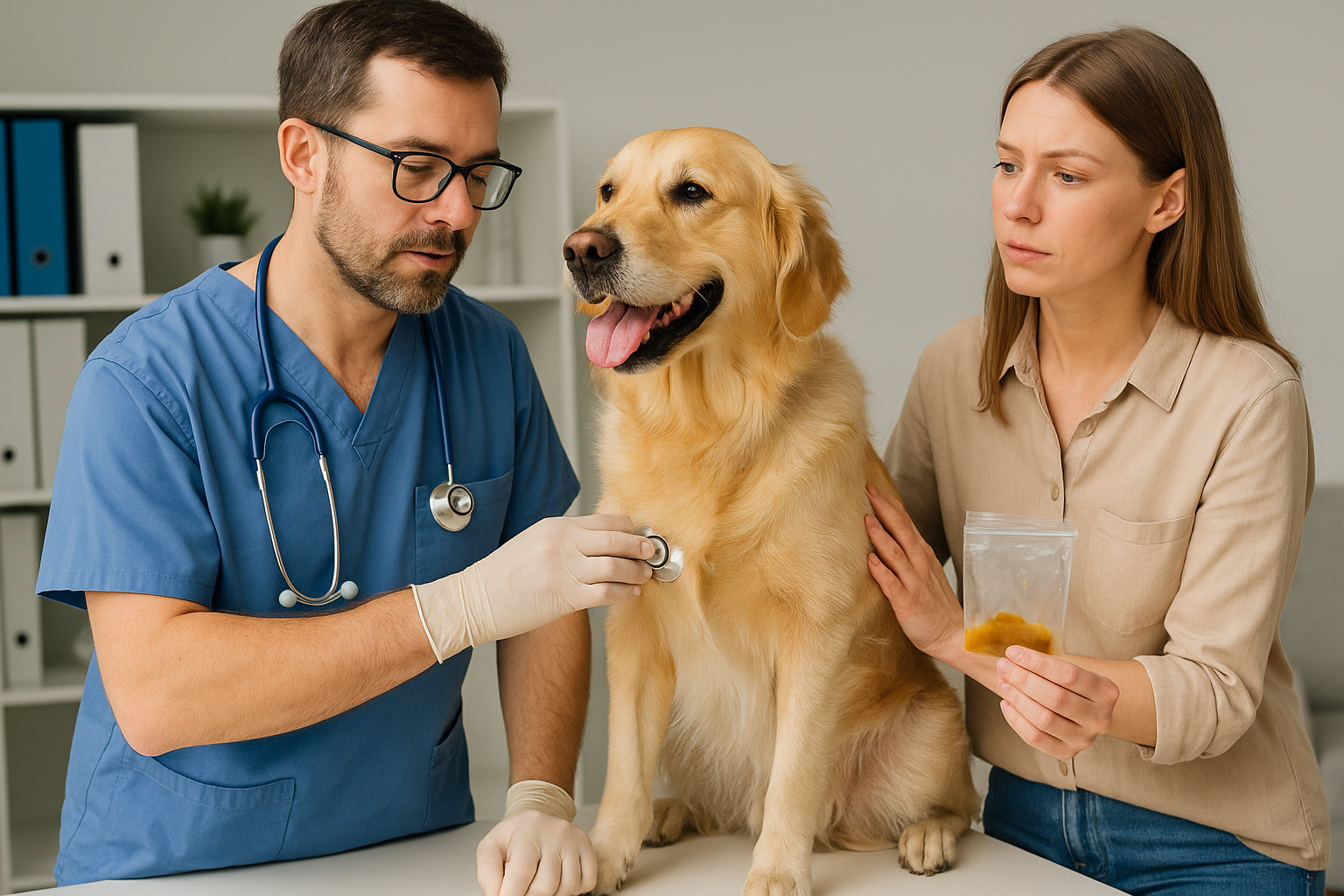
Use the 24-hour rule: if the yellow poop lasts more than a day or is accompanied by other symptoms (vomiting, weight loss, lethargy), it’s time for a checkup. See our vets in your area database to find the best option near you.
Bring this info to your vet:
- Photos or samples of the stool
- A record of recent diet changes
- Any medications given recently

What Will the Vet Do?
- Physical exam and medical history
- Stool sample testing
- Blood tests or imaging for liver/pancreas
- Dietary advice or prescription food
Most causes of yellow poop are treatable, especially when caught early.

How to Prevent Yellow Dog Poop
- Introduce new foods slowly
- Avoid table scraps and high-fat treats
- Provide clean, filtered water
- Use parasite preventatives regularly
- Maintain a consistent feeding schedule
For dogs with sensitive stomachs, keep training tools and treats gentle. Calmshops.co.uk stocks non-reactive training accessories ideal for dogs with GI issues.
Real Stories from Concerned Owners
Lucy the Labrador:
“We noticed Lucy’s poop turned yellow after trying a new brand of dry food. Switching back and adding a probiotic from our vet helped clear it up in just three days.”
Max the Rescue Dog:
“Max had consistent yellow diarrhea after antibiotics. The vet said his gut bacteria was off. With a special diet and probiotics, he’s back to normal.”
Last Bark: Don’t Ignore the Signs
So, why is my dog’s poop yellow? While some causes are harmless and temporary, others could signal deeper issues that need medical attention. Being aware of your dog’s stool is one of the simplest ways to monitor their health.
If you notice recurring yellow poop, talk to your vet and consider adjusting your dog’s diet or routine. And remember, a healthy gut makes for a happy pup.
Need calming solutions or digestion-friendly training accessories? Explore our full range at Calmshops.co.uk—supporting your dog’s health inside and out.
Frequently Asked Questions
Here are some common questions customers may have about this topic.
Can a simple diet change cause my dog’s poop to turn yellow?
Yes, introducing new foods, treats, or table scraps can disrupt your dog’s digestion and cause yellow stool. To avoid this, gradually transition to new diets over 7 to 10 days and monitor for any ingredients that might trigger a reaction or contain artificial dyes.
When should I be concerned about yellow stool indicating liver disease?
Yellow or pale stool accompanied by symptoms like jaundice (yellow gums or eyes), lethargy, and vomiting could signal liver problems. If you notice these alongside yellow poop, it’s important to seek veterinary advice promptly for proper diagnosis and treatment.
How do parasites contribute to yellow diarrhoea in dogs?
Parasites such as giardia or coccidia can cause foul-smelling, yellow diarrhoea, often accompanied by weight loss, dehydration, and abdominal pain. If your dog shows these signs, a stool sample analysis by your vet is essential to identify and treat the infection effectively.
Can stress or anxiety lead to yellow poop in dogs?
Yes, stress and anxiety, such as from moving, travel, or loud noises, can affect your dog’s digestive system, causing loose or yellow stools. Managing stress through calming routines, consistent walks, and possibly calming chews can help restore normal digestion.
Are antibiotics responsible for yellow stool in dogs, and how can it be managed?
Certain antibiotics can disrupt healthy gut bacteria, leading to temporary yellow stool. To support your dog’s digestive health during and after antibiotic treatment, discuss probiotic options with your vet that can help restore balanced gut flora.