
Roughly half of dogs in the UK are estimated to be overweight or obese, according to vet surveys conducted over the past several years — and most of their owners don’t realise it. Weight creeps on gradually, and because you see your dog every day, the change is often too slow to notice the way a stranger would notice it instantly. This guide covers how to actually check, what the numbers mean, and what a realistic management plan looks like.
Why this matters more than it might seem
Carrying excess weight isn’t just a cosmetic issue. In dogs, it’s linked to a measurably shorter lifespan, increased risk of osteoarthritis, higher rates of diabetes, greater strain on the heart and respiratory system, and a higher risk of complications during anaesthesia if your dog ever needs surgery. A well-known long-term study by Purina found that Labrador Retrievers kept at a lean body condition throughout their lives lived, on average, nearly two years longer than littermates kept slightly overweight. Two years is a significant proportion of a dog’s life.
This isn’t about aesthetics or breed standards. It’s a genuine health intervention, and one of the few things you have direct, daily control over.
The body condition score: the actual standard vets use
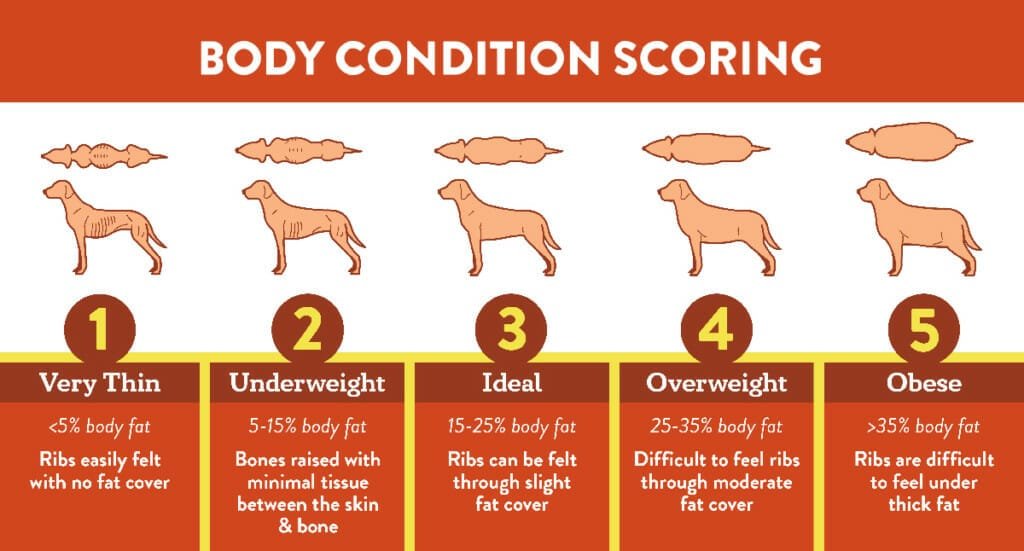
Weighing your dog on a scale tells you a number, but that number means very little without context — a 30kg Labrador might be lean or obese depending on their frame. What vets actually use is the Body Condition Score (BCS), a 9-point scale that assesses your dog by feel and visual appearance rather than weight alone.
You don’t need a vet visit to do a basic version of this yourself. Two checks form the core of it.
The rib check
Run your hands gently along your dog’s sides, fingers flat, applying light pressure. On a dog at a healthy weight, you should be able to feel each individual rib without pressing hard — similar to feeling the back of your own hand, where you can sense the bones beneath a thin layer of tissue. If you have to press firmly to find the ribs, or can’t distinguish them at all, that’s a strong indicator of excess weight. If the ribs are sharply visible with no covering at all, your dog may be underweight instead.
The waist check
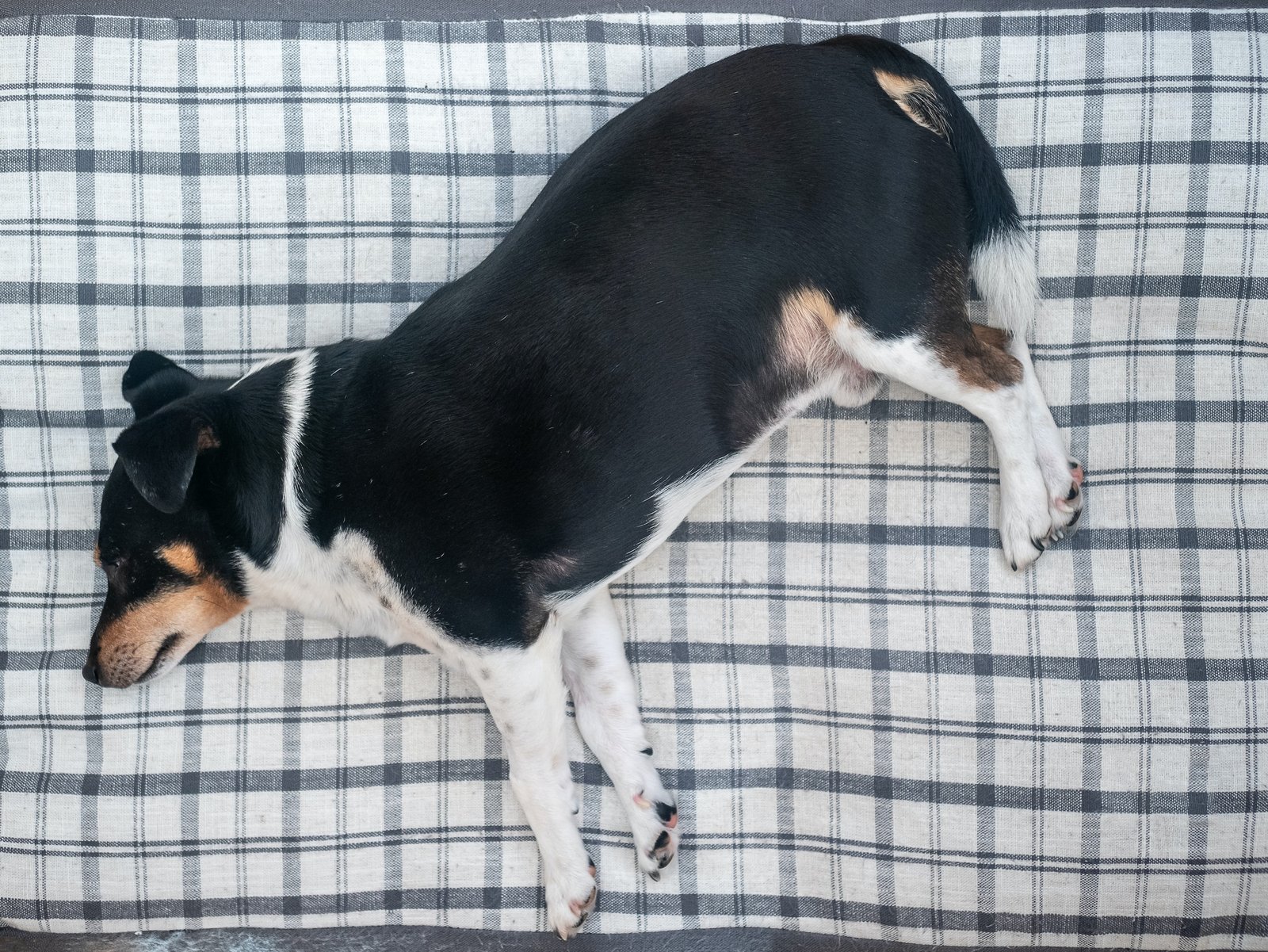
Stand over your dog and look down at their body from above. A dog at a healthy weight has a visible inward curve at the waist, behind the ribcage, before the hips. If your dog’s body looks like a straight oval or barrel shape from above — wide at the chest and just as wide at the hips with no narrowing in between — that’s the second clear sign of excess weight.
From the side, you should also see an abdominal tuck — the belly line rising up toward the hind legs rather than running flat or sagging below the ribcage.
Putting it together
Roughly speaking: if you can easily feel ribs and see a clear waist, your dog is likely in the healthy 4-5 range on the 9-point scale. If ribs are hard to feel and the waist is minimal or absent, you’re likely looking at a 6-7 (overweight) or 8-9 (obese) range. This isn’t a substitute for a vet assessment, but it’s accurate enough to tell you whether a conversation with your vet is worth having.
Other signs worth watching for
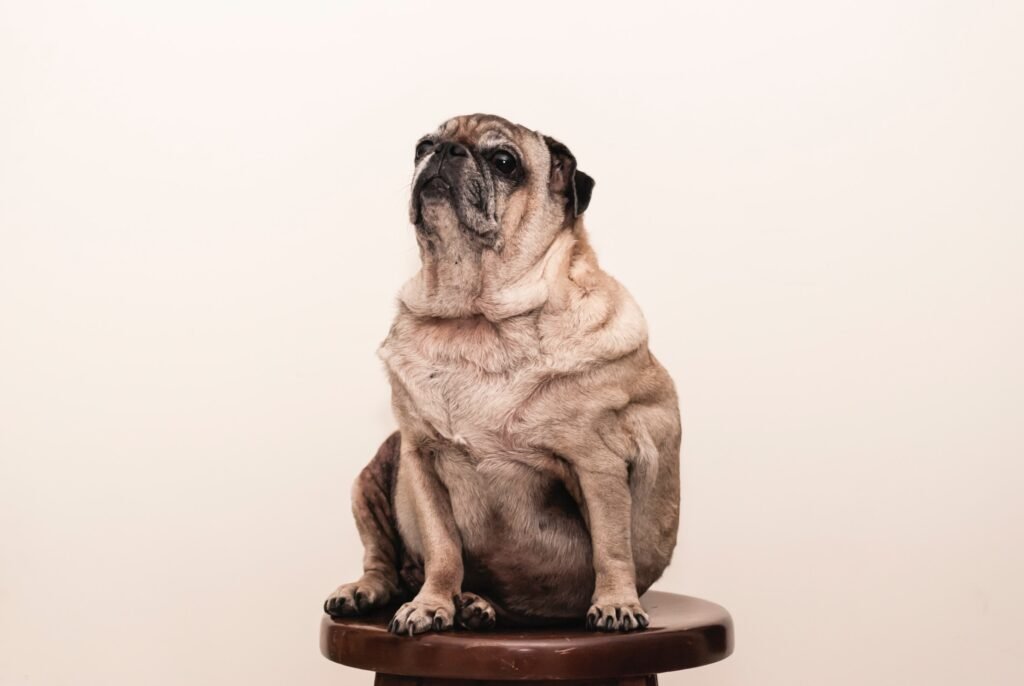
Beyond the rib and waist checks, a few behavioural and physical signs tend to show up as weight increases:
Reduced enthusiasm for walks, or tiring noticeably faster than they used to on a route they previously managed easily. Heavier breathing or audible panting after mild exertion that wouldn’t previously have caused it. Reluctance to jump onto furniture, into the car, or up and down stairs — often an early sign of joint strain from extra weight rather than age alone, even in dogs that aren’t elderly. Visible fat deposits at the base of the tail and around the neck, which is often where extra weight shows first in dogs before it’s obvious elsewhere.
What actually causes weight gain in dogs
Before jumping to a management plan, it’s worth being honest about the usual causes, because the solution depends on identifying which apply to your dog.
Overfeeding relative to activity level is the most common cause by far. Feeding guidelines on dog food packaging are often generous estimates rather than precise recommendations, and many owners feed by eye rather than by weighing food, which leads to gradual overfeeding without anyone noticing.
Treats and table scraps add up faster than most people expect. A single standard dog biscuit can represent a meaningful percentage of a small dog’s daily calorie needs — the equivalent, proportionally, of a human eating an extra large meal.
Reduced activity due to age, injury, or simply a change in routine (a new job with less time for walks, for example) reduces calorie burn without a corresponding reduction in food.
Neutering lowers a dog’s metabolic rate by a measurable amount, which means a dog fed the same portions before and after neutering will typically gain weight unless the diet is adjusted.
Underlying medical conditions, particularly hypothyroidism and Cushing’s disease, can cause weight gain that diet and exercise alone won’t fully resolve. If your dog has gained weight despite no change in diet or activity, this is worth raising with your vet specifically.
A realistic weight management plan
Start with a vet check
This isn’t a formality. A vet visit confirms the BCS assessment properly, rules out medical causes, and gives you a target weight specific to your dog’s breed and frame — not a generic number from a chart. They can also calculate an appropriate daily calorie target, which removes the guesswork from the next steps.
Weigh food rather than eyeballing it
A kitchen scale is the single most useful tool for weight management. Measuring cups vary significantly between brands and kibble densities, which makes portion control inconsistent even when you think you’re being careful. Weighing food in grams against the target your vet provides removes that variability entirely.
Reduce treats, don’t eliminate them
Cutting treats entirely usually isn’t necessary or sustainable, particularly if you use them for training. The better approach is reducing the size of each treat, switching to lower-calorie options, or using a portion of your dog’s regular daily food allowance as training rewards rather than adding extra calories on top.
Increase activity gradually
If your dog has been significantly under-exercised, build up gradually rather than jumping straight into long runs — overweight dogs are at higher risk of joint injury, and sudden intense exercise can cause more harm than good. Start with slightly longer or more frequent walks and build from there over several weeks. Swimming is particularly good for overweight dogs because it provides cardiovascular exercise with minimal joint impact.
Track progress properly
Weigh-ins every 2-4 weeks at the vet (many practices offer free weight checks) give you objective data rather than relying on how your dog looks, which is hard to judge accurately when you see them daily. A realistic, healthy rate of weight loss for most dogs is around 1-2% of body weight per week — faster loss can be unsafe.
What we’ve found works
We’ve had a few dogs through Calmshops over the years who needed a bit of a weight management push, and the thing that consistently makes the difference is the food scale — not the diet brand, not the exercise routine, just actually measuring what’s going into the bowl. Most overfeeding isn’t deliberate; it’s a slow creep from generous scooping, an extra treat here and there, and feeding guidelines on the bag that are higher than what most dogs actually need.
It’s also worth saying: weight loss in dogs is slow by design, and that’s appropriate. Quick fixes tend to involve under-feeding, which causes its own problems. Patience and consistency genuinely are the two things that matter most here.
Frequently Asked Questions
Here are some common questions dog owners may have about this topic.
How can I tell if my dog is overweight without a vet visit?
Run your hands along your dog’s sides — you should be able to feel individual ribs without pressing hard. Then look down at your dog from above; you should see a clear inward curve at the waist behind the ribcage. If ribs are hard to feel and there’s little or no visible waist, your dog is likely carrying excess weight.
What is a body condition score?
It’s a 9-point scale vets use to assess a dog’s weight based on physical feel and appearance rather than weight alone, since ideal weight varies enormously by breed and frame. A score of 4-5 is generally considered ideal; 6-7 is overweight; 8-9 is obese; 1-3 is underweight.
How much weight loss is safe per week?
Around 1-2% of body weight per week is generally considered a safe rate for most dogs. Faster loss can indicate an unsafe deficit and should be discussed with a vet, particularly for dogs with significant weight to lose.
Can neutering cause weight gain in dogs?
Yes — neutering lowers metabolic rate, which means a dog fed the same amount before and after surgery will typically gain weight over time unless the diet is adjusted to account for the change.
Should I stop giving my dog treats if they’re overweight?
Not necessarily. Reducing treat size, switching to lower-calorie options, or using a portion of the daily food allowance as training rewards is usually more sustainable than eliminating treats entirely, particularly if you use them for ongoing training.
What if my dog has gained weight despite no change in diet?
This is worth a vet visit specifically to rule out underlying conditions like hypothyroidism or Cushing’s disease, both of which can cause weight gain that diet and exercise changes alone won’t resolve.