
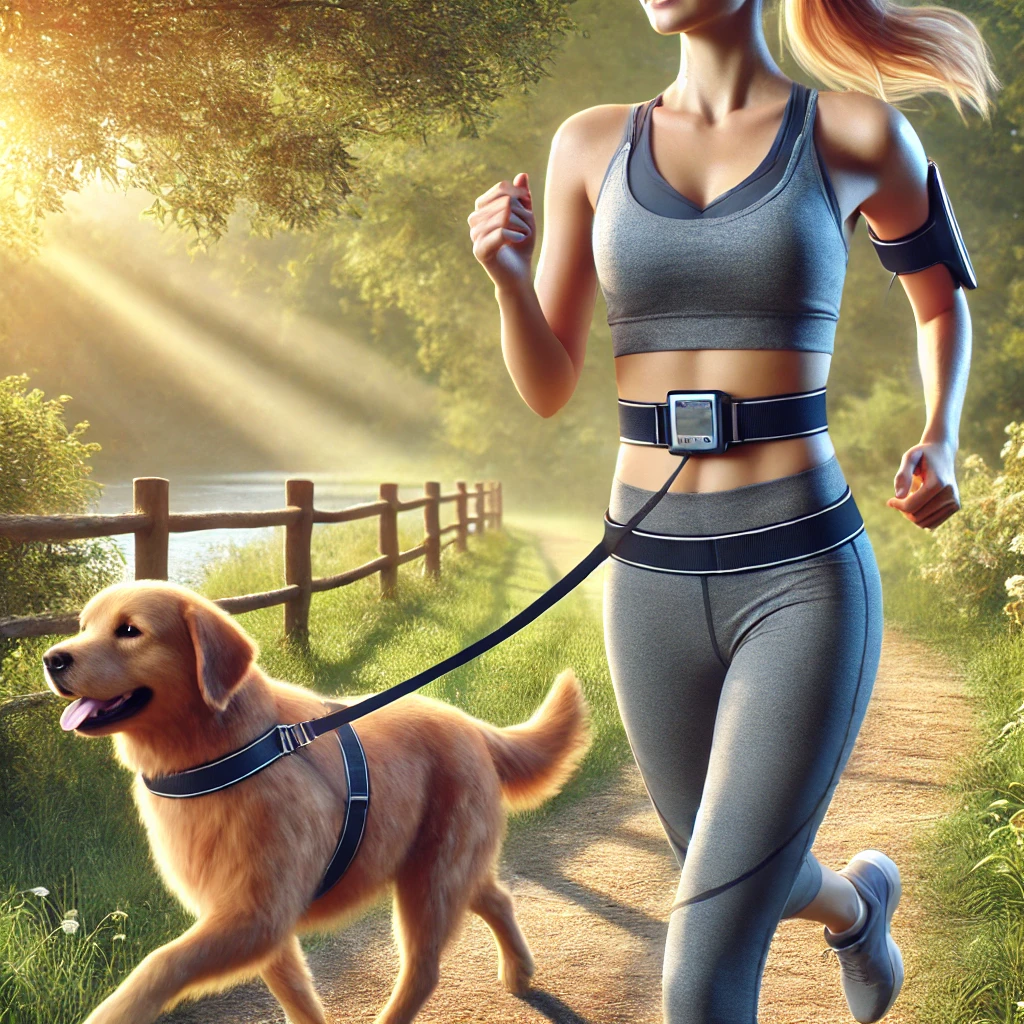
Running with a dog is genuinely good — for both of you — but doing it without the right kit makes it harder than it needs to be. A standard lead in your hand throws off your arm swing, your dog’s recall under distraction matters more at pace than it does on a slow walk, and hydration becomes a real issue on anything longer than twenty minutes. These are the accessories worth having, in roughly the order of how much they change the experience.
1. Hands-Free Running Lead
The single most useful piece of kit for running with a dog. A lead in your hand kills your running form — you compensate with your opposite arm, your gait changes, and over distance it causes shoulder and neck tension that has nothing to do with fitness.
The Calmshops Running Lead wraps around your waist with an adjustable belt and connects to your dog via a bungee section that absorbs sudden pulls rather than transferring them directly to your hips. It has reflective stitching throughout, which matters for early morning or evening runs in autumn and winter. The small pouch on the belt holds keys and cards. If you only buy one thing from this list, it’s this.
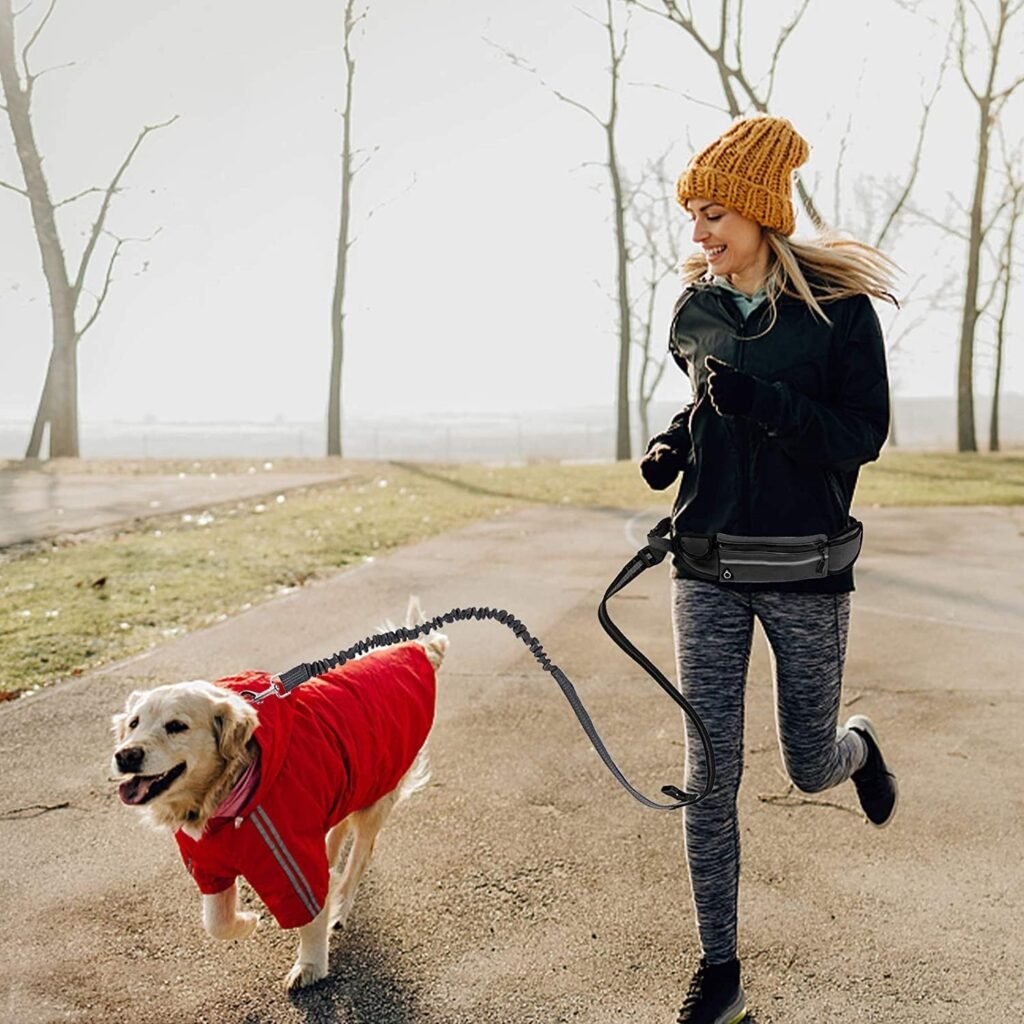
2. Dog Harness
If your dog pulls, a standard collar concentrates all that force on their neck and throat — not ideal during sustained exercise. A harness distributes pressure across the chest and shoulders, which is safer and more comfortable for a dog running at pace.
The Kurgo Tru-Fit Smart Harness has a padded fit, a front clip to reduce pulling, and a car restraint loop — worth having if you’re driving to a trail. It’s built for active use rather than just walking, and holds its shape well over time.
3. Anti-Bark Vibrating Collar
Excessive barking on a run is disruptive and tiring — for you, for other dogs you pass, and for the people around you. It’s also usually a sign that your dog is overstimulated or anxious rather than simply misbehaving, which means a calm, gentle intervention works better than a sharp correction.
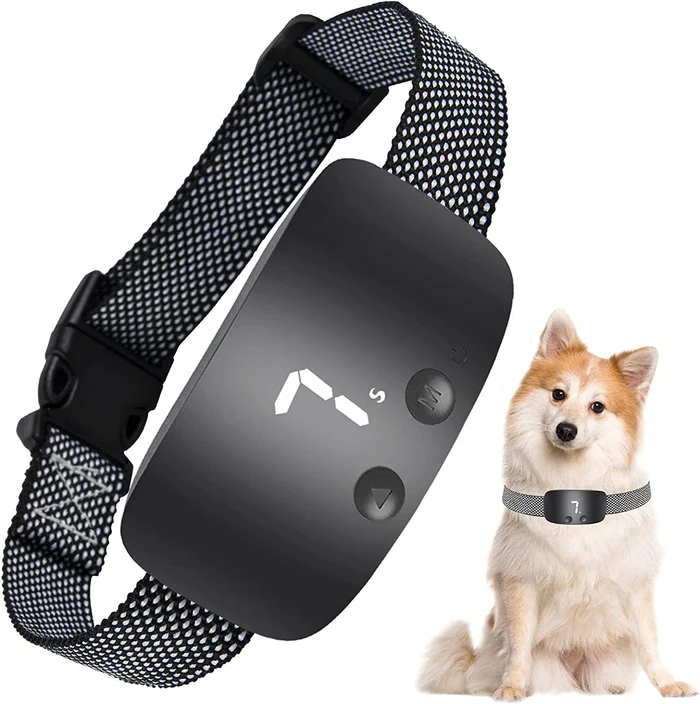
The Anti-Bark Vibrating Collar from Calmshops uses vibration rather than shock to interrupt the barking loop — a humane option that’s effective without causing distress. It’s adjustable to fit a range of breeds and comfortable enough for extended wear. Worth pairing with some basic recall and focus work before runs rather than relying on it as a standalone fix.
4. Collapsible Water Bowl and Portable Water Bottle
Dogs overheat faster than people do, and on anything over twenty minutes — particularly in warm weather or at pace — they need water stops. Waiting until your dog shows obvious signs of overheating is too late.
The SLSON Collapsible Dog Bowl Set flattens completely flat and clips to a lead or belt with a carabiner. Pair it with a portable dog water bottle that lets you pour directly into the bowl without needing a separate container. Neither takes meaningful space or weight.
5. Dog Boots
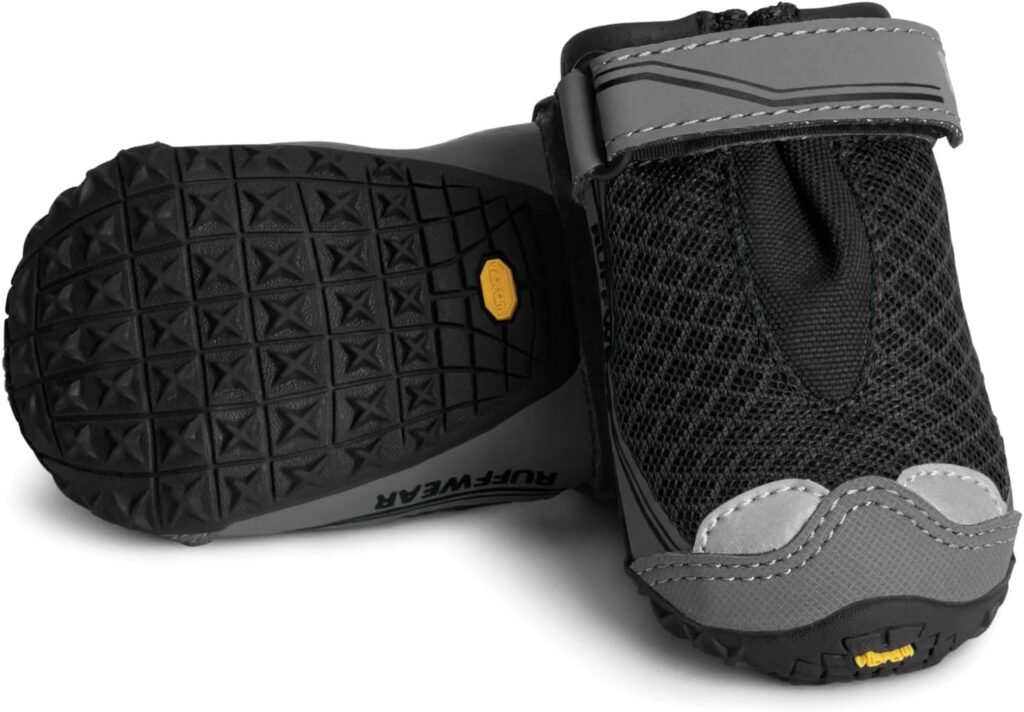
Not essential for every dog or every surface, but worth having for trail running on rough ground, summer tarmac that gets genuinely hot by mid-morning, or winter runs on gritted or salted paths. Figo took a while to accept boots — most dogs do — but the acclimatisation time is worth it if you’re regularly running on surfaces that could cause pad damage.
The Ruffwear Grip Trex Dog Boots have rubber soles with real grip, breathable uppers, and a secure closure that stays put during movement. Check the sizing carefully — Ruffwear’s size guide requires measuring the widest part of the paw, not just estimating by breed.
6. Cooling Vest
In warm weather, dogs regulate temperature primarily through panting, which is less efficient than sweating. A cooling vest slows heat build-up by using evaporation to keep the dog’s core temperature down — useful on summer runs where you’d otherwise need to cut things significantly shorter.
The Ruffwear Swamp Cooler is soaked in cold water before use and stays effective for a couple of hours depending on ambient temperature. It won’t replace proper hydration breaks but it extends comfortable running time in heat meaningfully.
7. Reflective and Light-Up Gear
Running at dawn or dusk in the UK for roughly six months of the year means low light conditions. Drivers noticing you and your dog before they’re close to you is not optional.
The reflective stitching on the Calmshops Running Lead helps, but adding the Calmshops LED Dog Collar means your dog is visible from all angles rather than just from the front. The collar is USB rechargeable and has multiple light modes. At the price point, it’s worth having even if you only use it a few times a year.
8. Waste Bag Dispenser

Non-negotiable, regardless of where you run. The Earth Rated Dog Waste Bag Dispenser clips directly to a lead or belt and keeps bags accessible without digging through pockets mid-run. Earth Rated bags are thick enough to be reliable — cheaper alternatives frequently aren’t.
9. Treat Pouch
If you’re working on recall or focus during runs — which most dogs benefit from — you need treats immediately accessible, not buried in a pocket. A treat pouch clipped to your belt means reward timing stays accurate, which is the difference between reinforcing the right behaviour and reinforcing whatever happened in the two seconds it took you to find the treat.
The Dog Treat Training Pouch has a clip, a magnetic closure that opens with one hand, and enough space for treats, a phone, and keys. Practical rather than fussy.
10. Basic First Aid Kit
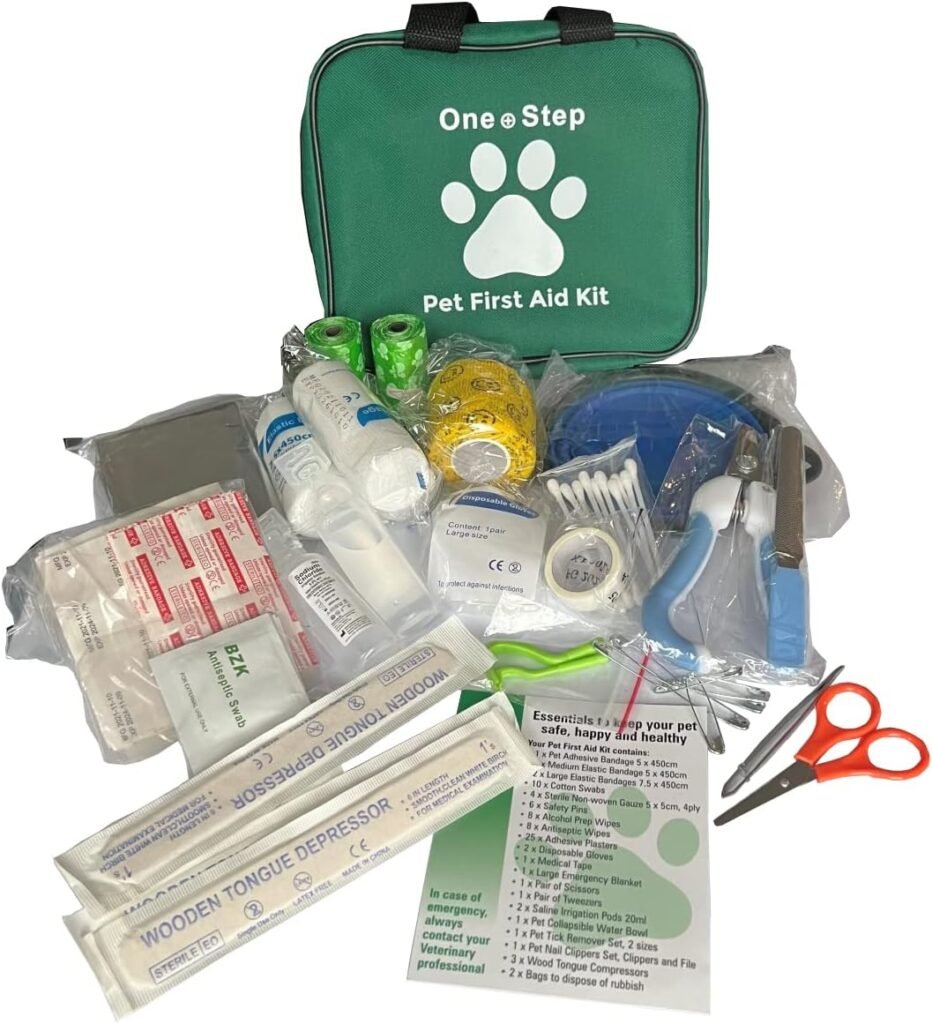
For trail runs or anywhere you’re more than ten minutes from the car, a compact first aid kit is sensible. Cuts, thorn injuries, and pad abrasions are the most common issues on off-road runs. A basic kit with antiseptic wipes, bandages, and a tick remover covers most eventualities without adding significant weight.
Most outdoor or pet shops stock trail-ready pet first aid kits — pick one with a compact case and a carrying clip rather than a full-sized box.
11. Training Clicker or Whistle
Useful if you’re running in environments where you want to reinforce behaviour at a distance — a clicker for short-range precision work, a whistle for recall across larger spaces. Neither is heavy or bulky.
The PetSafe Clik-R Clicker is the standard option — consistent click, finger loop for secure grip while running. For longer distances, a standard gundog whistle paired with a recall cue your dog already knows works well. We also stock a dog training clicker at Calmshops if you want a UK option.
A few things worth knowing before you start
Not all dogs are suited to running. Brachycephalic breeds — Bulldogs, Pugs, French Bulldogs — have compromised airways that make sustained aerobic exercise genuinely risky. Very young dogs shouldn’t run long distances until their growth plates have closed, usually around 12–18 months depending on breed. In hot weather, check the pavement temperature with your hand before setting off: if it’s too hot to hold your palm on it for five seconds, it’s too hot for your dog’s paws.
Build distance gradually, the same way you would for yourself. A dog that’s fit for a twenty-minute walk isn’t automatically ready for a five-kilometre run. Start shorter, watch how they recover, and increase gradually over several weeks.
Frequently Asked Questions
Here are some common questions dog owners may have about this topic.
Why use a hands-free lead rather than holding one?
Holding a lead changes your running mechanics — you compensate with the other arm, your gait shifts, and over distance it creates shoulder and neck tension. A waist-mounted bungee lead keeps your arms free and absorbs sudden pulls before they reach your hips.
When do dogs actually need boots?
Primarily on rough trail surfaces that could cause pad cuts, on tarmac that gets genuinely hot in summer (test with your palm — if it’s uncomfortable after five seconds, it’s too hot for paw pads), and on winter paths treated with salt or grit. Most dogs need time to get used to wearing them — introduce them gradually at home before expecting a dog to run in them.
How do I know if my dog is overheating?
Heavy panting that seems out of proportion to the effort, slowing down noticeably, stumbling, or seeking shade are the main signs. Don’t wait for obvious distress — if your dog is panting harder than feels right, stop, find shade, and offer water. Prevention via water breaks every 15–20 minutes in warm weather is more reliable than watching for symptoms.
Are vibrating collars humane?
Yes, when used correctly. A vibrating collar uses a physical sensation — similar to a phone vibration — to interrupt a behaviour, with no pain involved. It’s substantially different from a shock collar. Used as an interruption tool alongside positive reinforcement and recall training, it’s a reasonable aid for a dog that barks excessively during runs.
At what age can a dog start running?
Generally 12–18 months, once growth plates have closed — earlier for smaller breeds, later for large and giant breeds. Running before growth plates close can cause joint damage. Start with short distances and low-impact surfaces regardless of age.