

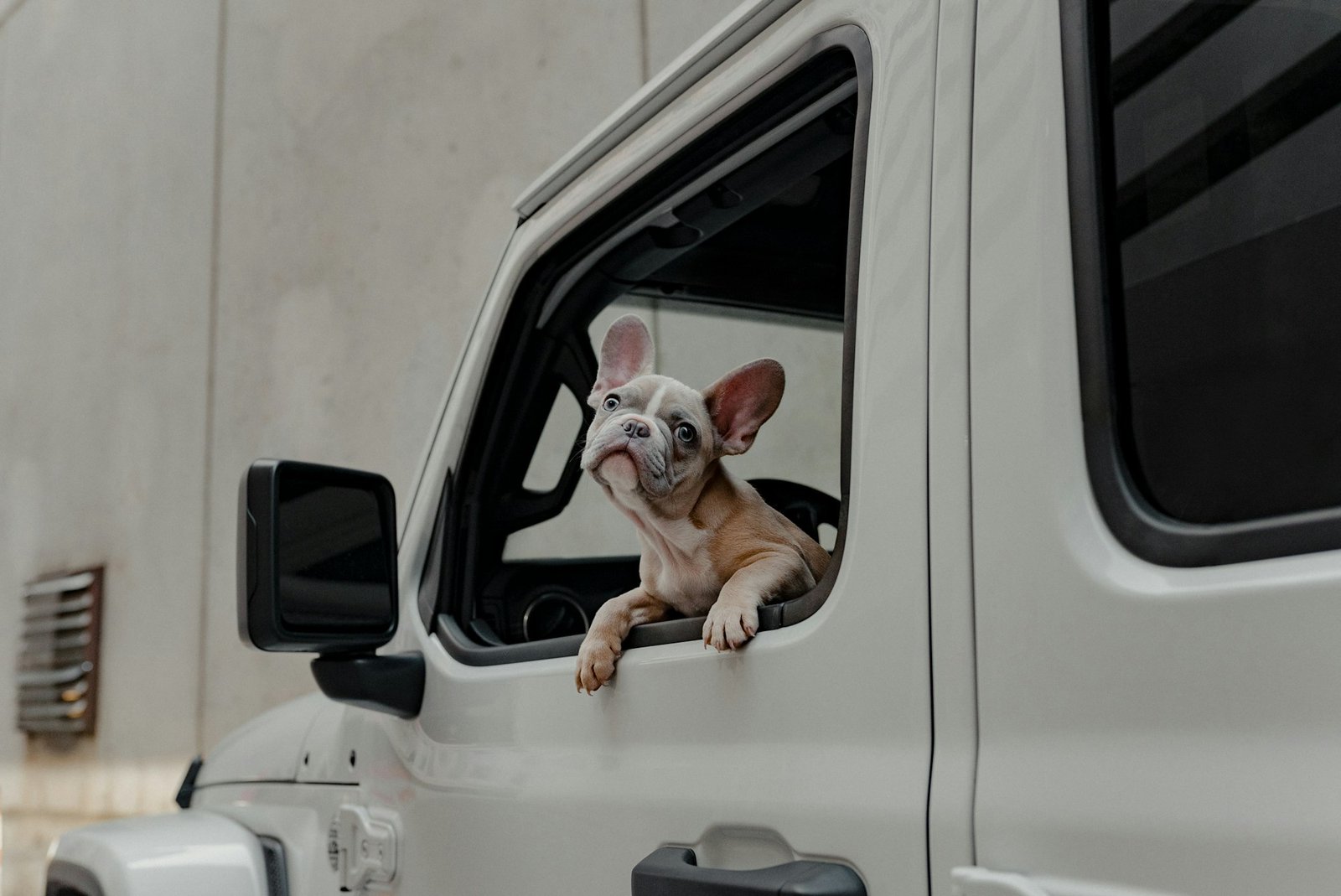
Looking for pet transport near you? Whether you need a dog taxi to the vet, a puppy courier from a breeder two hundred miles away, or a full pet relocation service for a house move, this guide covers everything you need to know about finding safe, reputable pet transport in the UK — and what to check before anyone takes charge of your dog.
Use the city list below to find pet transport near you, or read on for a full explanation of how pet transport works, what a DEFRA licence actually covers, and the questions worth asking before you book.
Find pet transport near you
We’re building dedicated city guides where there’s genuinely something local worth knowing — an airport with its own Animal Reception Centre, a distinctive motorway or port position, or logistics that couldn’t be copy-pasted from another city. That’s a smaller, slower list than promising every major city upfront, but it’s an honest one. Here’s what we’ve built so far:
- Pet Transport in Aberdeen — a local pet taxi, NorthLink Ferries to Orkney and Shetland, and why Edinburgh is Scotland’s ARC
- Pet Transport in Belfast — the Northern Ireland Pet Travel Document, the Cairnryan ferry crossing, and local operators
- Pet Transport in Birmingham — an honest look at local operator supply, and the M5/M6/M42 motorway position
- Pet Transport in Bristol — local operators, the M4/M5 interchange, and the airport’s uncertain ARC status
- Pet Transport in Cardiff — local operators, the M4 corridor, and the Severn crossing into England
- Pet Transport in Coventry — a genuine local operator near Rugby, and the M6/M69/A45 crossroads
- Pet Transport via Dover & the Eurotunnel — the exact tapeworm timing window, AHC requirements, and specialist crossing operators
- Pet Transport in Edinburgh — operators, DEFRA licence checks, and Scotland’s only Animal Receiving Centre
- Pet Transport in Glasgow — the motorway hub, the Cairnryan ferry to Northern Ireland, and why Edinburgh (not Glasgow) is Scotland’s Animal Reception Centre
- Pet Transport via Holyhead — the Republic of Ireland crossing, and how its rules genuinely differ from Belfast’s
- Pet Transport in Hull — a local 24/7 pet ambulance and taxi service, the Humber Bridge, and Humberside Airport
- Pet Transport in Leeds — an honest look at local operator supply, and the M1/M62/A1(M) motorway crossroads
- Pet Transport in Leicester — an honest look at operator supply, the M1/M69 position, and East Midlands Airport
- Pet Transport in Liverpool — local operators, the M62, and proximity to Manchester’s Animal Reception Centre
- Pet Transport in London — operators, DEFRA licence checks, and the Heathrow Animal Reception Centre
- Pet Transport in Manchester — operators, DEFRA licence checks, and the airport detail
- Pet Transport in Newcastle — the DFDS Amsterdam ferry, local operators, and the A1 logistics angle
- Pet Transport in Nottingham — a genuine emergency pet ambulance service, the M1, and East Midlands Airport
- Pet Transport in Plymouth — a genuine local operator, the A38 position, and Brittany Ferries sailings to France and Spain
- Pet Transport via Portsmouth — the Brittany Ferries Santander & Bilbao crossings to Spain, and how they compare to Dover
- Pet Transport in Sheffield — local operators, the M1/M18, and why the city no longer has its own airport
- Pet Transport in Southampton — a genuinely thin local market, the M27/M3 position, and the Isle of Wight ferries
More cities to follow as we verify them have a genuine local angle worth writing about. In the meantime, the questions and checks below apply wherever you are — a good operator will happily answer all of them.
What pet transport actually covers
“Pet transport” is the umbrella term — you’ll also see it called a pet taxi, pet courier, or animal courier — for any professional service that moves your dog (or other pet) from one place to another on your behalf. That covers a wider range of situations than most people expect: short local trips to the vet or groomer, puppy collection from a breeder, house moves, rescue and rehoming transport, vet referrals to specialist hospitals, and airport collections. The five sections below cover the specifics for each.
If you’re looking to adopt rather than book a courier for rescue transport, our dog rescue shelter directory can help you find rescue centres near you.
The five situations people actually search for
Beyond the general picture above, most bookings fall into one of five clear, task-driven categories. If one of these is you, here’s what matters specifically.
Collecting a puppy from a breeder
This is the highest-stakes use case on this list, and the one with a genuine welfare angle attached to it. A young puppy travelling for the first time, often several hours from a breeder to a new home, needs an operator who’s done this before — ask specifically about their experience with puppies, not just dogs generally. Most operators won’t transport puppies under eight weeks old, and many prefer to wait until the first vaccination has been given. If you haven’t found your puppy yet, our guide to where to buy a puppy in the UK is worth reading first, and our guide to puppy vaccinations covers the timing question in detail. Once your puppy’s home, getting them used to a crate in advance — covered in our crate training guide — makes any future transport far less stressful, since a dog who already sees a crate as a safe space travels considerably better than one meeting one for the first time in a stranger’s van.

Figo came to us by car rather than courier, and even that twenty-minute drive from the breeder had him quietly sick in his blanket by the end of it — which is a long way of saying: whichever way your puppy travels, don’t assume a calm start means a calm middle. Ask the operator how they handle it if it happens.
The short local trip
A taxi to the vet, or to a groomer from our dog groomers directory, when you can’t drive, or when your dog is calmer travelling alone. This is the lowest-stakes booking on the list and the one where price and convenience matter more than the deeper welfare checks below — though whether a transporter authorisation is legally required depends on the journey, as the licensing section below explains, and general animal welfare law applies regardless of distance. If it’s a one-off and cost is the main concern, it’s also worth comparing against a sitter from our dog sitters directory who could walk your dog to a nearby appointment instead.
Airport collections and Animal Reception Centres
Pets arriving into the UK from abroad, or being sent out, generally move through an Animal Reception Centre, and the paperwork and timing requirements are specific to that process. Ask directly whether an operator has handled ARC collections before — this isn’t the same skill set as a routine domestic run, and it’s worth confirming rather than assuming. Our guide to Animal Reception Centres covers what actually happens on arrival, realistic timings, and the accompanied-versus-unaccompanied distinction that catches most people out.
Moving house with a dog
The point of booking transport here usually isn’t distance, it’s timing — getting your dog out of a chaotic moving day and into the new house once it’s calm, rather than making them sit through hours of strangers and open doors. Ask whether the operator can hold to a flexible collection window, since moving days rarely run to schedule.
UK to Europe
International pet travel involves its own separate paperwork — an animal health certificate, rabies vaccination timing, and rules that vary by destination country. Our guide to travelling with your dog to Europe from the UK covers the requirements in full; treat pet transport and pet travel paperwork as two separate jobs that both need sorting well in advance.
What a DEFRA licence actually means

In the UK, transporting animals as part of a business — including dogs and cats — generally requires a transporter authorisation from the Animal and Plant Health Agency (APHA), acting on behalf of DEFRA. Published APHA guidance confirms this applies to journeys over 65km (roughly 40 miles) done as part of an economic activity; shorter commercial trips can fall outside this specific licensing requirement, though general animal welfare law still applies regardless of distance.
Where a licence is required, there are two types: Type 1 covers journeys up to 8 hours, and Type 2 covers journeys over 8 hours — and also covers everything Type 1 does, which is why many operators hold Type 2 as their standard licence even for shorter, local work.
Why this matters to you: an operator working outside this system has no legal obligation to meet a welfare standard for the journey — no requirement for ventilated or temperature-controlled vehicles, secure caging, or insurance covering the animals in their care. Ask for an authorisation reference and, where you can, verify it directly rather than taking a website badge at face value — APHA’s Welfare in Transport team can confirm a live authorisation on request. This reflects current gov.uk guidance at the time of writing; rules can change, so check gov.uk directly for anything time-critical.
What a reputable operator looks like
Beyond licensing, a few things reliably separate a good operator from the rest: one family’s pets at a time rather than mixing your dog with strangers’ animals in the same run; climate-controlled vehicles, with independent control for the animal compartment, not just the driver’s cab; GPS tracking and journey updates, standard practice among reputable services now; genuine pet first aid training for drivers, which matters if something goes wrong mid-journey; DBS-checked drivers, particularly relevant for puppy collections where the operator handles young animals directly; and full insurance — both vehicle cover appropriate for pet transport and separate liability cover for the animals themselves, which not every operator carries. Ask about each one directly rather than assuming.
What pet transport costs
Costs vary a good deal by distance, operator, and service level, so treat any figure here as an indicative range rather than a quote — the only way to get a real number is to ring two or three operators and ask directly.
| Service type | Typical range |
|---|---|
| Local pet taxi (under 1 hour) | roughly £25–£60 |
| Regional trip (1–3 hours) | roughly £60–£150 |
| Long-distance UK (3–6 hours) | roughly £150–£300 |
| Cross-country UK (6+ hours) | roughly £250–£500+ |
| Puppy or kitten collection (national) | roughly £150–£400 |
| Airport collection or drop-off | roughly £100–£350 |
Most operators price on driving time from their base rather than pure mileage, and some work to an hourly rate rather than a fixed price per route. Always ask for a written quote before booking, and check what it actually includes — waiting time, the return leg, and tolls are sometimes billed as extras rather than folded into the headline figure.
Questions worth asking before you book
- Are you DEFRA licensed, and can I see your authorisation reference?
- Will my dog travel alone or alongside other animals?
- What vehicle do you use, and does it have independent climate control?
- Are you insured for animals in transit specifically?
- Are your drivers pet first aid trained?
- Do you offer GPS tracking and journey updates?
- Have you transported this breed before? (Worth asking directly for flat-faced breeds, giant breeds, or dogs with health conditions.)
- What happens if my dog is unwell during the journey?
- What’s your cancellation policy?
A reputable operator answers all of these confidently and without hesitation. If a question gets deflected or brushed off, treat that as a genuine red flag rather than bad luck.
Red flags to watch for
The pet transport market has its share of poor operators, particularly around puppy couriering, where unlicensed “delivery” is sometimes used to paper over poor welfare conditions further up the chain. Be wary of:
- No DEFRA licence number offered or visible anywhere on their website
- Prices that seem too low for the distance involved
- Offers to hand over a puppy in a car park or motorway services rather than at a proper address
- No fixed business address or landline
- No reviews anywhere independent — Google, Trustpilot, or similar
- Cash-only payment requests
- Reluctance to give a written quote or contract
Preparing your dog for the journey
A little preparation makes a genuine difference, especially for a dog travelling for the first time or one that’s naturally anxious. Introduce a crate weeks in advance rather than on the day — our crate training guide covers how, and a dog who already sees a crate as safe travels noticeably better than one meeting one for the first time in transit. Feed a light meal three to four hours before departure rather than immediately before, since a full stomach in a moving vehicle is a reliable recipe for nausea, and pack something familiar — a piece of your clothing or a favourite blanket — for a comfort anchor during the journey.
For dogs that travel anxiously, some owners find a natural calming supplement in the days around travel helps take the edge off without sedation — Calmdogs Calming Bites are one option some of our readers use alongside the preparation above, not instead of it. They’re a complementary feed rather than anything medical, and a genuinely distressed traveller is a conversation for your vet, not something to manage with a treat.
If your dog is reactive, struggles with handling by strangers, or finds new environments hard, working with a trainer before a long journey is worth the investment — our dog trainer directory can help you find someone qualified near you.
After the journey

Give your dog time to decompress once they arrive. Let them sniff and explore quietly rather than overwhelming them with attention straight away, and offer fresh water immediately. A short, calm walk once they’ve settled helps them get their bearings in a new place.
If your dog has had a long or genuinely stressful journey and seems unusually unsettled in the days afterwards, it’s worth a check with your vet. Our vet finder can help you find a practice near your new address if you’ve just relocated.
Frequently Asked Questions
Here are some common questions dog owners may have about this topic.
Do I need to be present when my dog is collected for transport?
Not necessarily — many bookings involve the operator collecting from a breeder, kennel, or third party and delivering to you at home. You’ll need to arrange collection authorisation in writing with that third party, and a good operator confirms the handover with a photo and signature at each end.
Can puppies be transported by a pet courier?
Yes, but age and vaccination status matter. Most operators won’t transport puppies under eight weeks — the legal minimum sale age in the UK — and many prefer to wait until after the first vaccination, around eight to ten weeks. Check with your vet and the operator before booking.
Is pet transport safe for elderly or sick dogs?
It can be, with the right operator. Experienced operators with pet first aid training and climate-controlled vehicles can manage elderly or medicated dogs safely. Always disclose health conditions, medication, and mobility issues at booking, and get written confirmation of how these will be managed en route.
Can I travel with my pet in the transport vehicle?
Some operators, particularly premium services, offer owner-and-pet transport where you travel together. It costs more but removes separation anxiety from the equation entirely — ask specifically at booking if this matters to you.
What’s the difference between a pet taxi and a pet courier?
Broadly, “pet taxi” tends to mean shorter, local journeys — vet trips, grooming appointments — while “pet courier” implies longer-distance work. In practice most operators do both, and the terms get used interchangeably. What matters more than the label is whether they’re licensed for the journey length you actually need.
Are there breed restrictions on transporting dogs?
Not for domestic road transport in the UK — a licensed operator can carry any breed. Flat-faced (brachycephalic) breeds like Bulldogs, Pugs, and French Bulldogs are more prone to respiratory stress in transit, particularly in warm weather, so it’s worth asking whether an operator has specific experience with these breeds if that’s relevant to you.
How do I find a reputable pet transport service near me?
Use the city guides above as they go live, and in the meantime check independently for Google reviews, a verifiable DEFRA authorisation reference, and a genuine fixed business address before booking anyone.
AboutDogs.co.uk is an independent resource for UK dog owners. We don’t accept payment for listings or recommendations — our guides are based on independent research and verified information.
Written by Georgiana & Figo. Have a question we haven’t covered? Have a look around Calmshops or drop us a line — we answer everything.