


You’ve booked the flight, sorted the paperwork you think you need, and now there’s a new phrase on the airline’s website: Animal Reception Centre. Nobody explained what that is, whether your dog goes through it, or what happens between the plane landing and you actually getting your dog back. That gap is where most of the anxiety around flying a dog into the UK actually lives, and it’s fixable with plain information rather than more worry.
This guide covers what an Animal Reception Centre actually is, the one distinction that trips more people up than anything else, and realistic, sourced timings for getting your dog home.
What an Animal Reception Centre actually is
An Animal Reception Centre (ARC) is the facility at certain UK airports where pets arriving by air are checked over before being released to their owner. Your dog doesn’t come off the plane and straight to you at arrivals the way your luggage does — pets travelling as cargo go through the ARC, where staff check the microchip against the paperwork, confirm the health documentation is in order, and coordinate with customs before releasing the animal.
This applies specifically to pets flying as cargo, which is how most dogs enter the UK by air. Current GOV.UK guidance confirms that pets have to travel as cargo on a plane unless you’re flying on a chartered private plane or travelling with a guide or assistance dog — there’s no routine option to bring a dog into the cabin or as ordinary checked baggage on a standard commercial flight.
Travelling with your dog vs sending your dog — the rules genuinely diverge
This is the distinction that catches people out, and it’s worth stating plainly because it changes everything downstream: whether your dog travels with you or is sent without you determines which rules apply.
We checked this against current GOV.UK guidance rather than assume it, and the framing holds up. Bringing your pet dog, cat or ferret into Great Britain generally follows the non-commercial Pet Travel Scheme — provided you or someone you’ve authorised in writing travels within five days of your pet. Step outside that window, and different rules apply.
GOV.UK is specific about this. Additional rules — officially referred to as Balai rules — apply if you’re going to sell, rehome, or transfer ownership of the pet; your pet arrives more than five days before or after you; or you’re bringing more than five pets and aren’t attending a competition, show, or sporting event. In practice, this is exactly the situation many rescue dogs and overseas-bred puppies fall into — travelling to a new owner who isn’t the one collecting them at the airport, often on separate dates entirely.
Many people assume that because their dog is coming from a reputable rescue or breeder, the standard pet travel paperwork covers it. If the movement is genuinely unaccompanied or involves a change of ownership, it may fall under these additional rules instead, with its own paperwork and requirements. If you won’t be the one physically travelling with your dog, check directly with GOV.UK or APHA which category your situation falls into before booking anything — worth confirming rather than assuming.
Which UK airports have Animal Reception Centres
Heathrow, Manchester and Edinburgh all have verified, functioning reception arrangements for arriving pets, and each works differently from the others.
Heathrow has long-established pet reception, historically run by the Heathrow Animal Reception Centre (HARC), a Live Animal Border Control Post that has served the airport since 1977. Airline-specific arrangements can change — some carriers have shifted to a different named provider for reception at Heathrow — so it’s worth checking which facility applies to your specific airline and flight rather than assuming.
Manchester’s arrangement is genuinely different, and it’s the detail that prompted this guide: rather than a separate agency, Manchester Airport’s pet reception is operated on-site by Pets on Jets, based at the World Freight Terminal. Our guide to pet transport in Manchester covers this in more local detail.
Edinburgh is Scotland’s only Animal Receiving Centre, operated by Extrordinair as the Border Inspection Post for pets at Edinburgh Airport. Owners are normally reunited with their pet within 3 hours of arrival, with fresh water, dry food and a secure exercise area provided while animals are in the centre’s care. Our guide to pet transport in Edinburgh covers this in more local detail.
Other UK airports may have their own arrangements for specific routes and airlines. Rather than assume which airports apply to your journey, check the current approved routes list — GOV.UK explicitly notes that approved carriers and routes can change and may only operate at certain times of year, so confirm directly before booking rather than relying on last year’s information.
What happens on arrival, and realistic timings
Once your dog’s flight lands, the crate is taken from the aircraft to the reception centre, where staff check the microchip against the accompanying paperwork, confirm the health certificate or passport is valid, and coordinate customs clearance before releasing your dog to you or your authorised representative.
Timings genuinely vary by airport and by how straightforward your paperwork is, and different sources quote different figures — so treat any timing as a working estimate to confirm directly with the specific ARC, not a guarantee. At Manchester, published collection guidance for owners gives a typical figure of around 90 minutes after landing. Other UK reception centres, including Heathrow’s, are more commonly quoted at several hours rather than under two — allow more time and don’t book anything time-critical immediately after a flight lands, wherever you’re arriving.
Two practical points worth knowing in advance: Heathrow’s own airport guidance states that pre-approval for your Animal Reception Centre entry needs to be completed at least 72 hours before your flight — this isn’t something you can sort on the day. And more broadly, ARC slots and collection arrangements need coordinating well ahead of the flight, not after it lands. If you’re using a courier or relocation specialist, confirm they’ve handled the specific airport and airline combination before, since ARC processes and paperwork requirements aren’t identical from one to the next.
Paperwork, in plain English
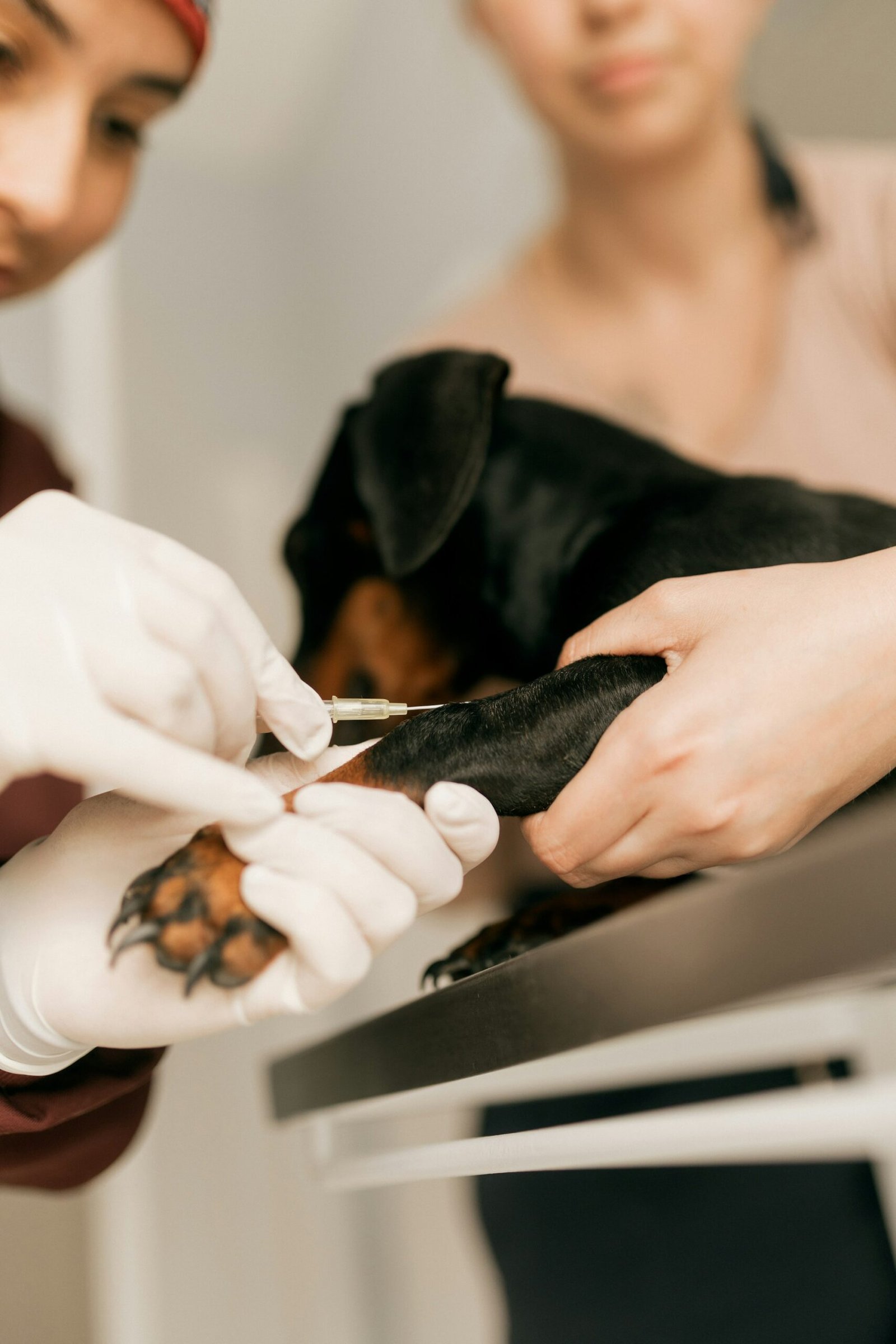
The core requirements for bringing a pet dog into Great Britain, per current GOV.UK guidance:
Microchipping, done before the rabies vaccination — the order matters.
Rabies vaccination, with a mandatory wait before travel: a minimum of 21 full days after the first vaccination (or the last of an initial course), though exact timing depends on the vaccine used — check with your vet.
A pet travel document from a vet, issued for your specific route — which document depends on the country you’re travelling from.
Tapeworm treatment for dogs (not always required, depending on route), which GOV.UK specifies must be given no less than 24 hours and no more than 5 days before arrival — a narrower window than people often expect.
A written declaration, unless you’re selling or transferring ownership, in which case the Balai rules above apply instead.
Every one of these has its own current guidance page on GOV.UK, and exact requirements can vary by your pet’s country of origin. This article makes the shape of the process legible — it isn’t a substitute for checking your specific situation with your vet and GOV.UK directly. Our puppy vaccinations guide has more on vaccination timing generally, and your vet is who’ll actually issue the paperwork, so loop them in early.
Getting any of this wrong carries a real consequence: GOV.UK states a pet may be put into quarantine for up to four months if the rules aren’t followed, or refused entry if travelling by sea. You’re responsible for any fees this creates.
What it costs
Costs vary significantly by airport, airline, route, and whether you’re using a specialist courier or handling logistics yourself, so treat any figure here as a starting point to confirm directly rather than a fixed price. Expect separate costs for the flight or cargo booking itself, the health certificate from your vet, and the reception centre’s own handling fee, which is charged in addition to the flight cost and varies by centre. Ring the specific airport’s reception centre and your airline directly for current figures before you commit to a booking — this is one area where a stale number online could leave you badly under-budgeted.
What goes wrong, and how to avoid it
Paperwork timed to the wrong moment. The rabies vaccination wait, the tapeworm window, and document validity periods all have to line up with your actual travel date. Work backwards from your flight date with your vet, not forwards from when paperwork started.
Assuming accompanied rules apply to an unaccompanied dog. If a rescue or puppy is arriving without you travelling too, don’t assume the standard process covers you — check the Balai rules position above first.
Not confirming your airline’s breed policy. Airlines set their own rules about which breeds they’ll carry as cargo, and flat-faced (brachycephalic) breeds — Bulldogs, Pugs, French Bulldogs and similar — are commonly restricted or refused by individual carriers, for genuine welfare reasons connected to their breathing. Policies differ by airline and change, so confirm directly rather than assuming based on another airline or something you’ve read elsewhere.
Leaving the ARC slot until the last minute. Reception centres need advance notice. Heathrow’s own guidance gives a 72-hour minimum for pre-approval — treat that as a floor, not a target.
Relying on someone else’s paperwork without checking it. Especially relevant for rescue dogs, where an overseas organisation has usually done most of the preparation. Ask to see the actual documents, not just a verbal assurance — a mismatched microchip number or a vaccination date a day short of the waiting period is easy to miss and hard to fix at the airport.
Rescue dogs arriving from overseas
A significant share of dogs arriving through UK Animal Reception Centres are rescues — dogs adopted through an overseas charity or foster network, often travelling as part of an organised transport rather than individually. If you’re adopting this way, the points above about the accompanied/unaccompanied distinction are especially relevant, since you’re very unlikely to be travelling alongside the dog yourself.
Ask the rescue organisation directly which category your dog’s journey falls into, who is named as the person collecting them, and what documentation you’ll be handed at collection versus what stays with the organisation. A well-run rescue will have done this many times and should be able to answer clearly; if the answers feel vague, that’s worth pressing on before the flight, not after. If you’re still deciding where to adopt from, our dog rescue shelter directory covers UK-based options too, which sidesteps this whole process entirely if that’s a genuine option for you.
Choosing an operator for an airport collection
Not every pet transport operator has genuine ARC experience — collecting from a reception centre involves its own paperwork, timing, and site-specific knowledge that a general local pet taxi may not have. Our pet transport hub covers the full list of questions worth asking any operator, and our Manchester pet transport guide is a working example of what a genuinely airport-experienced local operator looks like, alongside the DEFRA licensing detail worth checking on anyone you’re considering.
If your dog is arriving anxious after a long journey, getting them used to a crate well before travel makes a genuine difference — our crate training guide covers how, and it’s worth doing weeks ahead rather than the night before a flight.
Frequently Asked Questions
Here are some common questions dog owners may have about this topic.
What is an Animal Reception Centre?
It’s the facility at certain UK airports where pets arriving as cargo are checked and cleared before release to their owner — checking the microchip against paperwork, confirming health documentation, and coordinating with customs. Heathrow, Manchester and Edinburgh all have verified reception arrangements, though they operate differently.
Does my dog need to go through an Animal Reception Centre?
If your dog is flying into the UK as cargo, which is how most dogs travel by air, yes. The only routine exceptions are guide or assistance dogs and pets on chartered private flights.
What’s the difference between travelling with my dog and sending my dog unaccompanied?
Travelling within five days of your pet generally keeps you under the standard non-commercial Pet Travel Scheme. If your dog arrives more than five days before or after you, or if ownership is changing hands, additional rules (Balai rules) apply — check your specific situation with GOV.UK or APHA before booking.
How long does clearance take at an Animal Reception Centre?
It varies by airport. Manchester’s published guidance for owners gives a typical figure of around 90 minutes; other centres, including Heathrow’s, are more commonly quoted at several hours. Confirm directly with the specific centre and don’t book anything time-critical straight after.
Can any breed fly into the UK?
There’s no UK legal breed ban on flying, aside from breeds already banned from entering Great Britain at all. However, individual airlines set their own carriage policies, and flat-faced breeds are commonly restricted or refused by specific carriers on welfare grounds. Confirm directly with your airline.
What happens if my paperwork isn’t correct?
Current GOV.UK guidance states a pet may be put into quarantine for up to four months if the rules aren’t followed correctly, or refused entry if travelling by sea. You’re responsible for any resulting fees, which is exactly why timing the paperwork properly matters so much.
Written by Georgiana & Figo. Have a question we haven’t covered? Have a look around Calmshops or drop us a line — we answer everything.