
If you’ve brought a new puppy home in the last few days, you’ve probably already been told two things that don’t seem to fit together. Keep him in until he’s fully vaccinated, one person says. But the socialisation window closes at around sixteen weeks, says someone else, so don’t wait too long. Both are true, and taken together they can feel impossible.
They’re not, actually. There’s a genuine, well-recognised overlap between the period when a puppy is at highest risk of infection and the period when he’s learning what’s normal in the world — and there’s a practical way through it that most advice skips over in favour of just picking one side. That’s what this guide is for.
One thing before we start: this article exists to leave you better prepared for a conversation with your vet, not to replace one. Exact timings, which vaccines are used, and how many doses vary by practice, vaccine brand, and individual puppy, so treat anything here as the shape of what usually happens rather than instructions to follow on your own.
What puppies are vaccinated against in the UK
UK vets typically vaccinate against four core diseases: distemper, a virus attacking the nervous, respiratory and digestive systems, sometimes fatal in young puppies; parvovirus, a severe, highly contagious gut disease causing bloody diarrhoea and dehydration, which still kills unvaccinated dogs in the UK; infectious hepatitis (canine adenovirus), which affects the liver; and leptospirosis, a bacterial infection often spread via standing water, which can also pass to humans.
Depending on your puppy’s circumstances, your vet may also discuss kennel cough (Bordetella) if he’ll be going to daycare or classes, and rabies if you’re planning to travel abroad with him. None of this replaces your vet talking you through it — it’s just so the names on the paperwork make sense when you see them.
How the timing usually works
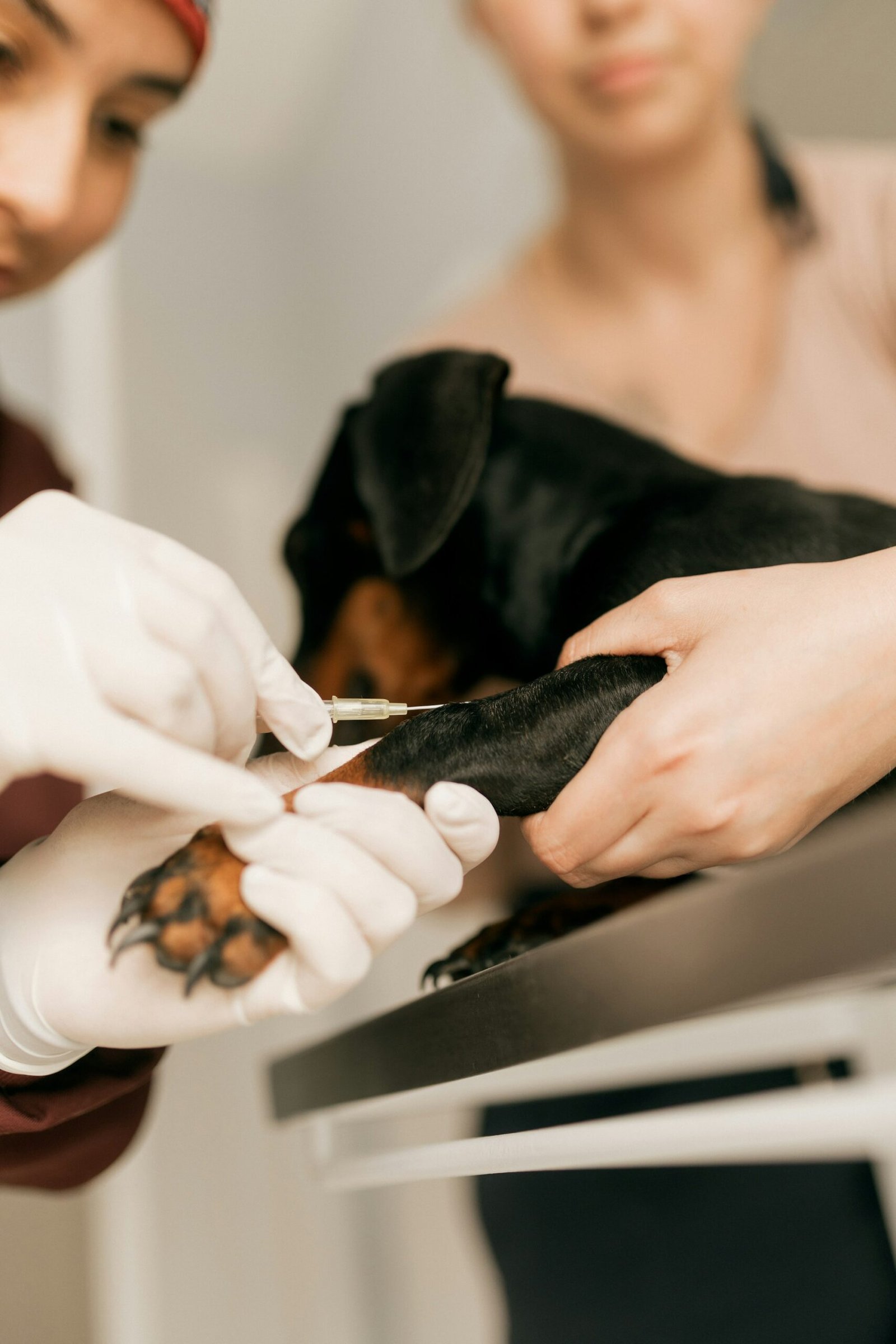
The RSPCA’s general guidance is that puppies are typically given their first vaccination at around eight to ten weeks old, occasionally earlier in some circumstances, with a second dose usually following two to four weeks later. Some puppies need a third dose, particularly if the course started very early. A booster then usually follows at six or twelve months, with annual or three-yearly boosters after that depending on which disease is being covered.
That’s the shape of it, so you’re not caught off guard by what your vet suggests — but your vet’s plan for your specific puppy is the one that actually matters, because practices vary genuinely and reasonably in how they run this. Don’t go in expecting a fixed internet schedule to match exactly.
One detail worth understanding: full protection doesn’t arrive the moment the last injection goes in. There’s a window afterwards — commonly one to two weeks, though your vet will confirm the timing for the vaccine they’ve used — before a puppy is considered fully covered. That gap is exactly why “when can he go outside” and “when is he vaccinated” aren’t quite the same question.
When can my puppy go outside?
This is the question underneath the question, and it’s where most content gives an unsatisfying half-answer.
Most UK veterinary advice, including guidance from Blue Cross and the PDSA, points to roughly two weeks after the final vaccination in the primary course before a puppy has full access to public outdoor spaces — pavements, grass, parks where other dogs have been. Depending on your vet’s exact schedule, that commonly lands somewhere around fourteen to sixteen weeks, though it varies, and your vet will confirm when your puppy specifically is covered. Until that point, don’t let him walk on ground unknown dogs have used, and don’t let him mix with dogs whose vaccination status you can’t confirm.
That’s the disease-risk side. Here’s the other half, because it matters just as much: the socialisation window — the period in which a puppy learns what’s normal, safe and unremarkable in the world — is generally understood to run to around twelve to sixteen weeks. Miss it, and you’re more likely to end up with a dog who finds ordinary things frightening as an adult: traffic, umbrellas, other dogs, strangers, vacuum cleaners. That’s a real, lasting cost.
So the two pieces of advice you’ve been given aren’t actually in conflict. “Don’t let him walk in public until he’s covered” and “socialise him before sixteen weeks” can both be followed at once — you just need to separate socialisation from ground-level public access, because they don’t require the same thing.
What you can safely do before full cover
This is the section that actually resolves the tension, so here’s the practical middle path.
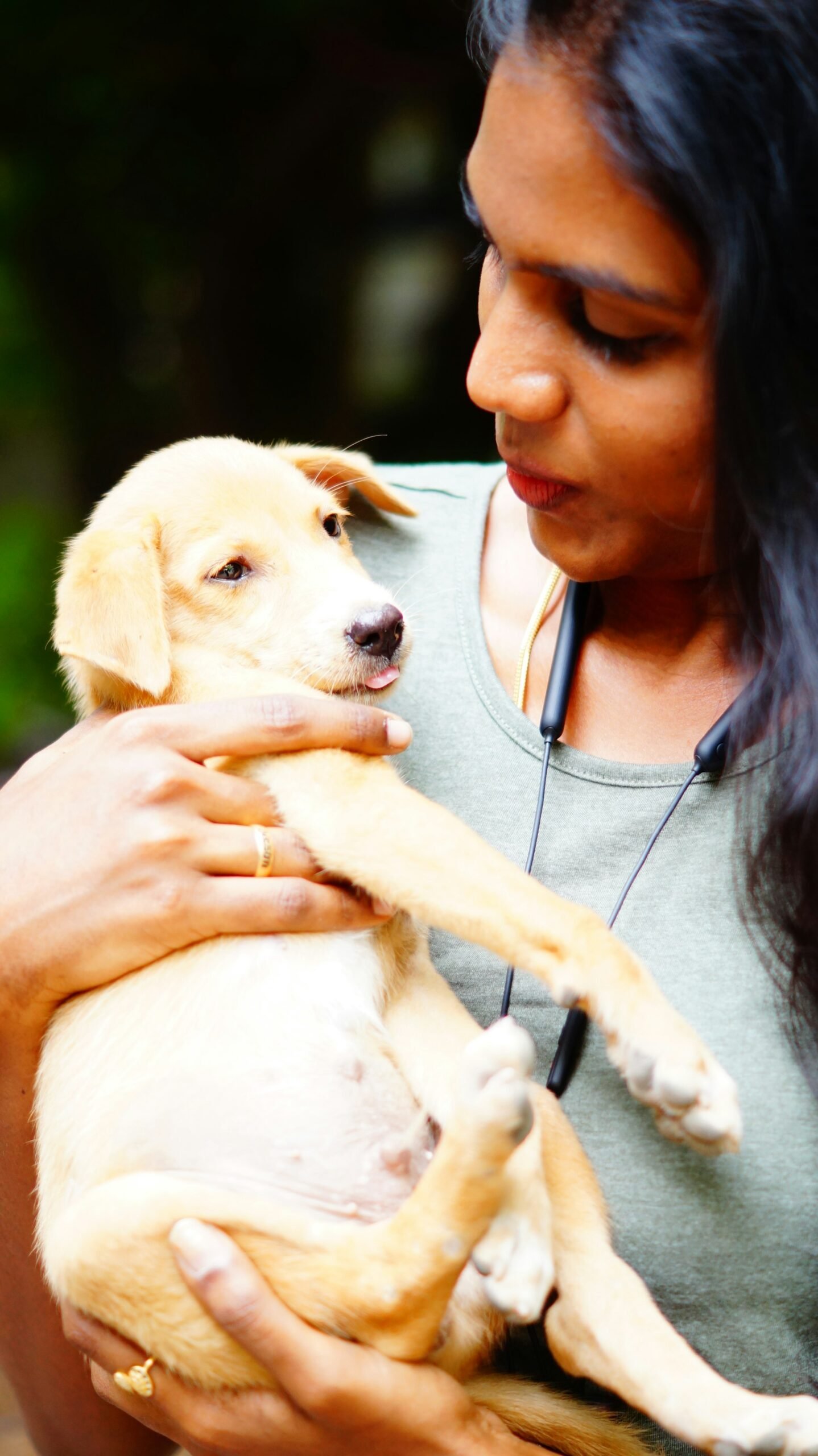
Carry him. A puppy in your arms, a sling, or a pushchair isn’t touching contaminated ground, so he can safely experience traffic, pushchairs, umbrellas, crowds, and all the ordinary, slightly chaotic texture of the world he needs to file away as normal. PDSA and Blue Cross both specifically recommend this.
Use your own garden, as long as no unwell or unvaccinated dogs have recently been in it.
Meet known, fully vaccinated adult dogs, in private. A calm adult dog belonging to a friend, met in a garden rather than a park, is a genuinely valuable, low-risk experience. Confirm their vaccination status first.
Look for puppy classes that require proof of first vaccination. Good ones ask to see it before your puppy touches the floor, and disinfect between sessions — supervised exposure without the risk of an open park. Our dog training near me guide is a good place to start.
Avoid dog parks, communal grass, and anywhere an unwell or unknown dog might recently have been, until your vet confirms he’s fully covered.
None of this requires choosing between disease protection and a well-adjusted adult dog — just knowing which specific activities carry the risk.
Why you can’t just keep him in until sixteen weeks
It’s tempting to think the simplest, safest option is to keep a puppy indoors entirely until fully vaccinated. It isn’t actually safer overall — it just trades one risk for a different, less visible one. Puppies who miss positive, varied exposure during this window are more likely to grow into anxious or reactive adult dogs — barking at things that move, struggling with visitors, finding ordinary walks stressful for both of you. That’s a real, lifelong cost, which is exactly why the carrying-and-private-garden approach above exists: so you don’t have to choose between the two risks.
What it costs, and ways to reduce it
Prices vary by practice and region, so ring two or three local vets and ask rather than expecting a single figure to hold everywhere. Many practices bundle the primary course, a health check, and microchipping into new-puppy packages, and plenty run Pet Health Clubs — a monthly plan folding vaccinations, flea and worm treatment, and routine checks into one payment, often cheaper than paying separately.
If cost is a genuine barrier, charitable and low-cost options exist. PDSA offers free or reduced-cost care to eligible owners on certain means-tested benefits, through its hospitals across the UK, subject to catchment area. RSPCA branches sometimes offer vouchers, and Dogs Trust runs schemes supporting owners in specific circumstances, including homelessness. Availability varies, so check directly with each organisation. Our pet insurance comparison is worth a look too — insurance and vaccination aren’t the same thing, but both are worth sorting early.
Boosters, travel, and what happens after the first year
Once the primary course is complete, most dogs need a booster at some point in their first year — commonly around twelve months — and ongoing boosters after that, with the interval depending on the disease: some annual, some every three years. Your vet’s reminder system will typically prompt you, and practices often combine this with a broader annual health check.
If you’re planning to travel abroad with your puppy, rabies vaccination and the wider pet travel scheme requirements need sorting well in advance, and rules differ by country. Our guide on travelling with your dog to Europe from the UK covers this in more detail — start early, since some paperwork has to be done a set number of weeks ahead.
Special cases
If your breeder has already given a first vaccination, ask for written proof — ideally the vaccination card itself — so your vet can pick up the course rather than guessing or restarting it. The same goes for rescue puppies: ask directly what’s been done and get it in writing before you collect him if possible. Our guide to where to buy a puppy in the UK covers what a good breeder or rescue should be handing over at collection. For imported puppies, or paperwork you can’t fully verify, be honest with your vet about the gaps — they may recommend blood testing or restarting parts of the course, which is a clinical judgement for them to make.
Side effects: what’s normal, what warrants a call
Mild tiredness, a small amount of swelling at the injection site, or being a little quieter than usual for a day afterwards is common and generally nothing to worry about. Speak to your vet if your puppy seems more than mildly unwell, if he’s vomiting, has diarrhoea, seems to be in pain, or if any swelling is significant or doesn’t settle — your vet’s practice will usually have given you guidance on what to watch for and how to reach them, including out of hours.
Two practical things to sort before he even comes home
Register with a vet before you collect your puppy, not after. Finding a practice, getting registered, and knowing where you’re going matters more than it sounds like it should in the chaos of the first few days. Our finding the best vets near me guide can help you shortlist somewhere local.
Get the vaccination card from the breeder or rescue, and take it to the first appointment. It’s a small piece of paper and it’s the single most useful thing you can hand your vet — it tells them exactly what’s already been done, so nothing gets missed or unnecessarily repeated.
While you’re getting organised, the other two things most new owners find hardest in that first week are the nights and the crate. Our guides to crate training a puppy and what to do when a puppy cries at night cover both, and toilet training starts the day he arrives.
A word on the choices your vet will make for you
There’s a genuine, ongoing difference of opinion among UK vets about certain aspects of protocol — which leptospirosis vaccine to use, for instance, since more than one type exists and practices reasonably differ in preference. That decision belongs to your vet, not this guide. The same goes for titre testing — a blood test checking existing antibody levels rather than automatically vaccinating — which some owners ask about. It’s a legitimate thing to discuss with your vet, but a clinical decision for the two of you, not something to decide from an article.
What matters more than any of these finer points is the mainstream position, which is unambiguous: vaccination against these diseases is safe, effective, and remains the recommended approach for UK puppies. If you’ve got worries, bring them to your vet directly rather than trying to resolve them yourself — they’d genuinely rather have that conversation than have you quietly decide not to vaccinate.
Frequently Asked Questions
Here are some common questions dog owners may have about this topic.
When can my puppy go outside in the UK?
Most vets advise full public access — walking on pavements and grass, meeting unknown dogs — around two weeks after the final vaccination in the primary course, which often lands around fourteen to sixteen weeks. Your vet will confirm the exact timing for your puppy.
Can I socialise my puppy before he’s fully vaccinated?
Yes, and you should. Carrying him outside, using your own garden, and arranging supervised meetings with known, fully vaccinated adult dogs are all considered safe ways to socialise before full cover.
How much do puppy vaccinations cost in the UK?
Prices vary by practice and region, so it’s worth ringing two or three local vets to compare. Many practices offer new-puppy packages or monthly Pet Health Club plans that bundle vaccination with other routine care.
What vaccines do puppies need in the UK?
Core vaccines typically cover distemper, parvovirus, infectious hepatitis, and leptospirosis. Kennel cough and rabies vaccines may also be recommended depending on your puppy’s lifestyle and any travel plans.
Is it normal for a puppy to be quiet after a vaccination?
Mild tiredness or slight soreness at the injection site for a day is common. Contact your vet if your puppy seems more than mildly unwell, is vomiting, or has significant swelling.
Written by Georgiana, who remembers carrying Figo round the block long before he was allowed to put a paw on the pavement. Have a puppy question we haven’t covered? Have a look around Calmshops or drop us a line — we answer everything.