

You’ve found the puppy. Deposit paid, a name half-picked, and now you’re looking at options to get them home — because the breeder’s four hours away, or you can’t get the time off to drive yourself, or a friend recommended a courier who “does this all the time.” Before you book anything, there’s one question worth answering honestly: have you actually been to see this puppy yet?
That single question is the whole of this article, really. Everything else is detail.
If you haven’t found your puppy yet, our guide to where to buy a puppy in the UK covers finding a reputable breeder and spotting the warning signs before you’re anywhere near the courier stage.
When a courier is fine, and when it isn’t
Here’s the distinction that matters, and it has nothing to do with the courier themselves: a good pet transport operator is simply logistics, and logistics can be entirely legitimate or entirely the wrong move, depending on what happened before they were booked.
If you’ve visited the breeder, seen the puppy with its mother, asked your questions, chosen your pup, paid a deposit in person or after a proper video call that showed you the real setup — and you’re now booking a courier purely to handle the drive because you can’t make the return trip yourself — that’s completely fine. It’s exactly the kind of legitimate use this directory exists to support, and plenty of good operators do this work well.
If a puppy is simply going to arrive, chosen from photos, with no visit and no real sense of where it actually came from, that’s a different situation entirely — and it’s the exact mechanism the law around puppy sales exists to prevent. A courier removes the one check that matters most: you seeing the place your puppy was actually born and raised, with its mother, before you commit.
This isn’t about couriers being dodgy. It’s about what a courier can and can’t tell you. A transport operator can tell you their vehicle is climate-controlled and their driver is DBS-checked. They cannot tell you whether the breeder they collected from is who they claim to be, because that was never their job.
What the law actually requires — and it’s genuinely different across the UK

We checked this directly rather than assume it carries over from one part of the UK to another, because it doesn’t — and getting it wrong here matters more than almost anywhere else on this site.
England. Since 6 April 2020, third-party sales of puppies under six months old are banned — this is what’s commonly called Lucy’s Law, formally an amendment to the Animal Welfare (Licensing of Activities Involving Animals) (England) Regulations 2018. A licensed breeder must sell the puppy from the place it was bred. The legislation itself (Schedule 6) is specific: a puppy under 8 weeks old may not be sold or permanently separated from its mother, and a puppy may only be shown to a prospective buyer together with its biological mother.
Wales. The Animal Welfare (Licensing of Activities Involving Animals) (Wales) Regulations 2021 came into force on 10 September 2021, with the same core requirement — a seller must have bred the puppy at the registered premises, and puppies must be at least 8 weeks old before sale.
Scotland. The Animal Welfare (Licensing of Activities Involving Animals) (Scotland) Regulations 2021 came into force on 1 September 2021, banning the third-party sale of puppies and kittens as part of a business, with equivalent breeding and welfare licensing requirements.
Northern Ireland — genuinely different, and worth knowing. As of when this was researched, Northern Ireland does not yet have its own version of Lucy’s Law in force. DAERA (the Department of Agriculture, Environment and Rural Affairs) published its response to a public consultation in February 2026 confirming the intention to introduce equivalent legislation, with the minister indicating it was anticipated in autumn 2026. Until that legislation actually commences, the protections described above for England, Scotland and Wales don’t have a direct equivalent in Northern Ireland. If you’re buying a puppy in or into Northern Ireland, check DAERA’s current position before assuming the same rules apply.
None of this is about distrust of couriers — it’s entirely about where the puppy came from before a courier was ever involved. Rules and dates can change; if anything here matters to a purchase you’re about to make, it’s worth a direct check against GOV.UK, GOV.WALES, GOV.SCOT or DAERA before you commit.
What a good puppy courier does differently
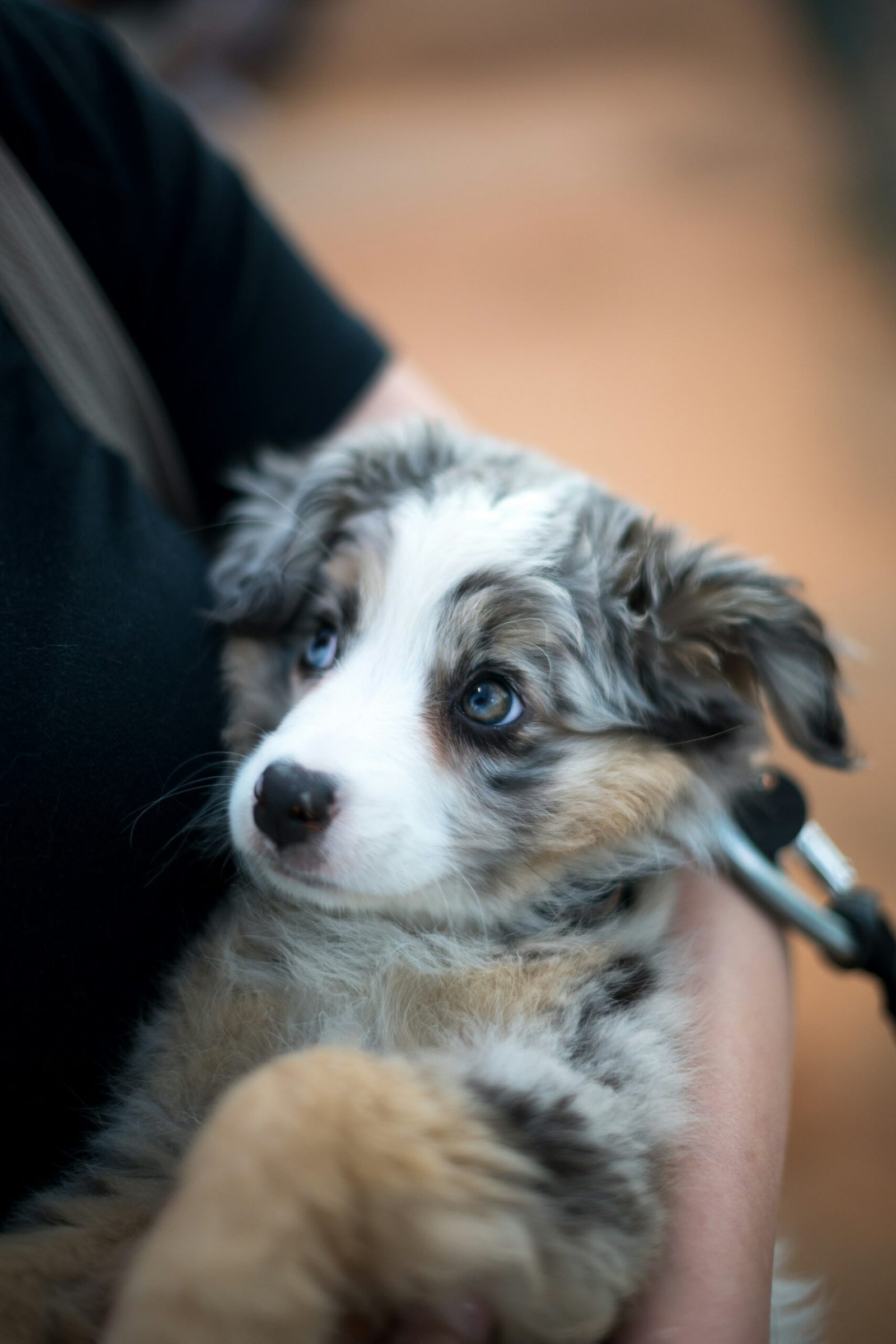
A puppy’s first long journey is a genuine welfare event on its own terms — a young animal, freshly separated from its litter, in a vehicle with someone it’s never met. A good operator treats that differently from transporting an adult dog.
Age and readiness matter. Most reputable operators won’t collect a puppy before 8 weeks old, matching the legal minimum for sale in England, Scotland and Wales, and many prefer to wait until the first vaccination has been given — check the current requirement with your vet, since timing depends on the vaccine used.
One family’s puppies at a time. A good courier transports your puppy alone, or with genuine littermates going to the same family — not a van carrying puppies from several unrelated litters on one run. This isn’t just about a calmer journey; it’s a genuine disease-transmission point. A young, not-yet-fully-vaccinated puppy mixing with others from different sources in an enclosed space is a real infection risk, not a theoretical one.
Comfort breaks and a settled pace, rather than treating a puppy delivery like a parcel run with multiple stops.
The handover itself. A properly run collection involves a photo and signature at both ends — when the courier collects from the breeder, and when they hand the puppy to you — and clarity about exactly who is authorised to release and receive the puppy. This paper trail matters; it’s the difference between a documented, traceable movement and one that simply happened.
An operator who’s done this many times will answer every one of these questions without hesitation, because they’ve answered them a hundred times before. Hesitation, vagueness, or a slightly annoyed “don’t worry about it” is itself the answer — a genuinely good operator finds these questions completely normal.
Questions worth asking before you book
Beyond our pet transport hub’s general questions, these are specific to a puppy collection — and if the breeder’s in the Manchester area, our Manchester pet transport guide covers locally-verified operators specifically:
- What’s the minimum age you’ll collect a puppy at, and do you check vaccination status before travel?
- Will my puppy travel alone, or with other puppies from different litters?
- What happens at collection — do you photograph and confirm details with the breeder directly?
- What happens at handover to me — will I get a photo and confirmation of collection?
- What do you do if a puppy seems unwell or distressed during the journey?
- Have you transported this breed before, particularly if it’s a flat-faced or giant breed?
- Can you provide your DEFRA authorisation reference?
Red flags to watch for
None of these automatically mean something’s wrong, but together or in combination they’re worth pausing over:
- The car park or motorway services handover. A puppy handed over anywhere other than a proper address, with no chance to see where it actually came from.
- Delivery offered before you’ve visited. If a seller suggests couriering the puppy to you before you’ve asked to see it with its mother, that’s worth questioning directly, not just accepting as convenient.
- Cash only, with no paper trail.
- No DEFRA authorisation reference offered, or reluctance to provide one.
- Vagueness about where the puppy is actually coming from — a breeder’s address, a rescue’s registration, anything that should be a simple, confident answer met with hesitation.
If you’re seeing more than one of these at once, it’s worth stepping back rather than proceeding on momentum because a deposit’s already been paid.
Preparing for the day the puppy arrives

Once the logistics are sorted, the preparation that actually matters is at home. Getting a crate set up and familiar before your puppy arrives makes a genuine difference to how settled they feel — our crate training guide covers how to do this properly, and it’s worth starting before collection day if you can. The first night or two is very often the hardest part of the whole process, harder than the journey itself for a lot of puppies — our guide to puppy crying at night is honest about what to expect and how to get through it.
Vaccination timing is a conversation for your vet specifically, not something to guess at — our puppy vaccinations guide covers the general shape of it, including the socialisation-window tension that comes up constantly in the first few months.
For a puppy who’s had a long or stressful journey, some owners find a natural calming supplement helps take the edge off the first day or two — Calmdogs Calming Bites are one option some of our readers use. It’s a complementary feed rather than anything medical, worth mentioning to your vet if your puppy seems more than ordinarily unsettled.
Imported puppies — different rules again
If your puppy is coming from overseas rather than from within the UK, an entirely separate set of rules applies, on top of everything above — import paperwork, rabies vaccination timing, and often an Animal Reception Centre at the airport. Our guide to Animal Reception Centres in the UK covers what happens when a puppy flies in, including the accompanied-versus-unaccompanied distinction that applies there too, and it’s worth reading in full before committing to an overseas breeder or rescue.
If you’d rather adopt than buy, our dog rescue shelter directory is a good place to start, and it sidesteps a good deal of this entirely.
Frequently Asked Questions
Here are some common questions dog owners may have about this topic.
Is it legal to use a courier to collect a puppy?
Yes, provided you’ve already visited the breeder and seen the puppy with its mother before booking transport. The law targets third-party sales — a puppy sold or delivered by someone other than the breeder without the buyer ever visiting — not the act of arranging transport after a legitimate, in-person purchase.
What is Lucy’s Law, and does it apply everywhere in the UK?
Lucy’s Law bans the third-party sale of puppies and kittens under six months old. It’s in force in England (since April 2020), Wales (since September 2021) and Scotland (since September 2021). As of this article’s research, Northern Ireland does not yet have equivalent legislation in force, though it has been proposed with an anticipated introduction in autumn 2026 — check DAERA’s current position directly.
How old should a puppy be before it’s collected or transported?
The legal minimum age for sale in England, Scotland and Wales is 8 weeks. Most reputable couriers won’t collect a puppy younger than this, and many prefer to wait until after the first vaccination — confirm current guidance with your vet.
Should my puppy travel alone or with other puppies?
Ideally alone, or only with genuine littermates going to your household. Mixing puppies from different sources on one journey is a real disease-transmission risk for animals that may not be fully vaccinated yet.
What should happen when the puppy is handed over to me?
A good operator confirms the handover with a photo and signature, and is clear about who is authorised to release and receive the puppy. If this feels vague or rushed, that’s worth questioning.
Written by Georgiana & Figo. Have a question we haven’t covered? Have a look around Calmshops or drop us a line — we answer everything.