

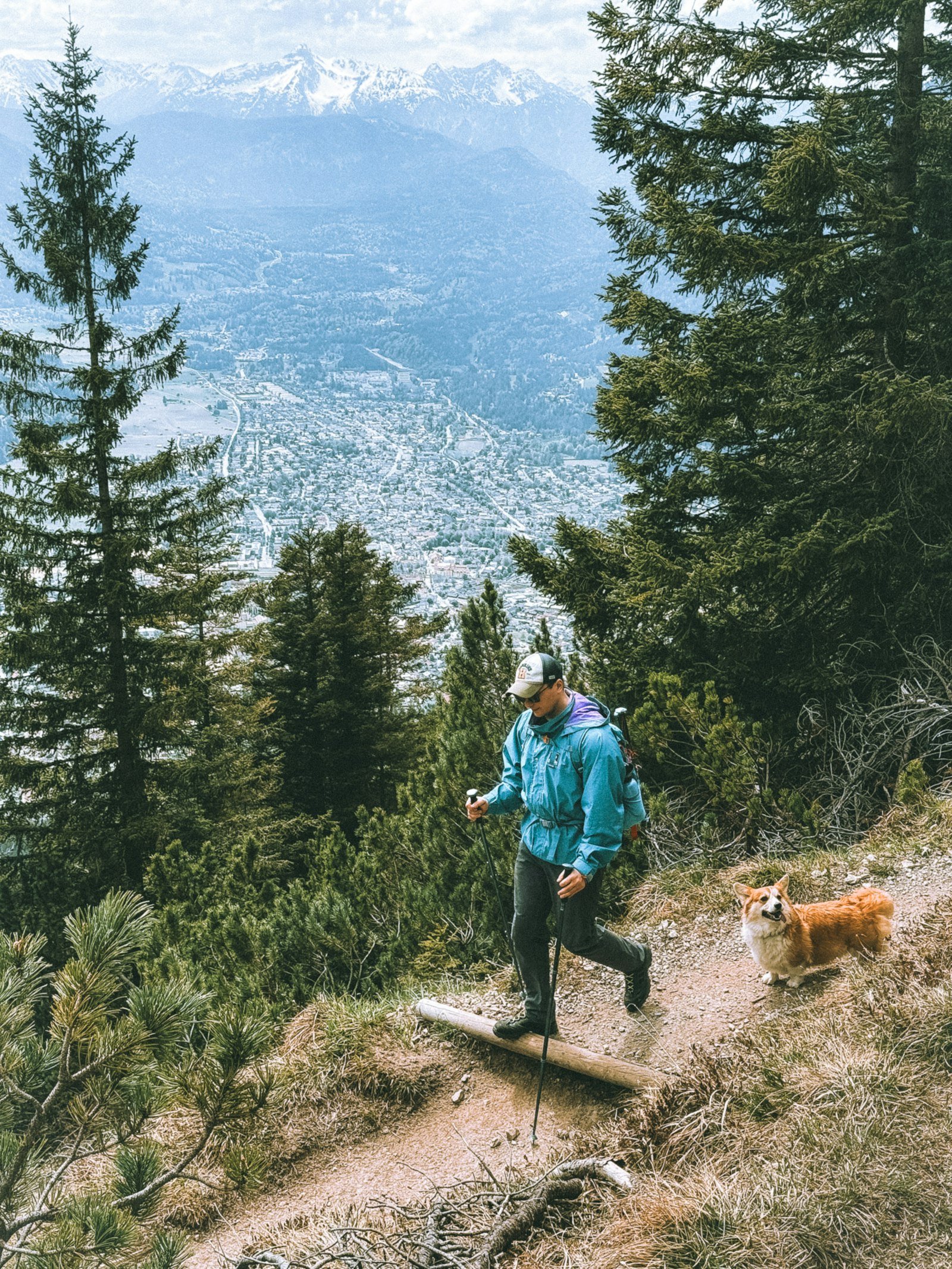
Monmouthshire’s best dog walks run from Cadw’s castles and Tintern Abbey up to National Trust hills on the Brecon Beacons fringe, with a Gwent Wildlife Trust reserve and a council-run country park thrown in. As with most counties, the rules are site-specific rather than one blanket policy, and a couple of well-known Wye Valley spots sit just over the border in England rather than inside Monmouthshire itself.
Cadw castles: Raglan and Chepstow
Both Raglan Castle and Chepstow Castle carry the same published rule, direct from Cadw’s own site: “dogs on short leads welcome to access ground floor levels of the site.” Only assistance dogs can go further. Tintern Abbey appears on Cadw’s own dog-friendly days-out list, but has no extra site-specific text beyond that general policy — treat the general rule as what applies there too, since Cadw doesn’t publish anything more specific for Tintern itself.
Sugar Loaf and Skirrid Fawr — National Trust
Both managed by the National Trust, on the Brecon Beacons (Bannau Brycheiniog) fringe near Abergavenny. The Trust’s own page for Sugar Loaf asks for a short lead around sheep, and to let your dog off and recall them once clear of cattle; the general “close control” standard applies elsewhere, with no specific named off-lead zone — check on-site signage. Skirrid Fawr’s own page says dogs are welcome but must be kept on a short lead around livestock. Despite both being known lambing/livestock sites, neither page publishes a specific seasonal closure date — the Trust defers to on-site signage rather than a fixed calendar, so we haven’t invented one either.

Caldicot Castle & Country Park
Run by Monmouthshire County Council rather than Cadw. The council’s own dog-friendly-sites page lists the castle among historic sites needing a short lead, and the wider countywide Public Spaces Protection Order (1 June 2024 to 31 May 2027) sets a 2-metre lead requirement in specified zones, around 180 exclusion areas (mainly sports pitches and play areas) and a general clean-up duty. We couldn’t confirm from the published text alone whether the Country Park itself (as opposed to the castle grounds) falls inside an on-lead zone, an exclusion zone, or neither — the order’s area maps are only published as site-coded PDFs we couldn’t resolve to plain-English site names. Worth a call to Monmouthshire Environmental Health before assuming either way.
Wyeswood Common — Gwent Wildlife Trust
Near Penallt, Monmouth. The reserve’s own page states dogs must be kept on a lead and under close control. Gwent Wildlife Trust’s general policy (applying trust-wide, not just here) treats an off-lead dog as “not under control,” bans commercial dog walking outright, and can impose temporary total dog exclusions during lambing, calving or nesting season on a reserve-by-reserve basis, announced via on-site notices rather than a fixed calendar. Several other Trust reserves ban dogs outright entirely (Magor Marsh, Brockwells Meadows, Bridewell Common) — a reminder that the Trust’s general default doesn’t apply uniformly everywhere.
Genuine gaps and geography flags
The Blorenge, common land straddling the Monmouthshire/Blaenau Gwent/Torfaen boundary, has no identifiable managing body with a published dog-specific rule — only the general Countryside Code default applies, not an official site policy. Neither the Wye Valley Walk nor the Usk Valley Walk has one blanket dog policy, since both long-distance paths cross multiple landowners and authorities — rules vary stretch by stretch. One important correction: Symonds Yat, often mentioned alongside Monmouthshire’s stretch of the Wye Valley, is genuinely in Gloucestershire and Herefordshire, England — not Monmouthshire, Wales — so we’ve left it out of this guide rather than claim it as a local site.
Between castle ground-floor-only rules and livestock country on the hills, Monmouthshire takes a bit of checking before you let your dog off the lead. A calming bite can help take the edge off a walk somewhere busy and new, like a castle on a bank holiday. If your dog struggles to settle regardless of where you walk, that’s worth a conversation with your vet or a qualified trainer.
Frequently Asked Questions
Can I take my dog into Raglan or Chepstow Castle?
Yes, on a short lead and to ground floor levels only — Cadw’s published policy for both sites.
Is Symonds Yat in Monmouthshire?
No — despite being closely associated with the Wye Valley, Symonds Yat is genuinely in Gloucestershire and Herefordshire, England, not Monmouthshire, Wales.
Is there a lambing-season closure at Sugar Loaf or Skirrid Fawr?
The National Trust doesn’t publish a fixed seasonal closure date for either — it defers to on-site signage, so check when you arrive rather than relying on a calendar date.
For everything else dog-related in Monmouthshire, see our Dog Services in Monmouthshire hub — and if you fancy staying over for a longer explore, our guide to dog-friendly accommodation in Monmouthshire has the verified options.
Written by Georgiana & Figo, who has never met a castle lawn he didn’t want to inspect thoroughly.

