
You see another dog at the end of the road, and your dog’s body changes. The lead goes tight, the barking or lunging starts, and you’re left apologising to a stranger while trying to hold on. If this is your daily walk, you’re far from alone, and it’s not a sign you’re doing everything wrong.
Here’s the short version. A dog who pulls and reacts to other dogs is usually struggling with a big feeling, such as fear, frustration or overexcitement, not being naughty. The way forward is to rule out pain, give him more distance from other dogs, reward him for staying calm, and get professional help if it’s strong. Shouting and yanking make it worse.
What is a reactive dog?
The Dogs Trust defines reactivity as a heightened emotional response to something in the environment, such as another dog, a person or a noise. It isn’t bad behaviour. It’s a dog finding it hard to cope. The behaviour you see, barking, lunging, growling, is the visible part. Underneath it is usually one of these:
- Fear or anxiety. Barking and lunging often work: the other dog moves away. So the dog learns to repeat it.
- Frustration on the lead. He wants to say hello (or get away) and can’t.
- Overarousal. Excitement builds until he can’t control himself.
- Past experiences or limited early socialisation.
- Pain or a health problem. The Dogs Trust says it’s important to rule out health conditions early.
Tension on the lead can feed into it too. A tight lead can make a dog feel trapped.
Why does my dog pull as well?
They often go together. Blue Cross explains that most dogs who pull have learned to do so, because pulling gets them where they want to go. Walks turn into a race to the interesting thing. When the interesting thing is another dog, the pull gets harder and the feeling behind it gets bigger.
Pulling and reacting are two separate problems. Teaching a calm walk on a loose lead helps, but it won’t fix the emotion on its own.
Step 1: See your vet
If the reactivity is new or has got worse, book a check. The Dogs Trust says it’s important to rule out underlying health conditions at the start of reactive behaviour. Sore joints, ear problems and other pain can make a dog much less tolerant. Our guide to finding a good vet can help if you’re looking for one.
Step 2: Learn his early warning signs
Before the lunge, there’s usually something smaller: lip-licking, yawning, turning his head away, stiffening, staring or refusing treats. The Dogs Trust lists lip-licking, yawning and pulling the ears back as early signs of fear and anxiety. The earlier you spot them, the more room you have to move him away before he’s over the edge.
Keep a diary for a week of where it happens, how far away the other dog was, and what he did. Patterns appear quickly.
Step 3: Stop practising the reaction
Every lunge is a rehearsal. For now, avoid the situations that set him off while you begin longer-term work. Walk at quieter times, cross the road early, and turn around if you need to. That isn’t giving in. It lets him calm down so he can learn.
If you have access to a secure, private field, it’s worth using it while you build skills. We list bookable options in our guides to secure dog fields in Manchester and in London, and we have the same for other areas too.
Step 4: Use distance, and pair other dogs with good things
The Dogs Trust is clear: the further away you are from what worries your dog, the easier he finds it. Find the distance where he can see another dog and still take a treat. That’s your starting line.
At that distance, the moment he notices the other dog, reward him. The aim is to pair other dogs with good feelings and to reward calm behaviour whenever you see it. As he relaxes, you can gradually close the gap, but only at his pace. Pushing too far, too fast is the most common reason it stalls. Encourage him to turn away with you, with treats, praise or a toy, rather than hauling him off.
If you use a clicker, our guide to clicker training shows how to mark the exact moment he stays calm.
Step 5: Teach loose-lead walking away from the trigger
Practise somewhere quiet first. The RSPCA’s method is to stand still, reward him when he looks at you, move off and reward him whenever the lead is loose, and stop if he wanders off before the lead tightens. Blue Cross adds that stopping when he pulls teaches him that pulling doesn’t get him where he wants to go. Use treats he loves, and bring plenty.
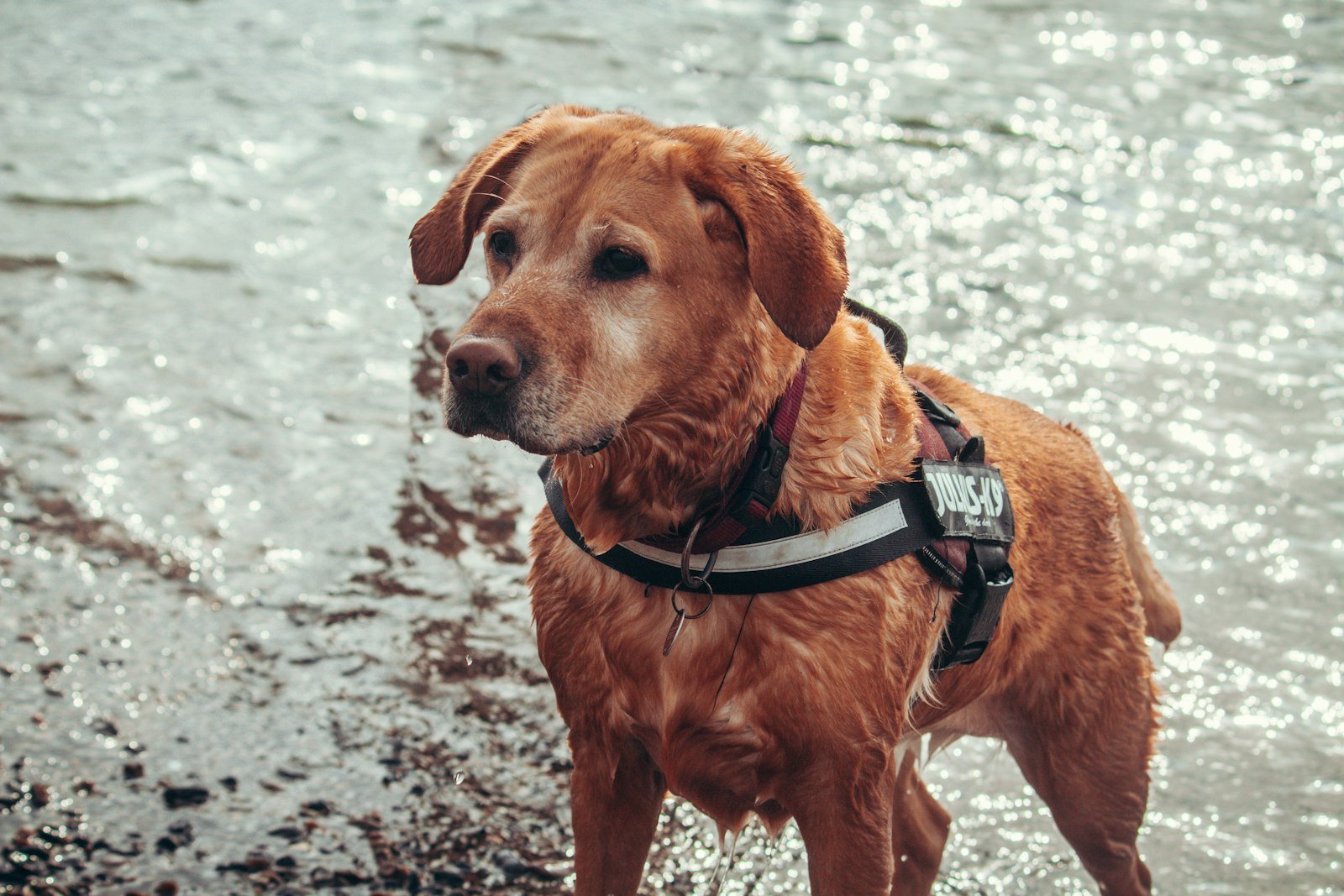
Equipment helps with control but doesn’t fix the cause. The Dogs Trust suggests a Y-shaped, fixed-size harness for support and comfort, and says a harness should stay put as your dog moves without letting him slip out. Blue Cross says a headcollar can give more control for strong dogs but shouldn’t be a long-term fix, and needs a slow, positive introduction. A good lead that’s comfortable in your hand makes it easier to keep it slack. A muzzle can keep everyone safe, but the Dogs Trust notes it won’t change how your dog feels about the trigger.
What not to do
- Don’t tell him off. The Dogs Trust warns it can raise his stress and remove a useful warning signal, such as growling.
- Don’t force greetings. “He just wants to say hello” is the sentence most reactive dogs’ owners hear most often. Walk on.
- Don’t make him face his fear. Behaviour change happens at his pace.
When to get a professional
Reactivity that involves growling, lunging or snapping, or that is getting worse, is worth professional help. The Dogs Trust recommends support from your vet and a clinical behaviourist. Our dog trainer directory is a good starting point, and our guide to one-to-one dog training explains what a session involves. If your dog is a rescue, our post on training a rescue dog with a difficult past covers why history matters. And if you’re unsure where he can legally be off the lead, see our guide to when your dog must be on a lead.
You may never end up with a dog who loves meeting every dog he sees, and that’s fine. A dog who can walk past calmly is a win.
Frequently Asked Questions
Why does my dog bark and lunge at other dogs on the lead?
Usually fear, frustration or overexcitement, made worse because he can’t move away or say hello on the lead. If it has worked to make the other dog go away, he will repeat it.
Is my dog aggressive or reactive?
Reactive means a strong emotional response to a trigger. It can look aggressive, but the cause is often fear or frustration. If he growls, lunges or snaps, ask your vet and a clinical behaviourist to assess him.
Should I let my reactive dog say hello to other dogs?
Not while he’s struggling. Forced greetings on a lead can make things worse. Keep your distance and reward calm behaviour instead.
Will a harness or head collar stop my dog pulling?
Equipment can give you more control, but it won’t change why he pulls. Teach loose-lead walking with rewards, and introduce any new gear slowly and positively.
When should I call a behaviourist?
If reactivity is strong, getting worse, or involves growling or snapping, see your vet first to rule out pain, then ask for a clinical behaviourist or qualified reward-based trainer.
Written by Georgiana & Figo.