

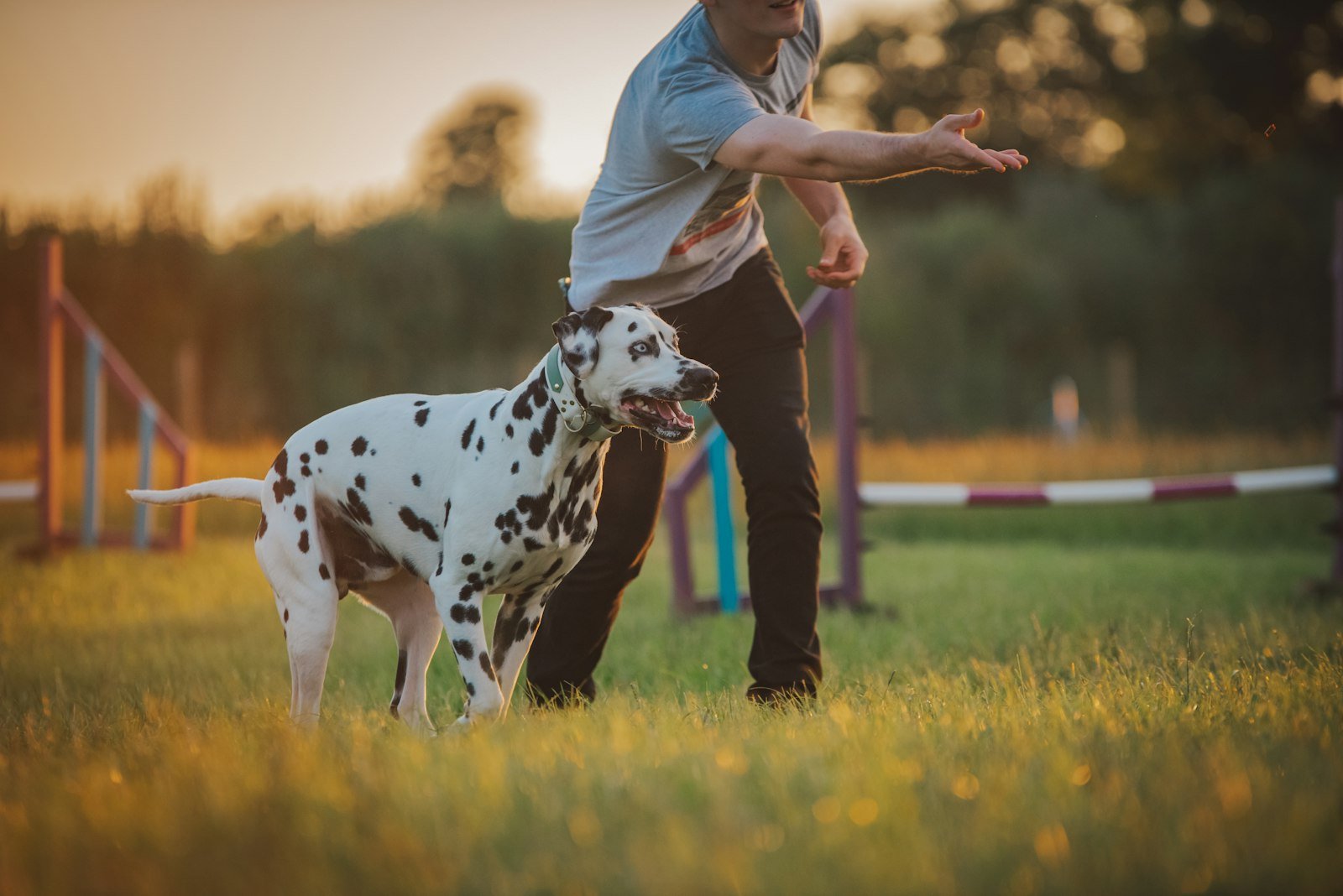
Indoors, your dog sits, waits, comes when called and looks at you like you hung the moon. Step out of the front door and he’s a different dog: deaf to his name, hauling on the lead, nose glued to the pavement. It’s maddening, and it feels personal. It isn’t.
A dog who ignores you outside but listens at home hasn’t forgotten his training. He never finished learning it. Dogs learn by place and situation, not by word, so “sit” in the kitchen and “sit” at the park are two different lessons to him. The fix is to teach the second one properly, in small steps.
Why does my dog listen at home but not outside?
Three things stack up the moment you leave the house.
Learning is tied to the place. A skill learned in one room doesn’t automatically carry to the next, let alone the street. A 2014 study in PLoS One by Hertel, Kaminski and Tomasello found that dogs broke a learned “don’t take the treat” rule more often when the person who set it left the room or a stranger was present. The authors concluded that dogs may treat a rule as tied to the immediate situation rather than as a general one. Add a busy pavement and a dozen new smells and it’s the same problem, only much bigger.
Outside is more interesting than you. Another dog, a squirrel, a dropped chip: all of it can win, especially if the reward on offer from you is a dry biscuit.
Your dog may be overwhelmed, not stubborn. A dog who is too excited, nervous or stimulated to think won’t respond to anyone. If he’s panting, pulling hard and ignoring even food, he isn’t being cheeky; he’s over his limit.
Step 1: Go back a stage, and don’t feel bad about it
If he doesn’t respond outside, you’ve asked for too much, too soon. Drop back to somewhere quiet, such as the garden or the hallway, and make it easy again. The Dogs Trust recommends starting indoors, in the garden or another enclosed space, with tasty treats to hand, and building out into the world from there.
Step 2: Raise the reward
What works as payment in the kitchen won’t compete with the park. The Dogs Trust advises exciting, tempting rewards, and high-value treats once you add distractions. Something soft and smelly, like cheese or chicken, usually does the job. A game with a toy counts too, if that’s what he loves.
Step 3: Add distractions one notch at a time
Think of it as a ladder:
- Quiet room indoors
- Busier room, or with a family member moving around
- Garden
- Front step or quiet street
- A quiet park at a quiet time
- Somewhere with other dogs, at a distance
Spend a few sessions on each rung before moving on. The Dogs Trust advises gradually increasing both the distance between you and your dog and the level of distraction you call him away from. If he fails, go back one rung rather than repeating the request. Our guide to teaching a reliable recall walks through the same idea for coming back when called.
Step 4: Use a long line while you build it
Until it’s reliable, he shouldn’t be able to practise ignoring you. A long line clipped to a harness keeps him safe while he’s learning. The Dogs Trust says to guide him in gently if he doesn’t respond, never pull him towards you, and only let him off in secure areas if he keeps running off. A sturdy lead is worth having for the in-between stage when he’s learning to pay attention on the walk.
Don’t repeat the cue if you think he won’t come. The Dogs Trust warns that calling again when he’s unlikely to return can teach him it’s fine not to.
Step 5: Make yourself worth listening to
Check in with him on walks. Reward him for looking at you without being asked. Give him short bursts of fun, such as a game of tug or a scatter of treats in the grass, rather than only calling him when it’s time to go home. Dogs who learn that coming to you means the fun ends will, quite sensibly, avoid it. Our piece on clicker training explains how a clear marker helps him know exactly what earned the treat.
Common mistakes
- Shouting. The Dogs Trust notes that getting angry can make a dog less willing to come back.
- Testing him off-lead too early. Every time he ignores you and gets away with it, he practises ignoring you.
- Only training when it’s easy. If he only hears his cues at home, that’s where they’ll work. Our list of common dog training mistakes will help you spot the rest.
- Forgetting the law. If he isn’t reliable, he needs to be on a lead in many places. Our guide to when your dog needs to be on a lead covers it.
When to ask for help
If he seems frightened rather than distracted, if he reacts strongly to other dogs, or if you’ve worked the ladder for a few weeks without progress, a trainer can see what you can’t. Our dog trainer directory lists reward-based trainers, and our guide to one-to-one dog training explains what a session looks like. If he’s suddenly stopped responding when he used to, speak to your vet to rule out pain or hearing problems.
Frequently Asked Questions
Why does my dog listen at home but ignore me outside?
Dogs learn by place and situation. A cue taught indoors hasn’t necessarily been learned in a busy street, where smells, dogs and people compete for his attention. He needs to be taught it again, in steps, with better rewards.
Is my dog being stubborn or dominant?
Almost never. Most dogs who ignore cues outside are distracted, overstimulated or haven’t yet learned the skill in that setting. Treat it as a training gap, not a battle.
What treats work best for training outdoors?
Something soft, smelly and special that he doesn’t get at home, such as cooked chicken or cheese in small pieces, or a favourite toy game. Reduce his meal portions slightly on heavy training days to avoid weight gain.
How long will it take for my dog to listen outside?
It varies with age, breed and history, but expect weeks of short, regular sessions rather than days. Move up the ladder only when he’s reliable on the current rung.
When should I see a vet or trainer?
See your vet if he’s suddenly stopped responding, as pain or hearing changes could be involved. Ask a reward-based trainer for help if he seems frightened outside or you’ve made no progress after a few weeks.
Written by Georgiana & Figo.

