

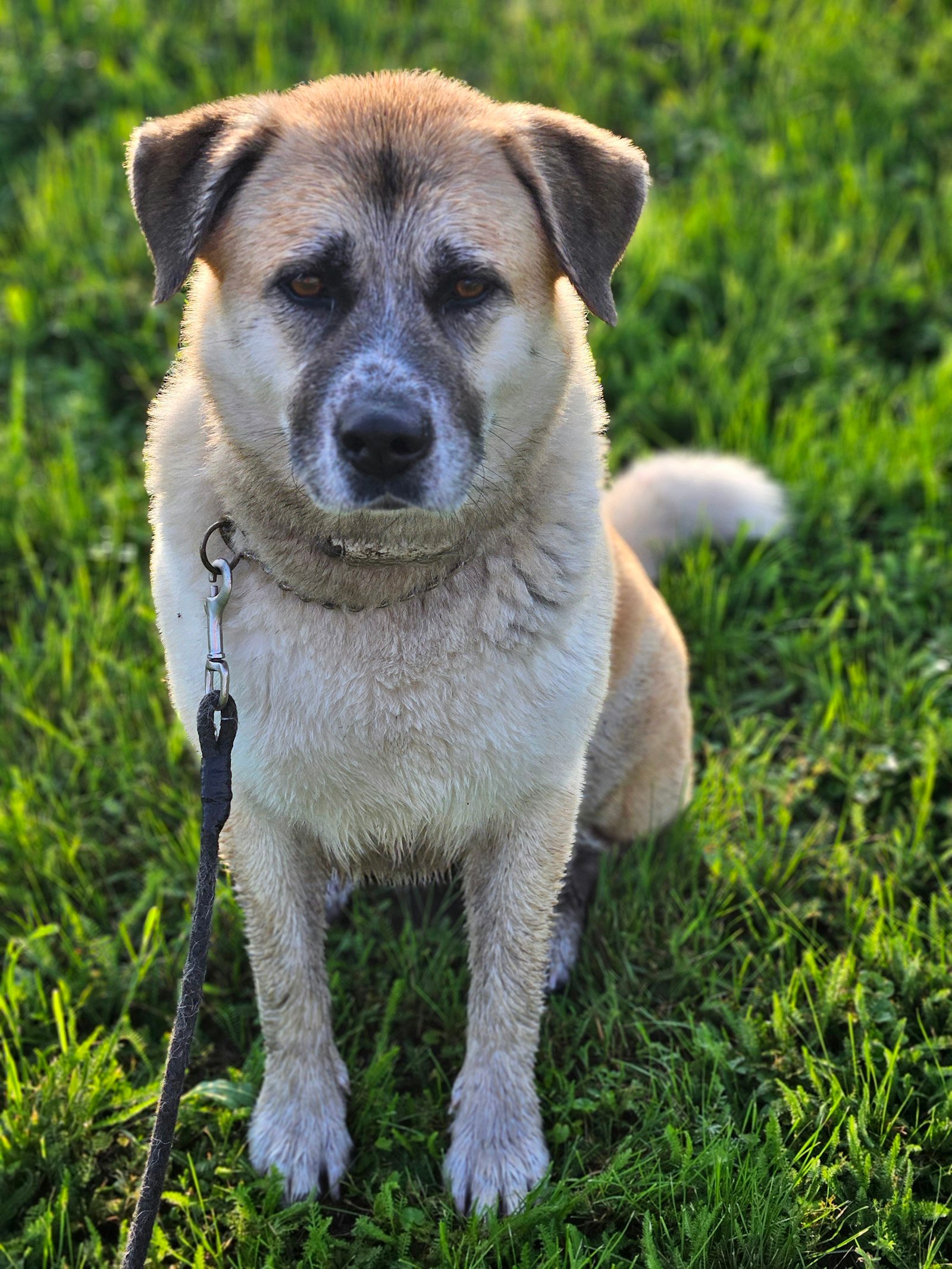
The doorbell goes, and your dog is at the door before the chime has finished, barking as if the house were under siege. Ten minutes later the postman goes past the window and it all happens again. Figo was exactly like this: a bark that could strip paint, aimed at everyone who walked past our front window, and the postman most of all.
You can stop a dog barking at the doorbell, but it takes a plan rather than a louder “no”. The good news is that the plan is the same for the bell, the postman and the people walking past: take away the practice, then teach him something better to do.
Why does my dog bark at the doorbell and the postman?
Because to him the door is the edge of his territory, and the bell means something is about to happen. The Kennel Club describes it as territorial barking: the dog is telling you someone is on his patch. The PDSA adds that doorway barking can also come from excitement, frustration, wanting attention, or nervousness about strangers coming into the house, and often a mix of all of them.
There’s also a learning loop. The PDSA points out that if barking seems to make a delivery driver go away, the dog may keep doing it. From his side, the postman arrives, he barks, the postman leaves. It works every single day.
That loop is why the postman is usually the hardest one. You can’t change when he turns up, so the work is all in changing what your dog does.
Step 1: Make the practice harder to get
Every rehearsal makes the habit stronger, so reduce them before you start training.
- Cut the view. Frosted window film or a lower curtain stops him watching the street. The Dogs Trust suggests closing curtains, using frosted film, and blocking access to the window with a stair gate or by moving furniture.
- Mask the sound. A radio or white noise in the front room covers some of the footsteps and gate clicks.
- Change how the post arrives. The Dogs Trust suggests an external letterbox, and asking visitors to message or phone rather than knock or ring.
- Put up a sign. A note asking people not to ring the bell while you train saves a lot of frustration, and the Dogs Trust recommends it.
Step 2: Take the sting out of the bell
Start with the sound, not the door. Play a recording of your doorbell or a knock on your phone at a volume so low he barely notices it, and give him a treat for staying relaxed. The Dogs Trust suggests starting by quietly knocking on a table and watching how he responds, then building up the volume and frequency over time. If he barks or rushes off, the sound was too loud, so go quieter and slow down.
When a recording gets no reaction, ask someone to knock once on the real door while you stay with him. Give him a food toy or snuffle mat while they do it, and reward calm. Do a few short sessions rather than one long one.
Step 3: Teach him to go to his bed when the bell goes
This is the bit that changes your evenings. The Kennel Club and Dogs Trust both teach the same idea: instead of trying to stop the barking, give him somewhere to be and a reason to be there.
- Choose a spot. A bed or mat, ideally somewhere visitors won’t go.
- Teach “bed” first, without any noise. Toss treats on to it, add the word, then reward him for being there. Build up how long he stays before the treat arrives.
- Add the bell. Ring it, give the cue, and reward when he’s on the bed.
- Do it a lot. Short sessions of about ten minutes. Ring at random times, and always be ready to reward. The Kennel Club’s advice is not to get lazy: get up and reward every single time at first.
- Add a long-lasting chew and close the door. Once he’s settled, open the door while he stays put, and release him with a cue such as “OK”.
If he won’t go to the bed, the Kennel Club suggests racing him there and making a game of it, and using better treats next time. If he’s struggling, go back a step. Our guide to crate training a puppy has a good method for building a place a dog actually wants to be in, and our piece on clicker training explains how to mark the exact moment he gets it right.
Step 4: Rehearse with real people
Once the routine is solid with a helper, bring in friends and family at set times. Ask them to text when they’re close, and to ignore him until you release him. They can leave by the back door and ring the front bell as if arriving for the first time. The Kennel Club suggests giving him a longer-lasting reward yourself when visitors arrive, so he stays settled.
For unexpected visitors, keep a chew near the door so you can use the same routine without a plan.
What about passers-by and the postman at the window?
The same principle, with one extra step. If he barks at people outside, he should simply not be in a position to see them for now. The RSPCA advises limiting a dog’s access to windows and the garden when he barks at passers-by. Then, once barking has dropped, you can reward him for sitting calmly while someone walks past.
In the garden, supervise him, and don’t leave a barking dog outside alone. Blue Cross warns against leaving dogs unsupervised in the garden, because barking out there can become a habit.
What not to do
- Don’t shout. The PDSA warns that telling a dog off can make him more excited or more anxious. From his side it sounds like you’re joining in.
- Don’t use anti-bark or shock collars. The Dogs Trust advises against them, as they can increase anxiety and don’t deal with the reason he’s barking. We cover the alternatives in our guide to stopping barking without a shock collar.
- Don’t force him to meet people. If he’s scared rather than excited, push him too fast and it gets worse.
When to ask for help
If he lunges, growls or snaps at visitors, or hides and trembles when the bell goes, stop and get professional help. The Dogs Trust is clear that aggression towards visitors needs support from an accredited behaviourist, and your vet should check first for anything physical. Our dog trainer directory lists local reward-based trainers, and our guide to one-to-one dog training explains what to expect.
For the genuinely loud days, such as Bonfire Night, we use Calmdogs calming supplements alongside training, and we’ve written more about the general routine in our guide to calming your dog naturally. They’re a complementary feed, not a treatment, so speak to your vet if your dog is distressed.
The goal isn’t a silent dog. It’s a dog who gives one bark, goes to his bed, and lets you answer the door.
Frequently Asked Questions
Why does my dog go crazy when the doorbell rings?
The bell usually predicts something exciting or worrying: a visitor, a delivery, a stranger on his territory. Dogs often bark through a mix of excitement, alerting you and unease. Teaching him to go to a bed when the bell rings gives him a different job.
Why does my dog bark at the postman every day?
Because it seems to work. The postman arrives, the dog barks, the postman leaves. That repeated result builds the habit. Cutting the view, moving the letterbox outside and teaching a calm alternative all help to break it.
How long does doorbell training take?
Most dogs need a few weeks of short daily sessions before the routine holds with real visitors. Go back a step whenever he struggles, and don’t rush the final stage with real guests.
Should I tell my dog off for barking at visitors?
No. Telling a dog off can raise his excitement or anxiety and doesn’t teach him what to do instead. Reward calm behaviour and show him where to go.
When is barking at visitors a sign I need a behaviourist?
If he growls, lunges or snaps at visitors, or hides and trembles when someone arrives, see your vet to rule out a physical cause and then an accredited behaviourist. Don’t try to manage that on your own.
Written by Georgiana & Figo.

