
GDV, short for gastric dilatation volvulus and often called bloat, is a painful, life-threatening condition in which a dog’s stomach fills with gas and twists, blocking both its entrance and exit. It is most common in giant and deep-chested breeds, and the headline message is simple: if you see the signs, ring your vet straight away.
At a glance
- What it is: the stomach swells with gas and then twists.
- Who it affects: mostly giant and deep-chested dogs, and more often middle-aged to older dogs.
- Urgency: emergency. Ring your vet or out-of-hours practice immediately.
- Vet needed? Yes, urgently. The PDSA says the only way to fix a GDV is by operating.
Signs to look for
The PDSA lists these signs:
- Retching or trying to be sick, but bringing up little or nothing (or a little foam)
- A swollen belly, which can be hard to spot if it is tucked up under the ribcage
- Restlessness, panting and pacing
- Heavy drooling
- Collapse, difficulty breathing or pale gums
It warns that signs often develop quickly and get rapidly worse. That is why GDV is different from an ordinary vomiting bug or gastroenteritis, where retching that brings up little or nothing is one of the warning signs.
Causes and risk factors
The PDSA explains the mechanism (gas, then a twist) rather than one single cause. It names these risk factors: giant and deep-chested breeds (it lists German Shepherds, Great Danes, Saint Bernards and Dobermanns), a parent or full sibling that has had GDV, and being middle-aged to older.
The Royal Veterinary College’s VetCompass team studied 77,088 dogs at 50 UK emergency clinics, in a paper in the Journal of Small Animal Practice. GDV affected 0.64% of the emergency caseload. Pedigree dogs were more than five times as likely as crossbreeds to be affected, dogs over 40 kg had far higher odds than dogs under 10 kg, and the odds rose with age up to 12 years. The breeds with the highest odds were Great Dane, Akita, Dogue de Bordeaux, Irish Setter and Weimaraner. A 2020 paper in the journal Genes adds that crossbred dogs are affected too, making up roughly 6% to 16% of cases, so a small or mixed-breed dog is not automatically safe.
When to call your vet
Straight away. The PDSA’s advice is to contact your vet immediately if your dog shows any of the signs, and never wait to see if they improve. Phone your own practice or its out-of-hours service. If you do not have a regular vet, our vets guide will help you find one before you need one. If your dog is generally unwell and you are not sure how urgent it is, our sick dog symptoms guide can help, but with a swollen belly and unproductive retching, do not read, ring.
- 1. Notice
Retching with little coming up, or a swollen belly - 2. Speak to your vet
Emergency: contact your vet or an emergency vet straight away - 3. Vet examines
An X-ray of the tummy; a very poorly dog may get emergency treatment first - 4. Options
Treatment options your vet may discuss: releasing gas, fluids, surgery - 5. Ongoing care
Watch for signs of bloat returning; contact your vet if concerned
How vets diagnose it
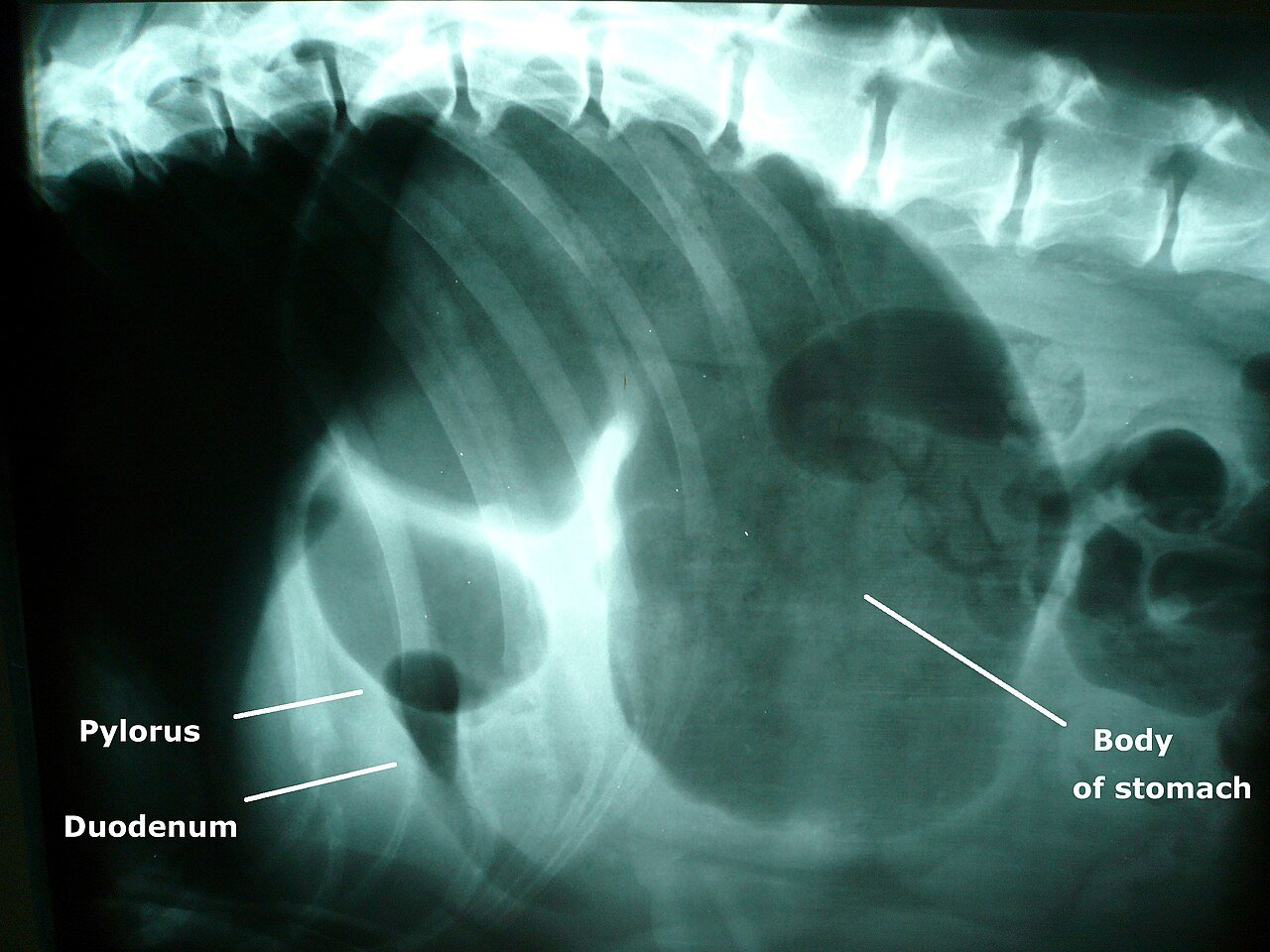
According to the PDSA, an X-ray of the tummy is the best way to diagnose GDV. A very poorly dog may be given emergency treatment before any X-rays are taken.
What vets generally do about it
The PDSA describes the usual steps, and your vet decides what your own dog needs:
- Releasing gas from the stomach. If the stomach is bloated but not twisted, this may be the only treatment needed.
- Treating shock with fluids, strong pain relief and antibiotics.
- Surgery to untwist the stomach, check the stomach and spleen and remove any damaged sections. Surgeons may also perform a gastropexy, which stitches the stomach to the body wall to make a repeat twist much less likely.
On outcomes, the sources give different pictures. The PDSA says about 15% of dogs do not survive despite treatment. In the RVC emergency-clinic study, about half of owners of live-presenting dogs chose surgery, and 79.3% of those operated dogs survived to discharge; the lead author said the study “has blown the myth that GDV is almost always a death sentence for affected dogs”. The two figures describe different groups of dogs, so they are not directly comparable. The PDSA stresses that quick treatment matters. The PDSA also notes that euthanasia may be the kindest option for a dog who is very unwell, elderly or unable to have surgery. Treatment is expensive, so it is worth reading about pet insurance before you need it.
Living with it and prevention
The PDSA says that after surgery dogs usually stay in hospital for a day or two so they can be monitored. At home, the PDSA says to watch for signs of the bloat coming back or of infection, and to contact your vet immediately if you are concerned. The PDSA says GDV can happen again, but the chance is much lower after a gastropexy.
For prevention, the PDSA suggests:
- restricting exercise and car travel for an hour before and after feeding
- several small meals rather than one big one
- feeding from the floor, as raised bowls have now been shown to increase GDV risk
- frequent small drinks, without withholding water
- a slow feeding bowl or scatter feeding for fast eaters, and separating dogs at mealtimes
If your dog is a high-risk breed, speak to your vet about your own dog’s situation.
Related conditions
See them all in our dog illnesses and conditions A to Z.
Sources
- PDSA, GDV (Gastric Dilatation Volvulus) in dogs
- Royal Veterinary College VetCompass, Gastric bloat: 80% survival of surgical cases shown in VetCompass study (O’Neill et al., Journal of Small Animal Practice, 2017)
- Piras et al., Identification of Genetic Susceptibility Factors Associated with Canine Gastric Dilatation-Volvulus, Genes, 2020
Frequently Asked Questions
What is GDV in dogs?
GDV (gastric dilatation volvulus), often called bloat, is when the stomach fills with gas and twists. The PDSA describes it as painful and life-threatening, so ring your vet immediately.
Which dogs are most at risk of bloat?
The PDSA says giant and deep-chested breeds, dogs with a parent or sibling who has had GDV, and middle-aged to older dogs. A UK VetCompass study found the highest odds in Great Danes, Akitas, Dogue de Bordeaux, Irish Setters and Weimaraners.
Can a dog survive GDV?
Yes, many do with fast veterinary treatment. In a UK emergency-clinic study, 79.3% of dogs whose owners chose surgery survived to discharge. The PDSA says about 15% do not survive despite treatment. Speak to your vet about your own dog.
Should I use a raised bowl to stop bloat?
No. The PDSA says raised bowls, once advised for at-risk dogs, have now been shown to increase the risk of GDV. It suggests feeding from the floor, with small meals.
This page is general information, not veterinary advice. If you are worried about your dog, speak to your vet. Written by Georgiana & Figo, who are dog owners, not vets. Have a look around Calmshops for everyday dog essentials.