
A lipoma is a benign (non-cancerous) lump made of fat cells, usually found under a dog’s skin. Cornell University’s vet school calls them one of the most common benign tumours in dogs. They are more often seen in older and overweight dogs, but you cannot tell a lipoma from other lumps by feel alone, so speak to your vet about any new lump.
At a glance
- What it is: a usually slow-growing, soft, fatty lump that is not cancerous
- Who it affects: mostly older and overweight dogs, and some breeds more than others
- Urgency: soon. Book a check for any new lump, and sooner if it grows quickly or bothers your dog
- Vet needed? Yes, to confirm what the lump is. Treatment is not always needed
Signs to look for
The PDSA describes lipomas as fatty skin lumps that often start very soft and become firmer as they grow. They usually grow slowly but can become very large. Cornell adds that they are typically round and movable under the skin. A dog may have one or several.
The PDSA suggests checking your dog regularly, by feel if their coat is thick, and noting each lump’s shape, whether it is smooth or knobbly, how firm it is, whether it seems painful, and whether it bleeds or weeps. Taking a photo and noting the size against a coin can help you spot changes. Our sick dog symptoms guide covers other things worth noting.
Causes and risk factors
Cornell says the cause is unknown. The Royal Veterinary College’s VetCompass team studied 2,765 lipoma cases among 384,284 UK dogs and found about 1.94% (roughly one in 50) were diagnosed in a year. It named Springer Spaniels, Dobermanns, Weimaraners and Labrador Retrievers among the more susceptible breeds.
The same study found higher odds in dogs at or above the average weight for their breed and sex (1.96 times), in neutered dogs, in purebreds compared with crossbreeds, and in older dogs: those aged 9 to 12 were far more likely to be diagnosed than dogs aged 3 to 6. The researchers say this supports a link with obesity. Our obesity page explains more. These are associations, not proof of cause.
When to call your vet
The PDSA says to always have new lumps checked, even if they look harmless, and especially if they appear quickly or cause problems. Book a check-up if a lump you are monitoring changes. Lumps often look alike, so you cannot reliably tell what one is by looking. Other lumps include abscesses, cysts, blood-filled swellings and some cancers, which the PDSA lists in its guide, and our cancer page covers the wider picture. You can find a practice through our vets database. The sources we read do not describe emergency signs for lipomas, but speak to your vet quickly about a lump that grows fast, bleeds or upsets your dog.
- 1. Notice
A new soft, round lump under the skin - 2. Speak to your vet
Have any new lump checked; sooner if it grows quickly or bothers your dog - 3. Vet examines
Your vet usually takes a sample of the lump to identify it - 4. Options
Treatment options your vet may discuss: monitoring or removal - 5. Ongoing care
Check and measure the lump regularly if your vet asks
How vets diagnose it
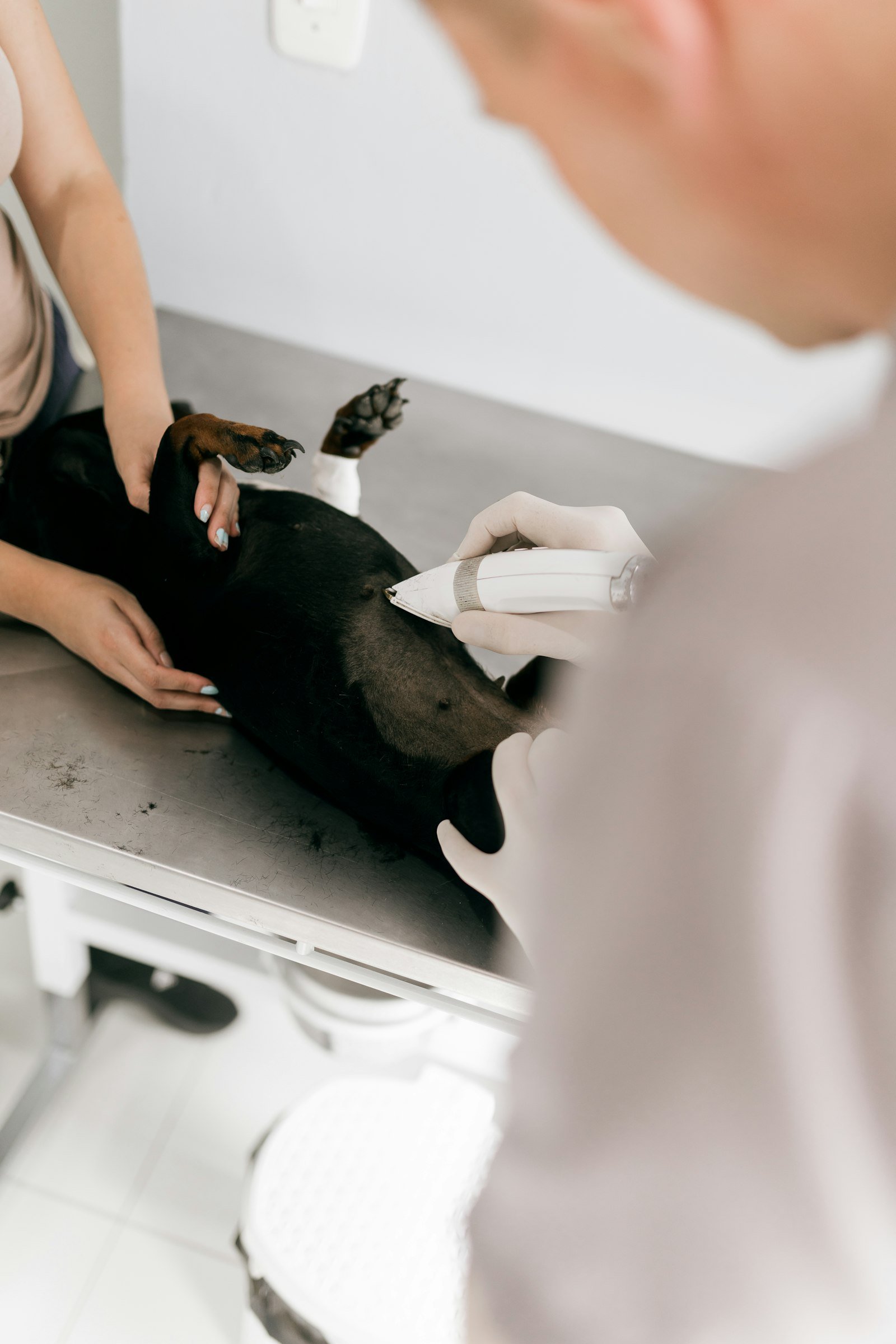
The PDSA says it is likely your vet will need to take a sample of the lump to identify it. Cornell describes two options: a fine needle aspirate, where cells are drawn off with a thin needle and examined under a microscope, and a biopsy, where some or all of the lump is removed. Tests are needed because other tumours can feel the same.
What vets generally do about it
Not every lipoma needs treatment, according to Cornell and the Blue Cross, which says removal may be needed if a large lipoma is painful or gets in the way of movement. Cornell’s vets say surgical removal is typically curative for simple lipomas and usually needs a relatively small incision. Vets may recommend removal when a lump sits somewhere it could restrict movement, such as the armpit, when it is growing or large, or while it is still small, because Cornell notes that removing lipomas before they get large lowers the risk of a fluid pocket (seroma) forming after surgery. Lipomas that are left are monitored.
Cornell also describes two rarer types: infiltrative lipomas, which are benign but spread into nearby muscle and other tissue and recur more often, and liposarcoma, a rare malignant fat tumour. These can need wider surgery, and sometimes scans or radiation therapy. Your vet will advise which applies.
Living with it and prevention
If your vet has confirmed a lipoma and advised monitoring, follow the PDSA’s checking routine and measure the lump every couple of weeks if your vet asks. Cornell says simple lipomas have an excellent outlook after complete removal and rarely come back, though new ones can appear elsewhere.
No source we read gives a proven way to prevent lipomas. Because the RVC study links them with being overweight, it is worth speaking to your vet about a healthy weight for your dog. Insurance can help with testing and surgery costs, so see our pet insurance guide.
Related conditions
- Cancer in dogs (lumps and bumps)
- Obesity in dogs
- Skin infections in dogs
- Hot spots in dogs
- Back to the dog illnesses A-Z
Sources
- PDSA, Skin lumps on dogs
- Blue Cross, Fatty lumps and lipomas in dogs
- Cornell University College of Veterinary Medicine, Lipomas in dogs
- Royal Veterinary College (VetCompass), UK dogs and their fatty lumps: finally the risks explained
Frequently Asked Questions
Are lipomas in dogs cancerous?
A lipoma is benign, meaning not cancerous. Cornell notes a rare malignant fat tumour called liposarcoma, and the PDSA says you cannot reliably tell lumps apart by looking, so speak to your vet about any new lump.
Do lipomas need to be removed?
Not always. Cornell says not all lipomas need treatment, but removal may be advised if a lump limits movement, is growing or is large. Your vet will decide with you.
Which dogs get lipomas?
Older and overweight dogs are more likely to be affected. A Royal Veterinary College study named Springer Spaniels, Dobermanns, Weimaraners and Labrador Retrievers among the more susceptible breeds, but any dog can get one.
How will my vet tell if a lump is a lipoma?
Usually by taking a sample, such as a fine needle aspirate, and looking at the cells under a microscope. Speak to your vet about which test suits your dog.
This page is general information, not veterinary advice. If you are worried about your dog, speak to your vet. Written by Georgiana & Figo, who are dog owners, not vets. Have a look around Calmshops for everyday dog essentials.