

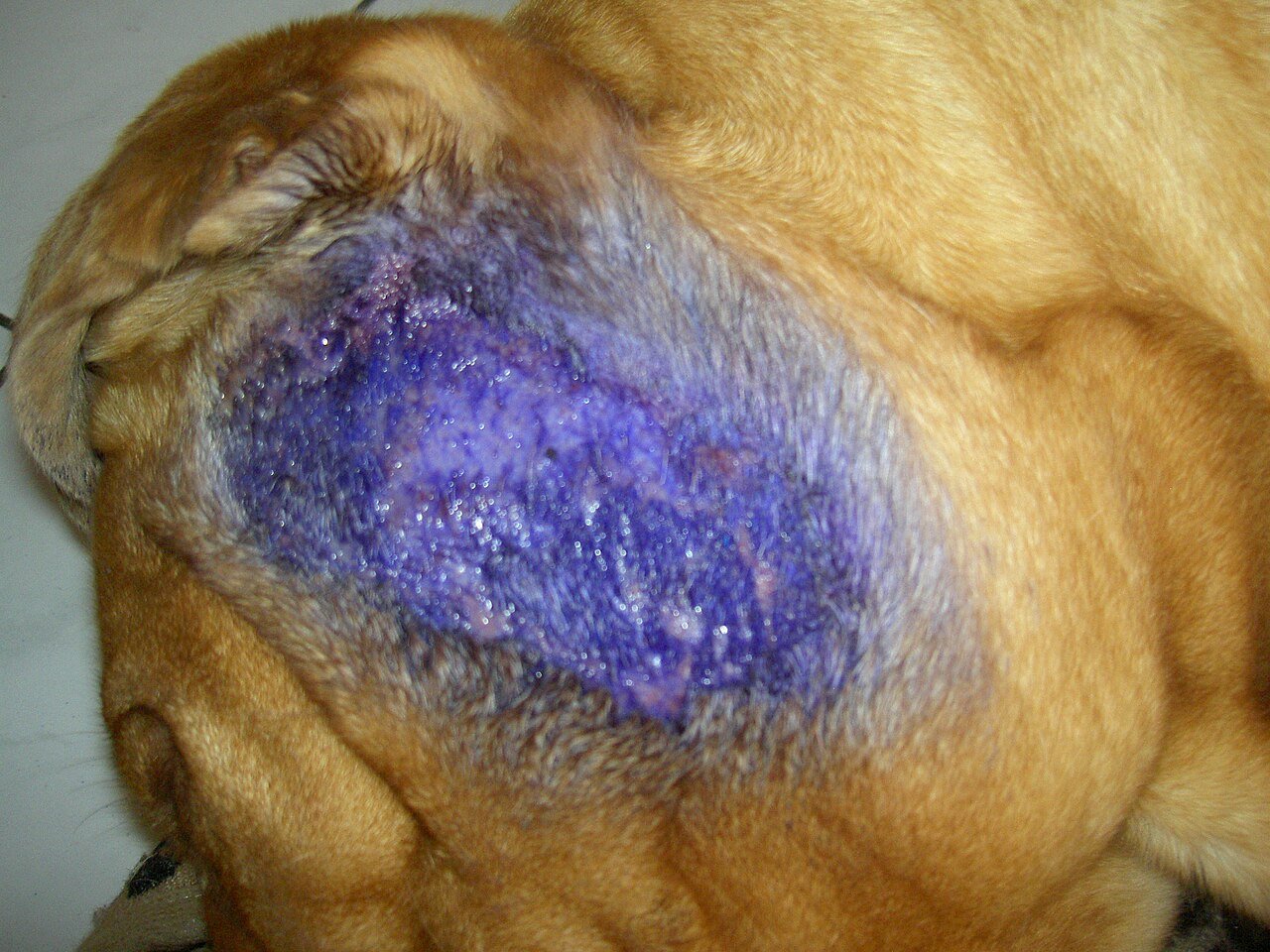
A hot spot, also called acute moist dermatitis, is a patch of sore, infected skin that usually shows up quickly on a dog that keeps licking, chewing or scratching one area. If you spot one, speak to your vet.
At a glance
- What it is: a red, wet, sore patch of skin, usually from a dog repeatedly licking, chewing or scratching one spot.
- Who it affects: any dog can get one. The PDSA says they can appear anywhere on the body, and can be harder to spot if they develop under long fur.
- Urgency: soon. The PDSA says to contact your vet straight away if a hot spot is developing.
- Vet needed? Yes. Your vet decides what the patch needs and, just as importantly, what is setting it off.
Signs to look for
The PDSA describes hot spots as looking “red, angry and wet”. They are usually damp, red, smelly and sore, and sometimes scabbed. They are typically hairless and easy to see, but the PDSA notes they can be harder to spot under long fur.
Causes and risk factors
A hot spot often starts as something small, such as an insect bite or a graze, which then becomes inflamed and infected when it is rubbed, licked or nibbled. The PDSA says that anything that makes a dog chew or lick one area can lead to one, and lists fleas, itchy skin, skin allergies, insect bites, and cuts or grazes.
If the same dog keeps getting hot spots, the real question is usually what is behind them. Our pages on dog allergies and fleas cover two of the triggers the PDSA lists.
The PDSA describes a hot spot as “a patch of sore, infected skin” and says antibiotics are not necessary for every one. Your vet will judge whether your dog needs any.
When to call your vet
Ring your vet as soon as you notice a hot spot developing; the PDSA’s advice is to contact them straight away. If it is not improving, or it keeps coming back, book another appointment, because your dog may still be reaching the spot without you noticing. If you do not have a regular vet, our vets database can help you find one. Not sure whether this is the problem or something else? Our sick dog symptoms guide may help you decide how quickly to call.
While you wait for the appointment, the PDSA says to stop your dog and any other pets licking or scratching the area, using a buster collar (the plastic cone), a body suit or a protective item such as a t-shirt.
- 1. Notice
A red, wet, sore patch where your dog keeps licking or chewing - 2. Speak to your vet
Contact your vet straight away if a hot spot is developing - 3. Vet examines
Your vet advises on treatment and looks for the underlying trigger - 4. Options
Treatment options your vet may discuss: clipping, cleaning, medication - 5. Ongoing care
Keep your dog from reaching the spot until it has healed
How vets diagnose it
The PDSA says your vet will advise on the best treatment for your individual dog. Finding the underlying trigger is part of the job, so expect questions about fleas, itching elsewhere and your dog’s routine.
What vets generally do about it
Treatment is decided by your vet, but the PDSA says it often involves clipping the fur around the spot so air can reach it, cleaning the area, and sometimes medication to calm the inflammation or tackle infection. The PDSA points out that antibiotics are not necessary for every hot spot. The PDSA says hot spots respond very well to veterinary treatment, but can cause much more serious problems if they are not treated quickly. Do not clip or medicate the area yourself without your vet’s say-so; the patch can be very sore.
Living with it and prevention
Once your vet has advised, the PDSA says to keep your dog from reaching the spot until it has healed. It recommends keeping skin as healthy as possible, staying up to date with flea treatment, checking the coat regularly and getting early veterinary advice for any unhealthy skin. Vet bills for skin problems can mount up, so see our guide to pet insurance in the UK.
Related conditions
You can browse the full list on our dog illnesses and conditions A-Z.
Sources
Frequently Asked Questions
What causes hot spots in dogs?
Anything that makes a dog lick, chew or scratch one area can lead to a hot spot, according to the PDSA, including fleas, itchy skin, skin allergies, insect bites and grazes. Your vet can work out what is behind your dog’s hot spot.
Will a hot spot go away on its own?
The PDSA advises contacting your vet straight away if you see a hot spot developing, and says that if one is not improving, your dog may still be reaching it, so you should book another appointment. Speak to your vet rather than waiting to see.
What can I do while I wait for the vet appointment?
The PDSA says to stop your dog licking or scratching the spot, using a buster collar, a body suit or a protective item such as a t-shirt. Leave the clipping, cleaning and medicines to your vet.
Do hot spots always need antibiotics?
No. The PDSA says antibiotics are not necessary for every hot spot. Whether your dog needs any medication is a decision for your vet.
This page is general information, not veterinary advice. If you are worried about your dog, speak to your vet. Written by Georgiana & Figo, who are dog owners, not vets. Have a look around Calmshops for everyday dog essentials.