

A dog allergy is an oversensitivity of the immune system to something harmless, such as pollen, grass, house dust mites, fleas or certain foods, as the PDSA explains. It can start at any age and is usually a long-term thing to manage, so the first step is to speak to your vet.
At a glance
- What it is: an over-reaction of the immune system to triggers such as pollen, dust mites, fleas or food.
- Who it affects: any dog, at any age, though some breeds are more prone.
- Urgency: soon for itching that persists; emergency if there is facial swelling, difficulty breathing or collapse.
- Vet needed? Yes. Many things cause itching, and a vet has to sort out which.
Signs to look for
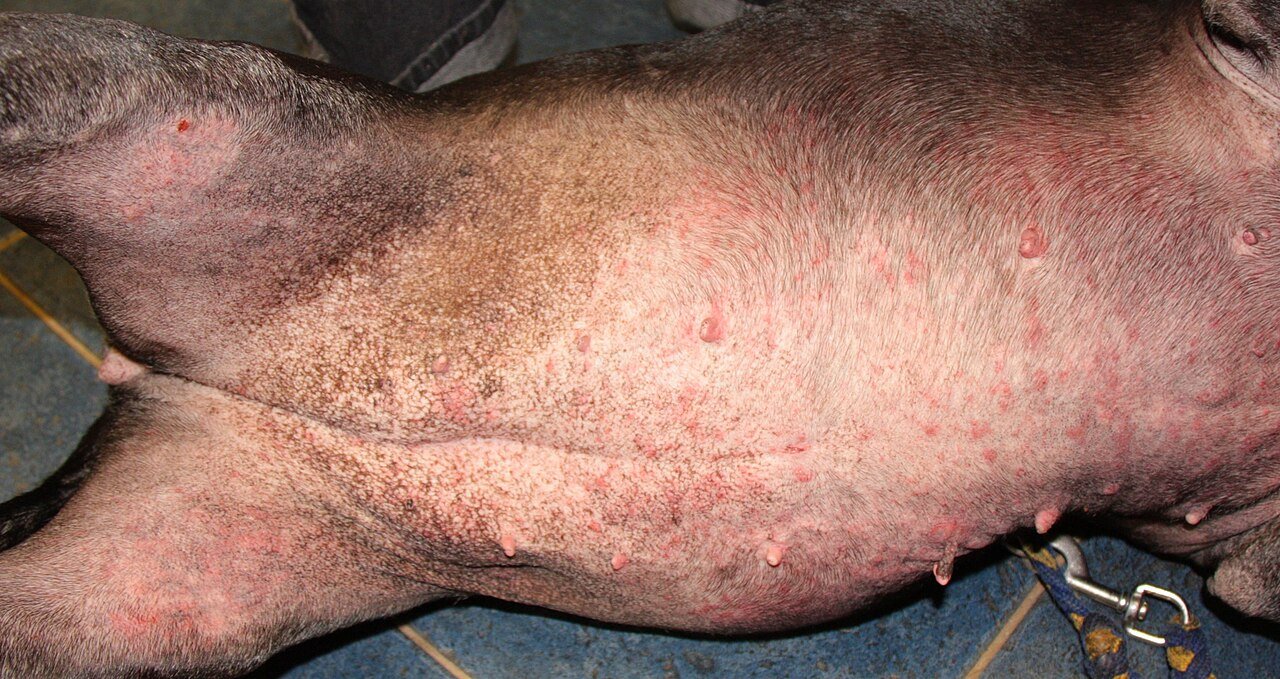
The PDSA lists itchy skin, redness and rashes, hair loss, skin and ear infections, overgrooming, saliva-stained skin, dark thickened skin, weepy eyes and hot spots. For food allergy, the PDSA says skin problems and tummy problems are the most common signs: itchy or sore skin (especially feet, ears, face, tummy and groin), plus vomiting, diarrhoea and wind. Blue Cross adds that food allergy can sometimes cause weight loss or a reduced appetite as the only sign.
Causes and risk factors
The PDSA names environmental triggers (house dust mites, pollens, grasses, trees and moulds), fleas and food. Blue Cross says a single flea bite can set off a severe reaction in a flea-allergic dog. For food, the PDSA says dogs most often react to proteins such as beef, chicken or lamb, and some react to wheat or dairy. Food allergies most commonly start before a dog is a year old, though Blue Cross says they can develop at any age, even to a food eaten for years.
The PDSA says skin allergy is particularly common in West Highland White Terriers, along with Bichon Frises and Shar Peis. Blue Cross says inherited skin allergy (atopy) usually first shows between six months and three years old. In a large UK VetCompass study in BMC Veterinary Research, skin disorders were recorded in about 12.6% of dogs.
The Kennel Club separates food allergy (an immune reaction, about 10% of allergies in dogs) from food intolerance, which does not involve the immune system.
When to call your vet
The PDSA says to book an appointment if your dog has symptoms of skin allergy, and its vet team advises not to wait: skin problems often get worse over time and can become harder to treat. Ring sooner for increased scratching, bald patches, redness or scabs. Blue Cross says anaphylaxis (a rare, severe reaction with facial swelling, difficulty breathing, heavy vomiting or diarrhoea, or collapse) is an emergency, so contact a vet immediately. If you don’t have a practice, see our guide to finding the best vets near you. Our sick dog symptoms page helps if you are unsure how urgent it is.
- 1. Notice
Itchy skin, redness, hair loss, or skin and ear infections. - 2. Speak to your vet
Soon for itching that persists. Emergency for facial swelling, difficulty breathing or collapse: contact a vet immediately. - 3. Vet examines
Rules out fleas and food allergy first, sometimes with a food trial. - 4. Options
Treatment options your vet may discuss: avoiding triggers, flea control, special diet, medication. - 5. Ongoing care
Keep a diary of meals, walks and flare-ups.
How vets diagnose it
The PDSA says vets first rule out easily controlled causes, such as fleas and food allergy. A food allergy is investigated with a food trial: a vet-recommended diet and nothing else except water, usually for 8 to 12 weeks, or as long as the vet advises, with no treats, human food or dental sticks. Blue Cross gives six to 12 weeks and the Kennel Club a minimum of four to six, so lengths vary: ask your vet how long yours should be. Blood and skin allergy tests exist, but the PDSA says they are not 100% reliable, and knowing the exact trigger is not always needed.
What vets generally do about it
The PDSA says plans are individual and often combine avoiding triggers, strict flea control, a special diet and medication to stop the itch. Vets may also use soothing shampoos, treatment for infections and, for some dogs, immunotherapy, which exposes the dog to tiny amounts of the trigger over years and does not work for every dog. For a confirmed food allergy, the PDSA says dogs are fed a diet that doesn’t trigger the allergy, and nothing else, for life. Which option suits your dog is a decision for your vet.
Living with it and prevention
The PDSA’s vets suggest keeping a diary of meals, walks and flare-ups, and sticking to plain tap water for washing unless your vet advises otherwise, because many shampoos and “natural remedies” can make irritated skin worse. The PDSA says a quick wipe with a damp cloth after walks can help remove pollen. Don’t stop treatment or change the diet without your vet’s advice. With proper management, the PDSA says dogs can live long, healthy lives, although flare-ups may happen and lifetime costs can run into thousands of pounds, so consider pet insurance early. The PDSA states there is nothing owners can do to prevent a food allergy. Our general guide to dog vitamins covers everyday nutrition only and is not a treatment for allergies, so speak to your vet before adding any supplement.
Related conditions
- Fleas on dogs
- Hot spots in dogs
- Skin infections in dogs
- Ear infections in dogs
- Anal gland problems in dogs, which the PDSA links to allergic skin disease
- Mange in dogs and diarrhoea in dogs
- Back to the dog illnesses A to Z
Sources
- PDSA: Skin allergies in dogs
- PDSA: Food allergies in dogs
- PDSA: Vet Q&A, How can I care for my dog’s skin allergy?
- Blue Cross: Food and skin allergies in dogs
- The Kennel Club: Food allergies in dogs
- O’Neill et al., BMC Veterinary Research 2021: Prevalence of commonly diagnosed disorders in UK dogs
Frequently Asked Questions
What are the signs of an allergy in dogs?
The PDSA lists itchy skin, redness, rashes, hair loss, skin and ear infections and hot spots. Food allergy can also cause vomiting, diarrhoea and wind. Speak to your vet, as other conditions cause similar signs.
How do vets find out if a dog has a food allergy?
The PDSA says the best way is a food trial: a vet-recommended diet and nothing else except water, usually for 8 to 12 weeks, with no treats or human food. Your vet will advise on how long yours should last.
Can dog allergies be cured?
The PDSA says a food allergy can’t be cured but symptoms can be avoided by controlling the diet, and that skin allergies may need management throughout a dog’s life. Your vet can build a plan for your dog.
Is an allergic reaction ever an emergency?
Blue Cross says anaphylaxis, with signs such as facial swelling, difficulty breathing, heavy vomiting or diarrhoea, or collapse, is an emergency. Contact your vet immediately.
This page is general information, not veterinary advice. If you are worried about your dog, speak to your vet. Written by Georgiana & Figo, who are dog owners, not vets. Have a look around Calmshops for everyday dog essentials.