
An ear infection in dogs is an overgrowth of bacteria or yeast in the ear canal that makes it sore, itchy and often smelly, as the PDSA explains. It is common: in a large Royal Veterinary College study of UK dogs, 7.3% had it diagnosed in a single year. It is painful, so it’s one for your vet rather than something to wait out.
At a glance
- What it is: bacteria or yeast overgrowing in the ear canal, usually the outer part.
- Who it affects: any dog, though some breeds and ear types are more prone.
- Urgency: soon. Contact your vet as soon as you suspect it. Same day if there is a head tilt or loss of balance.
- Vet needed? Yes. Prescription treatment and a look for the underlying cause are usually needed.
Signs to look for
According to the PDSA, an infected ear can cause:
- head shaking, and rubbing the head or face on furniture or along the ground
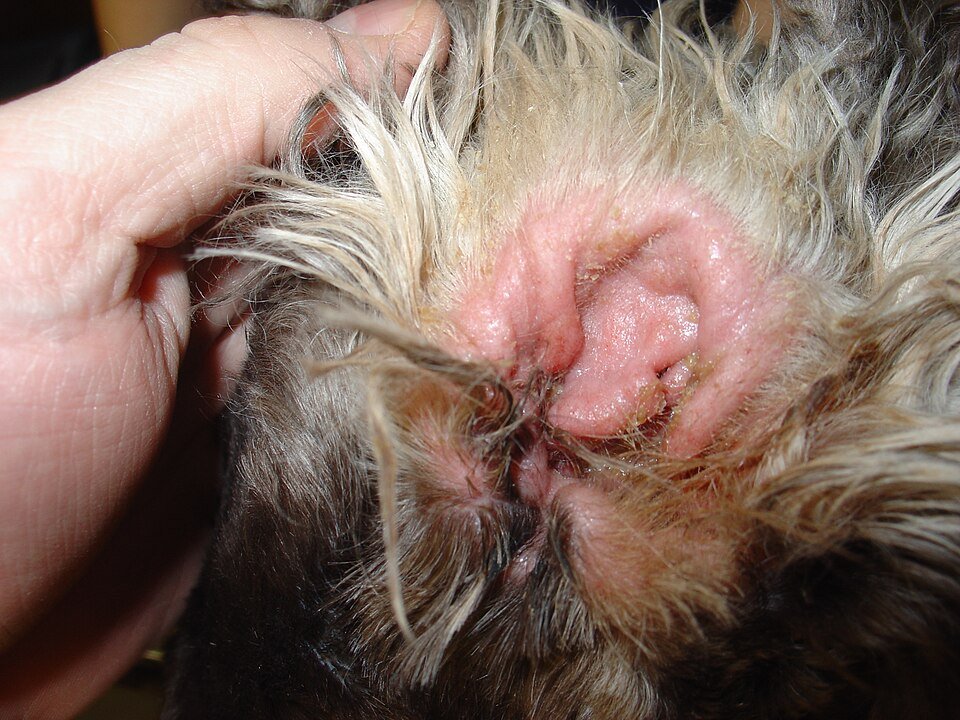
- itchy or painful ears that look red, swollen or feel hot
- smelly, pus-like discharge
- a swollen ear flap (vets call this an aural haematoma)
- scabs and crusting in the ear or on the side of the face
If the infection reaches the middle or inner ear, the PDSA says you may also see a head tilt, loss of balance, vomiting or partial deafness. Our vestibular disease page covers another condition that affects balance.
Causes and risk factors
The PDSA says an ear infection usually has an underlying cause, such as a skin allergy or skin disease, ear mites, growths, excess wax or even too much ear cleaning. That’s why the infection often comes back if only the infection is treated. See our guides to dog allergies and skin infections.
The PDSA also points out that hairy ears are often warm and moist, which suits bacteria and yeast, and that ears can get infected after swimming.
Breed matters too. The RVC’s VetCompass summary says 16 breeds were more likely to be affected than crossbreeds, and the RVC’s news report on the study says Basset Hounds, Chinese Shar Peis and Labradoodles top the list. In the RVC VetCompass study of canine ear infections (O’Neill et al., 2021), Poodle breeds had about 1.9 times the risk of non-Poodle breeds, and spaniel breeds about 1.2 times the risk of non-spaniels.
When to call your vet
The PDSA says to contact a vet as soon as you suspect an ear infection, because it is very painful and needs prompt treatment. A head tilt or loss of balance needs a same-day appointment. Ring your own practice, or use our guide to finding a vet near you. If you’re unsure how quickly to go, ring and speak to your vet or the practice team. Our sick dog symptoms guide may also help.
If your dog has had more than two or three ear infections in their life, tell your vet, as the PDSA says this points towards looking harder for an underlying cause.
- 1. Notice
Head shaking, smelly discharge, or red, sore ears. - 2. Speak to your vet
As soon as you suspect it. Same day for a head tilt or loss of balance. - 3. Vet examines
Looks at the ear and may take a sample of the discharge. - 4. Options
Treatment options your vet may discuss: medicated ear drops, ear cleaning, pain relief. - 5. Ongoing care
Check ears regularly and clean them only as your vet advises.
How vets diagnose it
Your vet will look at the ear and, according to the PDSA, may take a sample of the discharge to find out what is causing the infection. If the ear isn’t improving, they may examine or treat it under anaesthetic. Speak to your vet about what they’d recommend for your dog.
What vets generally do about it
Treatment is decided by your vet, but the PDSA describes the usual approach as:
- medicated ear drops, which may contain antibiotics, antifungals and anti-inflammatories
- cleaning the ear as the vet advises, using cotton wool pads rather than cotton buds
- pain relief if your dog is very sore
- antibiotic tablets for severe infections (drops are usually enough)
- treating the underlying cause, which the PDSA says is needed to stop it returning
The PDSA stresses finishing the full course even if the ears look better sooner. Severe or long-lasting cases may need surgery.
Living with it and prevention
Once your vet has advised, the PDSA suggests checking the ears regularly (including for any change in smell), cleaning them only as your vet advises, cleaning and drying them after swimming, and asking your vet whether plucking ear hair would help airflow. Managing any skin condition matters too. Repeated vet visits add up, so it’s worth knowing about pet insurance in the UK before you need it.
Related conditions
Back to the dog illnesses and conditions A-Z.
Sources
- PDSA, Ear infections in dogs
- O’Neill et al., Prevalence of commonly diagnosed disorders in UK dogs under primary veterinary care, BMC Veterinary Research (2021)
- Royal Veterinary College VetCompass, Frequency and predisposing factors for canine otitis externa in the UK (summary of O’Neill et al., 2021)
- Royal Veterinary College VetCompass, Now listen here: new RVC research reveals the dog breeds most affected by ear infections
Frequently Asked Questions
Will a dog ear infection go away on its own?
The PDSA describes ear infections as very painful and in need of prompt treatment, and says an untreated infection can spread to the middle or inner ear. Speak to your vet as soon as you suspect one.
How common are ear infections in dogs?
Very common. In a Royal Veterinary College study of 22,333 UK dogs under veterinary care, 7.3% were diagnosed with otitis externa (outer ear infection) in one year.
Should I clean my dog’s ears myself?
Only as your vet advises. The PDSA lists too much ear cleaning as a possible cause of infection, and says cotton wool pads should be used rather than cotton buds.
Are some breeds more likely to get ear infections?
Yes. A Royal Veterinary College VetCompass study found 16 breeds with a higher risk than crossbreeds, with Basset Hounds, Chinese Shar Peis and Labradoodles topping the list, and Poodle breeds and spaniels also more at risk. Any dog can get one, so speak to your vet if you notice signs.
This page is general information, not veterinary advice. If you are worried about your dog, speak to your vet. Written by Georgiana & Figo, who are dog owners, not vets. Have a look around Calmshops for everyday dog essentials.