
Bladder stones in dogs (also called uroliths) are rock-like lumps that form when minerals build up in the urine. The PDSA says they can be as small as a grain of sand or as big as the bladder, and a dog may have one or several.
Some dogs show no signs at all, while others find peeing painful. The big worry is a stone blocking the tube that carries urine out of the body, which is an emergency. If your dog is straining to pee, speak to your vet.
At a glance
- What it is: mineral stones in the bladder, which can irritate it or block the flow of urine.
- Who it affects: any dog, though some breeds are more prone (see below). Male dogs are more likely to be blocked.
- Urgency: soon for new peeing problems, with prompt checks for any signs of a urinary infection. Emergency if your dog can’t pee.
- Vet needed? Yes, always. Only a vet can confirm stones and decide how to deal with them.
Signs to look for
According to the PDSA, signs of an irritated bladder include:
- Straining to pee, or whimpering and yelping while peeing
- Passing small amounts, or peeing more often
- Blood in the urine
- Peeing indoors
- Drinking more than usual
If a stone blocks the urethra (the tube that carries urine out), the PDSA lists straining with nothing coming out, vomiting and lethargy. These signs overlap with a urine infection, which is why a vet check matters. See our page on urinary tract infections in dogs.
Causes and risk factors
The PDSA says stones usually form when minerals are out of balance in the urine. It names Dalmatians, Bulldogs, Miniature Schnauzers and Dachshunds as breeds that are more prone. Other risk factors it lists are frequent urinary infections, a liver condition called portosystemic shunt (see liver disease in dogs), and long-term use of steroids or diuretics. Male dogs have more blockages because their urethra is thinner and longer.
Blue Cross also notes that when a dog has repeat bladder infections (cystitis), an underlying problem such as bladder stones or masses is sometimes behind it.
When to call your vet
Always speak to your vet if you think your dog might have bladder stones. The PDSA is clear that a blockage is an emergency: if your dog can’t pee, contact a vet straight away for an emergency appointment. If you do not have a regular vet, our guide to finding a vet can help. Even without a blockage, the PDSA says to get any signs of a urinary infection checked promptly, and Blue Cross says a vet visit matters if you suspect cystitis, because it won’t go away on its own or with home remedies. Our sick dog symptoms guide may help if there are other signs too.
- 1. Notice
Straining to pee, blood in the urine, or peeing indoors. - 2. Speak to your vet
Emergency if your dog can’t pee: contact your vet or an emergency vet straight away. - 3. Vet examines
Questions, a tummy check, a urine sample, then X-rays or an ultrasound. - 4. Options
Treatment options your vet may discuss: special diet, removal, antibiotics. - 5. Ongoing care
Stick to any prescribed diet and keep fresh water available.
How vets diagnose it
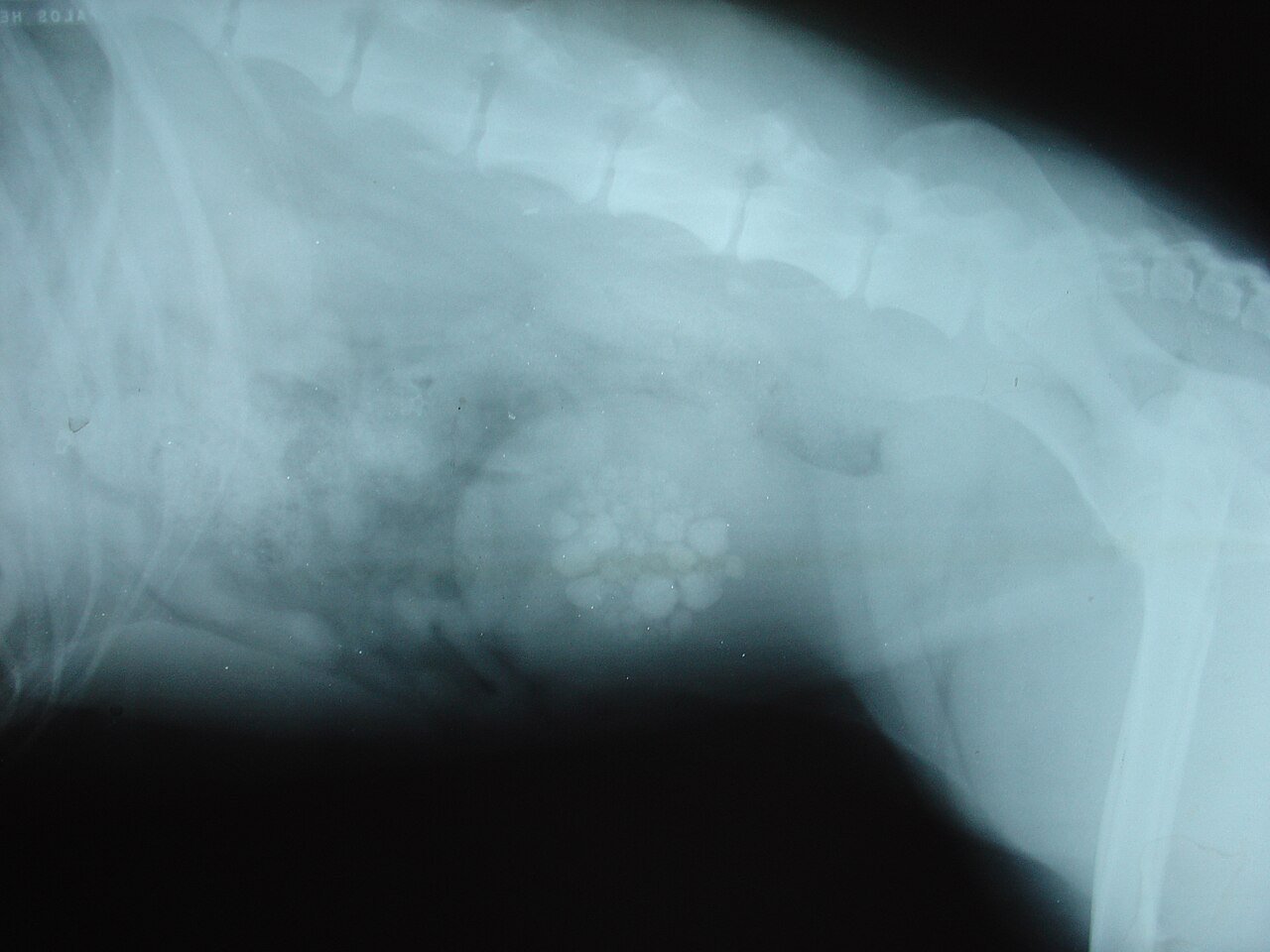
The PDSA says your vet will ask questions and feel the tummy, as large stones can sometimes be felt. X-rays or an ultrasound of the bladder confirm stones, and dye is sometimes used to make them show up. A fresh urine sample is tested for acidity, infection and crystals, and blood tests may check whether other organs are affected. Blue Cross adds that a urine sample taken directly from the bladder may be used. The type of stone can only be confirmed by laboratory testing once it has been removed.
What vets generally do about it
Treatment depends on the stone type and how your dog is coping, and is decided by your vet. The PDSA describes:
- A special diet that can dissolve some, but not all, stones. It has to be the only thing the dog eats and can take weeks to months. Stones remain a blockage risk until fully dissolved.
- Removal when stones can’t be dissolved, and nearly always when there is a blockage. This can be bladder surgery, urethral surgery, flushing small stones out with sterile water, or specialist procedures such as basket retrieval or laser, usually only at referral centres.
- Antibiotics if there is also a urinary infection.
Surgery and specialist care can be expensive, so our pet insurance guide is worth a read before you need it.
Living with it and prevention
The PDSA says the outlook is good for most dogs that haven’t had a blockage, but many stones come back, so ongoing management matters. Its advice, once your vet has guided you, is to:
- Get prompt vet checks for any signs of a urinary infection
- Stick to a prescribed special diet for as long as your vet says
- Make sure fresh, clean water is always available
Blue Cross also says that following a prescribed diet can help prevent further urinary problems. Ask your vet before adding treats or extras to a prescribed diet.
Related conditions
- Urinary tract infections
- Kidney disease (the PDSA notes kidney stones are different from bladder stones and much less common)
- Liver disease
Browse the full A-Z of dog illnesses and conditions.
Sources
Frequently Asked Questions
Is a dog with bladder stones in an emergency?
It can be. The PDSA says a blockage is an emergency, so if your dog can’t pee, contact your vet straight away for an emergency appointment.
Can bladder stones in dogs dissolve on their own?
The PDSA says a special diet can dissolve some stones, but not all, and it has to be fed exclusively and under your vet’s guidance. Speak to your vet before changing your dog’s food.
Do bladder stones come back?
The PDSA says many stones do recur, which is why ongoing diet management matters. Your vet will advise how long to continue it.
Which dogs are most likely to get bladder stones?
The PDSA names Dalmatians, Bulldogs, Miniature Schnauzers and Dachshunds as more prone, and says male dogs are more likely to be blocked. The PDSA also says bladder stones can develop in any dog, so speak to your vet about any peeing changes.
This page is general information, not veterinary advice. If you are worried about your dog, speak to your vet. Written by Georgiana & Figo, who are dog owners, not vets. Have a look around Calmshops for everyday dog essentials.