


Mange in dogs is a skin condition caused by tiny mites that live on or in the skin, leading to itching, redness and hair loss. There are two main types, sarcoptic mange (caught from other dogs or foxes) and demodectic mange (linked to a dog’s own immune system), and both need a vet to diagnose and treat them.
A dog that is scratching hard or losing patches of hair isn’t always a mange case, so please don’t try to work it out at home. Speak to your vet and let them look.
At a glance
- What it is: a skin condition caused by mites. The two main types are sarcoptic mange and demodectic mange (demodex).
- Who it affects: any dog. Sarcoptic mange is caught from infected dogs and foxes. Demodex is more often seen in young dogs, and some breeds are affected more than others.
- Urgency: soon. Book a vet appointment if the signs fit, and sooner if your dog seems unwell or the skin is sore.
- Vet needed? Yes. Mange is treated with products prescribed by a vet.
Signs to look for
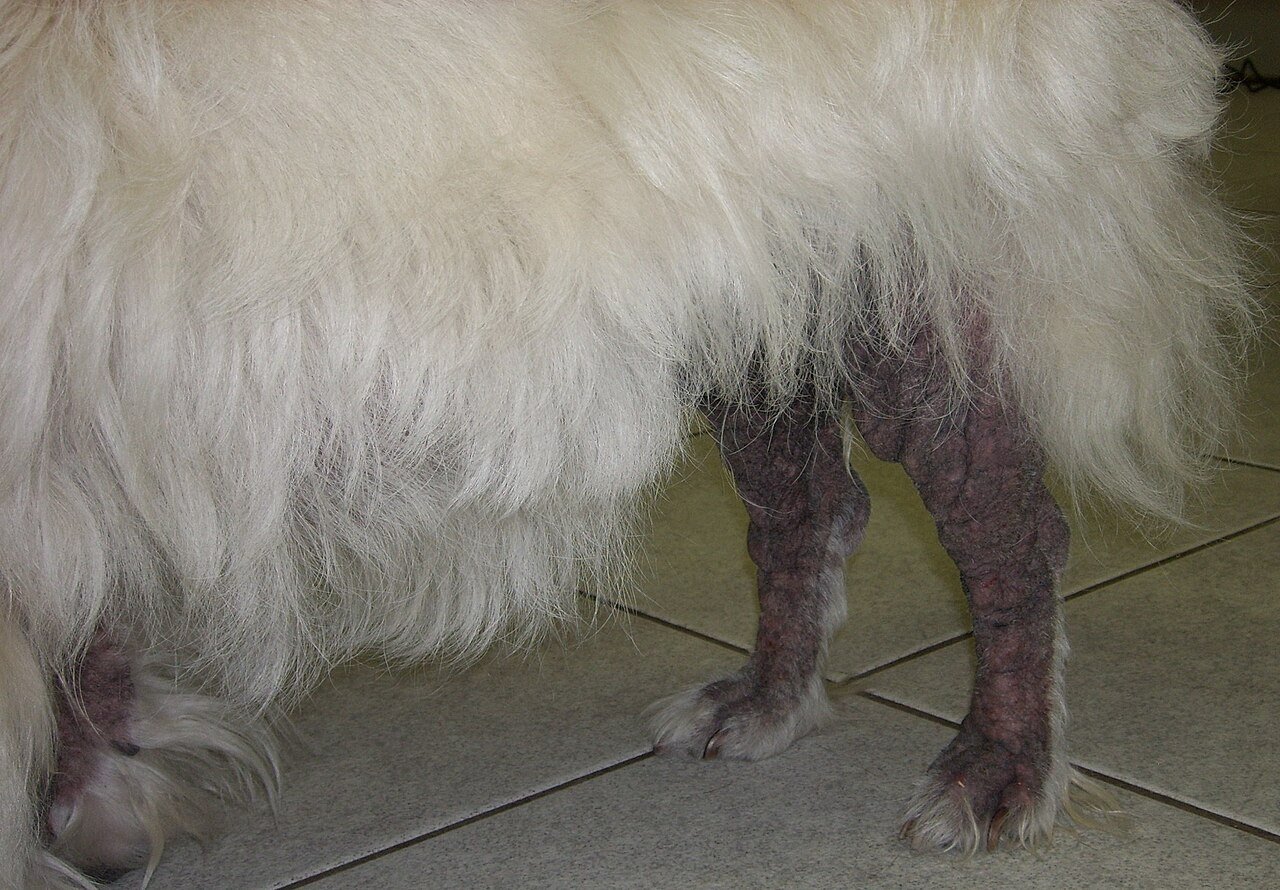
The PDSA lists the signs of sarcoptic mange as intense itching (especially on the ears and legs), crusty, red, thickened skin, hair loss and low energy. The mites often start around the ears, elbows and hocks (the ankle-like joint on the back leg), but in severe cases can spread over the whole body.
Demodex looks different. The Kennel Club describes lesions on the face and forelimbs or across the body, hair loss, reddened skin and sometimes blue-grey skin caused by blackheads. Sore skin can pick up secondary bacterial and fungal infections, which is one reason it’s worth getting checked early. Itchy, sore skin has plenty of other causes too, such as allergies or skin infections.
Causes and risk factors
Sarcoptic mange is caused by the mite Sarcoptes scabiei, which burrows under the skin. The PDSA says it is highly contagious and most commonly caught from infected dogs and foxes, although Blue Cross describes the fox route as rare. The Kennel Club adds that it can also spread through contaminated grooming products and bedding.
Demodex is a different story. The Kennel Club says the mites live in hair follicles, are rarely passed to other dogs or people, and are mainly passed from mum to pup in the first few days of life. Blue Cross says a healthy immune system usually keeps the mites dormant, and the disease develops when immunity is compromised.
UK research gives a sense of who is affected. In a Royal Veterinary College VetCompass study of 455,553 dogs, summarised in the Veterinary Ireland Journal, demodicosis was recorded in 0.17% of dogs overall. It was about ten times more common in dogs under two (0.48%) than in dogs over four (0.05%). Chinese Shar-Peis, Pugs and Boxers had higher odds in both age groups. The authors suspect a shared genetic basis in several young-dog breeds, and say adult cases may follow genetics, immune-suppressing illness or medication. They also note vets’ diagnoses weren’t always confirmed by testing, so the true figure may be higher.
When to call your vet
Book an appointment if you think your dog has mange, or if they have been in contact with a dog or fox that does, as the PDSA advises. Speak to your vet sooner rather than later if the skin looks raw, weepy or painful, or your dog seems low. The PDSA warns that untreated mange can lead to deep skin infections and serious illness, so it isn’t one to leave. Our vets database can help you find a practice, and our sick dog symptoms guide is a useful starting point.
- 1. Notice
Intense itching, red skin or patchy hair loss - 2. Speak to your vet
Book an appointment soon, sooner if the skin is sore - 3. Vet examines
Skin scrapes or plucked hairs checked under a microscope - 4. Options
Treatment options your vet may discuss: prescribed mite-killing products - 5. Ongoing care
Keep away from other dogs until recovered
How vets diagnose it
According to the Kennel Club, vets usually look for mites by examining skin scrapes or plucked hairs under a microscope. These don’t always show the mites, so a vet may start treatment without a positive identification.
What vets generally do about it
The PDSA says the vet prescribes a mite-killing product, usually a spot-on, tablet or shampoo, and that dogs may need two or three treatments a few weeks apart. Other dogs in close contact should be treated too, and the vet may suggest washing bedding, brushes, coats and soft furnishings. The Kennel Club says treatment can occasionally continue for up to six months. Your vet decides what is right for your dog.
Living with it and prevention
Once your vet has treated your dog, the PDSA says to keep them away from other dogs and from areas with lots of foxes until they have recovered. It describes the outlook as excellent when mange is spotted and treated early. For people worrying about their own skin: the PDSA says you cannot catch scabies from a dog, though dog mites can briefly irritate human skin and any itch should clear once the dog is treated.
On prevention, the PDSA says many flea treatments also work against mange and recommends avoiding areas with large fox populations. Costs can mount, so pet insurance is worth a look before you need it.
Related conditions
- Fleas on dogs
- Ticks on dogs
- Ringworm in dogs
- Skin infections in dogs
- Ear infections in dogs
- Hot spots in dogs
Back to the A to Z of dog illnesses and conditions.
Sources
- PDSA Pet Health Hub: Mange (sarcoptes mite) in dogs
- The Kennel Club: Mange and mites
- Veterinary Ireland Journal (O’Neill, Royal Veterinary College): Demodicosis in first opinion caseloads of dogs
- Blue Cross: Mange in dogs
Frequently Asked Questions
Can I catch mange from my dog?
The PDSA says people cannot catch scabies from dogs. Dog mange mites can irritate human skin briefly (they can’t survive on people for more than a couple of days), and any itch should clear once the dog is treated. If you have a rash that doesn’t clear up, speak to your own doctor.
Is mange contagious to other dogs?
Sarcoptic mange is highly contagious between dogs and from foxes. Demodex is rarely passed on. Your vet will tell you which type your dog has and whether other pets need treating.
How do vets check for mange?
Usually by looking at skin scrapes or plucked hairs under a microscope. The mites don’t always show up, so a vet may start treatment without a positive result.
Can mange go away on its own?
The Kennel Club says some demodex cases in puppies resolve as the immune system matures around a year old, but it can become widespread and serious without immune control. The PDSA warns untreated sarcoptic mange can lead to deep skin infections. Speak to your vet rather than waiting.
This page is general information, not veterinary advice. If you are worried about your dog, speak to your vet. Written by Georgiana & Figo, who are dog owners, not vets. Have a look around Calmshops for everyday dog essentials.


