

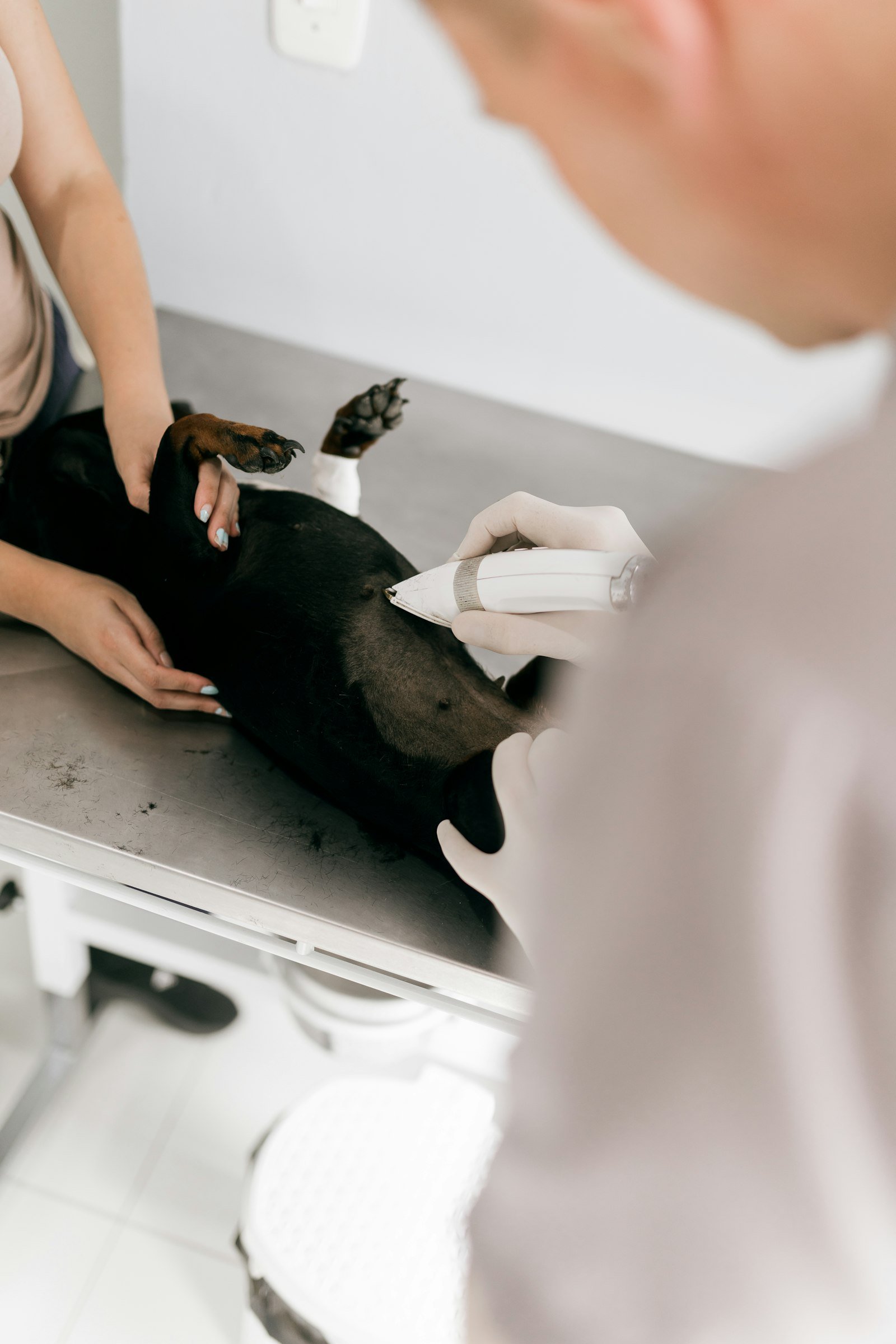
Prostate problems in dogs are conditions where the prostate, a small reproductive gland in male dogs, becomes enlarged, inflamed, infected or develops a tumour. They are seen most often in male dogs that have not been castrated, though neutered dogs can be affected too. If you spot any of the signs below, speak to your vet.
At a glance
- What it is: a problem with the prostate gland, most often enlargement, infection or, less commonly, cysts or a tumour
- Who it affects: male dogs. The PDSA says problems can affect any male dog but are more common in entire (not castrated) dogs
- Urgency: contact your vet immediately if your dog is straining to wee and passing nothing, or is in severe pain (PDSA)
- Vet needed? Yes
Signs to look for
The PDSA lists these signs of a prostate problem:
- Trouble weeing, such as straining or passing small amounts often
- Blood in the wee
- Straining to poo
- Blood or pus coming from the penis
- A painful tummy
- A high temperature, in severe cases or infections
The prostate makes fluid that travels with sperm, and it sits wrapped around the urethra, the tube that carries wee out of the body, just underneath the colon (the large bowel). The PDSA explains that when it enlarges it can affect both, which is why pooing and weeing can both become difficult. Straining to poo can look like constipation, but your vet is the one to say what is going on.
Many dogs show nothing at first. The PDSA’s BPH page says most have no symptoms early on, and a 2022 veterinary review notes that the signs overlap with other diseases.
Causes and risk factors
Several different things can enlarge the prostate:
- Benign prostatic hyperplasia (BPH): a non-cancerous enlargement caused by long-term exposure to the hormone testosterone. The PDSA says it is common in older dogs, and its BPH factsheet says it develops in nearly all uncastrated male dogs at some point and is most common after seven years old. The 2022 review calls it the most common prostate disorder in entire dogs, and it often causes no problems unless severe.
- Prostatitis: inflammation, usually from infection. The PDSA says severe BPH can lead to it. The review describes it as common in entire dogs, usually with bacteria travelling up the urethra, and says chronic cases can be silent. A 2021 paper says it is rarely reported in neutered dogs.
- Cysts: fluid-filled pockets, which the PDSA links to severe BPH. The review says they usually cause signs only when large.
- Prostate cancer: enlargement from a tumour. The review calls it rare but probably under-diagnosed, with many dogs showing no signs until late. See cancer in dogs for the wider picture.
Neutering and cancer is where the evidence is mixed. The PDSA says castration does not reduce the risk of prostate cancer. The 2022 review found the same prevalence in entire and neutered dogs, while the 2021 paper says neutered dogs may be predisposed and that an enlarged prostate in a castrated dog should be checked carefully. The sources we read name no particular breeds, so we have not either.
When to call your vet
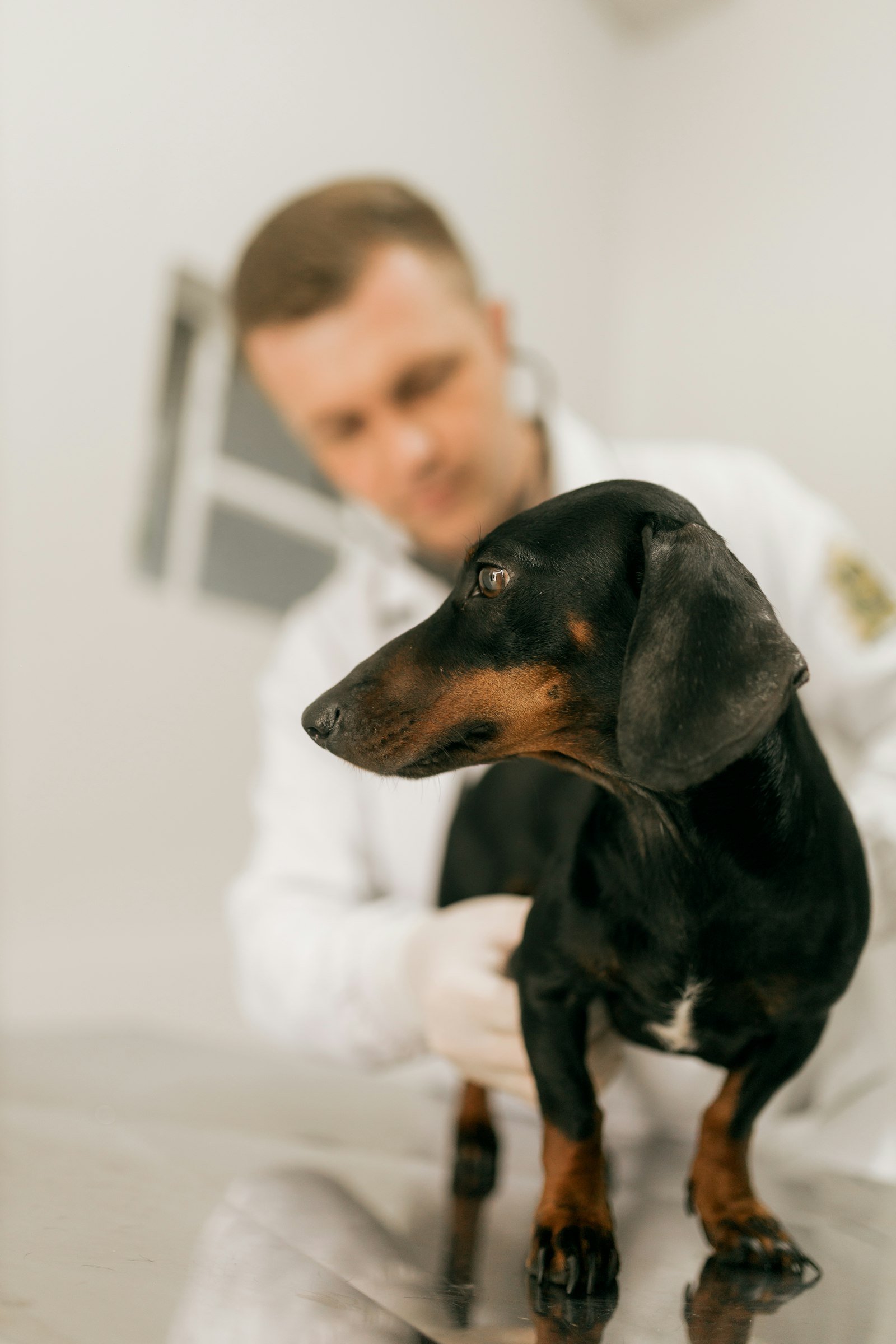
Speak to your vet if you suspect a prostate problem or notice any of the signs above. The PDSA says to contact a vet immediately if your dog is in severe pain, or is straining to wee and not passing anything.
If you need a practice, our vets near me guide can help.
- 1. Notice
Trouble weeing or blood in the wee - 2. Speak to your vet
Immediately if straining to wee and passing nothing, or in severe pain - 3. Vet examines
Hands-on check, wee and blood tests, X-rays or scan - 4. Options
Treatment options your vet may discuss: castration, hormone therapy, antibiotics - 5. Ongoing care
Follow your vet’s plan and go back if signs return
How vets diagnose it
Your vet needs to work out why the prostate is enlarged. According to the PDSA, they may use:
- A hands-on check of the prostate
- A wee sample and blood tests
- X-rays and an ultrasound scan
- A prostate sample (biopsy)
- Referral for an MRI or CT scan
The 2022 review adds cell sampling and cultures of urine or prostate fluid to find infection. Your vet will decide what suits your dog.
What vets generally do about it
The treatment depends on the cause, and it is your vet’s decision. The PDSA says there may be more than one option. For BPH, its factsheet lists castration, hormone therapy (an injection, implant or tablets), and extra treatment such as antibiotics or anti-inflammatories if there are cysts or infection.
The PDSA describes castration as the simplest and quickest way to treat BPH. Removing the testicles stops testosterone being made, so the prostate shrinks, back to normal size within 8 to 10 weeks according to the factsheet. As above, castration does not reduce the risk of prostate cancer, and if a tumour is the cause your vet will explain the options. Treatment can be expensive, so our pet insurance guide is worth a read.
Living with it and prevention
After a diagnosis, follow your vet’s plan and go back if signs return. On prevention, the PDSA says castration is the best way to prevent BPH and prostatitis, because it lowers testosterone. If you have an entire male dog, speak to your vet about the best timing. Castration does not prevent prostate cancer.
Related conditions
- Urinary tract infections in dogs
- Bladder stones in dogs, another urinary condition
- Constipation in dogs, as an enlarged prostate can make pooing hard
- Cancer in dogs, as tumours are one cause
- Back to the dog illnesses A-Z
Sources
- PDSA, Enlarged Prostate in Dogs
- PDSA, Benign Prostatic Hyperplasia (BPH) in Dogs
- PDSA, Benign prostatic hyperplasia in dogs (BPH) factsheet
- Palmieri C, Fonseca-Alves CE, Laufer-Amorim R, A Review on Canine and Feline Prostate Pathology, Frontiers in Veterinary Science, 2022
- Delaude A et al., Intra- and Inter-observer Variability of Computed Tomographic Measurements of the Prostate Gland in Neutered Dogs, Frontiers in Veterinary Science, 2021
Frequently Asked Questions
What are the signs of prostate problems in dogs?
The PDSA lists trouble weeing, blood in the wee, straining to poo, blood or pus from the penis, a painful tummy and, in severe cases or infections, a high temperature. Speak to your vet if you notice any of these.
Does castrating a dog help with prostate problems?
The PDSA says castration is the simplest and quickest way to treat benign prostatic hyperplasia (BPH) and the best way to prevent BPH and prostatitis. It does not reduce the risk of prostate cancer. Speak to your vet about whether and when it suits your dog.
Can neutered dogs get prostate problems?
Yes. The PDSA says prostate problems can affect any male dog, though they are more common in entire dogs. A 2021 veterinary paper says an enlarged prostate in a castrated dog should be checked carefully, so speak to your vet if you notice signs.
What age do dogs get prostate problems?
The PDSA says BPH is common in older dogs and most common after seven years old, and that it develops in nearly all uncastrated male dogs at some point. Your vet can tell you what is going on in your own dog.
When is a prostate problem an emergency?
The PDSA says to contact a vet immediately if your dog is in severe pain, or is straining to wee and not passing anything. For any other sign, contact your vet if you suspect a prostate problem.
This page is general information, not veterinary advice. If you are worried about your dog, speak to your vet. Written by Georgiana & Figo, who are dog owners, not vets. Have a look around Calmshops for everyday dog essentials.