
Pyometra in dogs is a serious infection of the womb (uterus), where the womb fills with pus. It affects female dogs that have not been spayed, usually in the weeks after a season, and the headline message is blunt: it is an emergency, so speak to your vet straight away if you see the signs.
At a glance
- What it is: a bacterial infection of the womb that fills it with pus
- Who it affects: unspayed female dogs. Male dogs cannot get it because they have no womb
- Urgency: emergency. The PDSA says to contact your vet immediately
- Vet needed? Yes, always
Signs to look for
The PDSA and Blue Cross describe these signs. Not every dog shows all of them.
- Drinking more than usual and weeing more
- Pus or blood-stained discharge from the vulva
- Vomiting
- Reduced appetite and tiredness (lethargy)
- Faster breathing (Blue Cross)
- A swollen tummy
- Collapse
There are two forms. In an open pyometra the neck of the womb (cervix) is open, so pus is usually visible. In a closed one there is often little or no discharge, and the PDSA says this is particularly dangerous because the womb is at risk of bursting. So no discharge does not mean no problem. Our sick dog symptoms guide is a useful companion.
Causes and risk factors
Blue Cross says it is a bacterial infection, most commonly E. coli, and Cornell University adds that hormonal changes after a season, together with bacteria climbing from the vagina into the womb, are behind it.
Risk factors:
- Not being spayed. The PDSA says any unspayed female dog is at risk, and that spaying is the best way to prevent it
- Age. The PDSA says the risk becomes higher once a dog is over six, while Blue Cross says it is usually seen in older dogs, typically over seven. Both say unspayed females of any age can be affected
- Timing. The PDSA says the most common time is four to eight weeks after a season, while Blue Cross says a few weeks to months after the season has finished
The PDSA says a rare stump pyometra can happen after spaying, when an infection develops in a small part of the womb left behind.
When to call your vet
This is not a wait-and-see condition. The PDSA says pyometra is an emergency and that prompt treatment gives the best chance of survival, so phone your vet immediately if your unspayed dog has any of the signs above, especially in the weeks after a season. Need a practice? Our vets near me guide can help.
- 1. Notice
Pus or blood-stained discharge, drinking more - 2. Speak to your vet
Emergency: contact your vet or an emergency vet straight away - 3. Vet examines
Looks at the signs and does an ultrasound scan - 4. Options
Treatment options your vet may discuss: fluids, pain relief, antibiotics, surgery - 5. Ongoing care
Cone or recovery suit, rest and the medicines your vet prescribes
How vets diagnose it
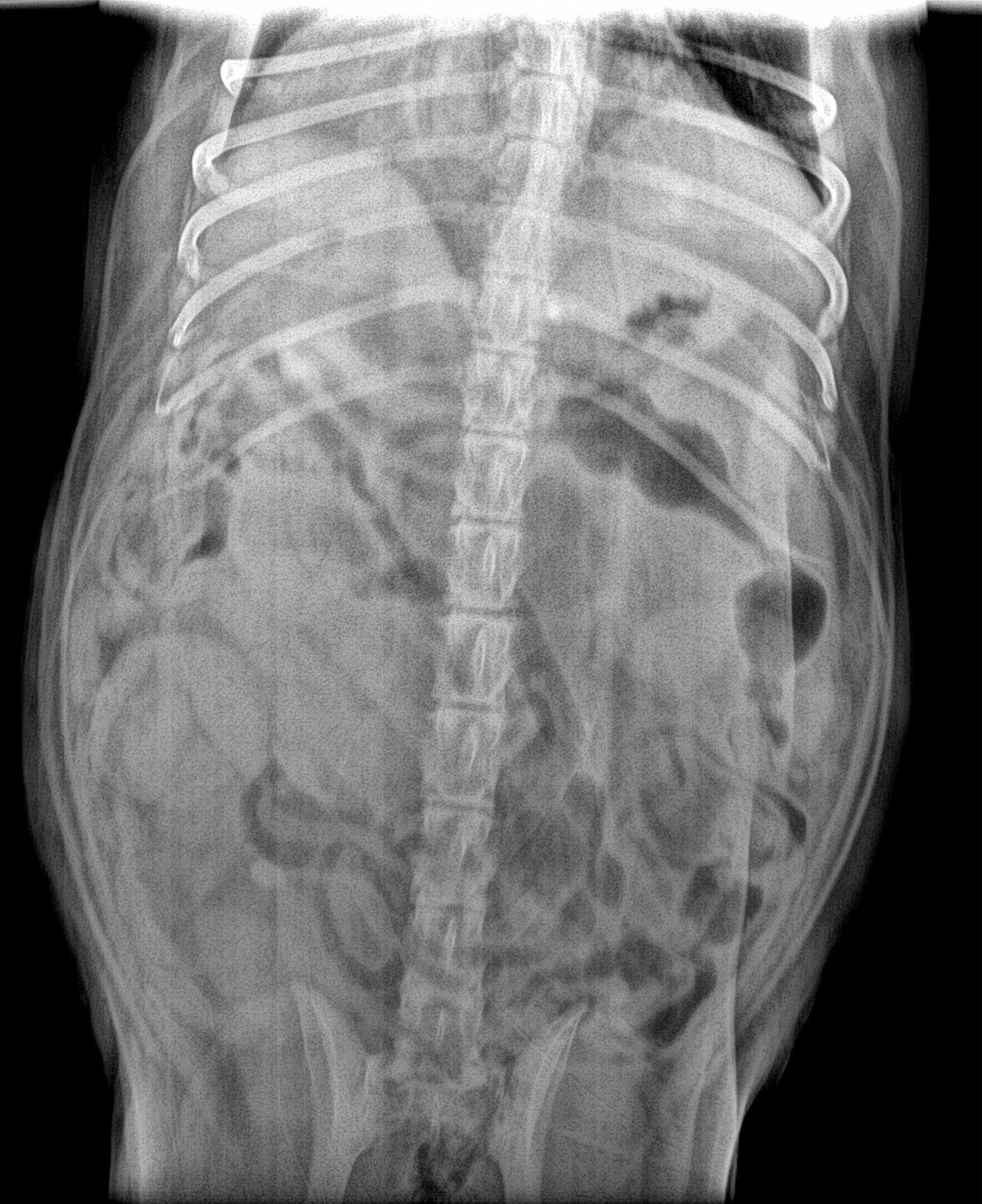
The PDSA says vets diagnose it from the signs and an ultrasound scan of the womb. Blue Cross adds that the vet will ask about the timing of the last season and recent behaviour, and examine the tummy for swelling. Cornell says X-rays, blood work, a wee test or a vaginal swab (cytology) may also be used.
What vets generally do about it
Treatment is your vet’s decision. The PDSA says it usually means a drip for fluids, pain relief and antibiotics, and emergency surgery to remove the infected womb. Blue Cross says surgery is usually the only cure and carries more risk than a routine spay, and that complications such as kidney failure and dehydration can be fatal. The PDSA says treating with medicines alone is possible for some dogs in specific circumstances, but the pyometra often returns after the next season, so surgery may still be needed.
The PDSA says treatment is expensive, so have a look at our pet insurance guide before you need it.
Living with it and prevention
After surgery the PDSA says recovery includes a cone or recovery suit to stop her licking the wound, keeping your dog calm and rested, giving the medicines your vet prescribes, and monitoring her pain levels. Ask your vet what to look out for at home.
On prevention, the PDSA says that neutering (spaying) prevents pyometra, and Blue Cross agrees that spaying prevents it. Until then, the PDSA advises watching your dog closely after each season. Whether and when to spay is a decision to make with your vet.
Related conditions
- Kidney disease in dogs, as kidney failure is a possible complication
- Urinary tract infections in dogs, if increased thirst and weeing is what you have noticed
- Vomiting in dogs, which is also a sign of pyometra
- Diabetes in dogs, if increased thirst and weeing is what you have noticed
- Back to the dog illnesses A-Z
Sources
- PDSA, Pyometra (infected womb) in dogs
- Blue Cross, Pyometra in dogs
- Cornell University Riney Canine Health Center, Pyometra
Frequently Asked Questions
What is pyometra in dogs?
Pyometra is a serious infection of the womb that fills with pus. It affects unspayed female dogs, usually in the weeks after a season. It is an emergency, so speak to your vet straight away.
How soon after a season does pyometra happen?
The PDSA says the most common time is four to eight weeks after a season, while Blue Cross says a few weeks to months after it has finished. Speak to your vet about any worrying signs.
Can a dog have pyometra with no discharge?
Yes. In a closed pyometra there is usually little or no discharge, and the PDSA says this form is particularly dangerous. Speak to your vet if your unspayed dog seems unwell after a season.
Can pyometra be treated without surgery?
The PDSA says medicines alone work for only some dogs in specific circumstances and the infection often returns, and Blue Cross says emergency surgery is usually the only cure. Your vet decides the right treatment for your dog.
Can spaying prevent pyometra?
The PDSA says neutering prevents pyometra, though a rare stump pyometra can occur if womb tissue is left behind. Speak to your vet about the best time to spay.
This page is general information, not veterinary advice. If you are worried about your dog, speak to your vet. Written by Georgiana & Figo, who are dog owners, not vets. Have a look around Calmshops for everyday dog essentials.