
A luxating patella in dogs is a kneecap that slips out of its groove on the thighbone. The PDSA says “luxation” means dislocation, and that it is most common in small and toy breeds. If your dog has started skipping or hopping on a back leg, speak to your vet.
At a glance
- What it is: a kneecap that dislocates, stopping the knee from bending properly and causing a limp.
- Who it affects: mostly toy and small breeds, and the Kennel Club says it often begins when a dog is young.
- Urgency: soon. Speak to your vet rather than waiting.
- Vet needed? Yes, to grade it and decide on management or surgery.
Signs to look for
The classic sign, says the PDSA, is intermittent hopping or skipping, where a dog holds a back leg up for a few seconds until the kneecap slips back into place. You may also notice stiffness in the back legs. The PDSA suggests taking a short phone video to show your vet. Over time the condition can lead to arthritis (see arthritis in dogs).
Causes and risk factors
The Kennel Club says there is no single cause: genetics and lifestyle, such as exercise and weight, both play a part. It often begins when a dog is young. The PDSA links it to small and toy breeds that often have bow-shaped legs or a shallow groove that fails to hold the kneecap in place, and names miniature and toy poodles, Yorkshire terriers, Pomeranians, Pekingese, Chihuahuas, Boston terriers, Jack Russell terriers and Staffordshire bull terriers.
A 2016 VetCompass study of dogs at English vet practices found a diagnosis rate of 1.30%. Compared with crossbreeds, Pomeranians had 6.5 times the odds, Chihuahuas 5.9, Yorkshire terriers 5.5 and French bulldogs 5.4.
When to call your vet
The PDSA says to contact your vet if you suspect a luxating patella, and links earlier treatment with a lower risk of later arthritis. If your dog is in obvious pain or can’t put weight on the leg, speak to your vet promptly. Our vets database can help you find a practice.
- 1. Notice
Hopping or skipping on a back leg - 2. Speak to your vet
Speak to your vet rather than waiting - 3. Vet examines
Feels the knee, tests the kneecap and grades it 1 to 4 - 4. Options
Treatment options your vet may discuss: physiotherapy, exercise control, surgery - 5. Ongoing care
Keep a healthy weight to reduce pressure on the joints
How vets diagnose it
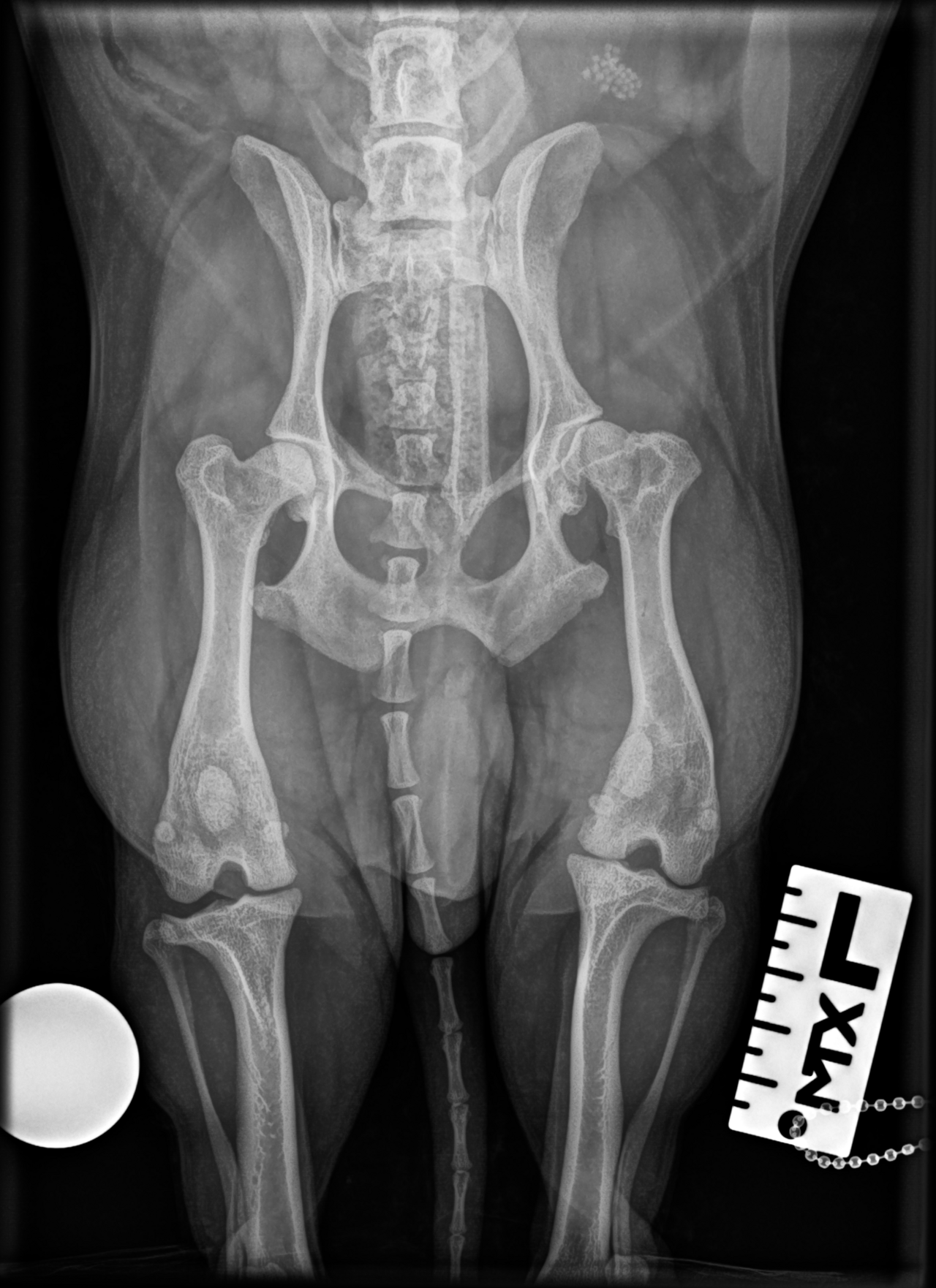
The PDSA says your vet will feel the knee and test how stable the kneecap is. They also check the cruciate ligaments, because cruciate disease is common in affected dogs (see cruciate ligament disease). Some dogs need a general anaesthetic and X-rays. Vets then grade the knee from 1 to 4:
| Grade | What the PDSA says |
|---|---|
| 1 | The kneecap is loose but stays in place when the dog moves. |
| 2 | The kneecap occasionally dislocates when the dog moves but usually returns by itself. |
| 3 | The kneecap is permanently dislocated; a vet can push it back but it slips out again. |
| 4 | The kneecap is permanently dislocated and cannot be pushed back. |
What vets generally do about it
Your vet decides based on the grade and your dog’s signs. The PDSA says physiotherapy and exercise control are usually suitable for grades 1 and 2, while surgery is generally needed for grades 3 and 4. Some complex operations are only done by specialists at referral centres. The Kennel Club also lists monitoring, weight management and hydrotherapy for mild cases, and vets may prescribe pain relief.
After surgery, the PDSA says dogs need strict rest for at least six to eight weeks, then a gradual return to exercise under the vet’s plan.
Living with it and prevention
Once your vet has advised, the PDSA suggests keeping your dog at a healthy weight to reduce pressure on the joints (our page on obesity in dogs has more). The PDSA says most dogs develop arthritis in the affected knees later in life, even with treatment, and the Kennel Club describes the condition as lifelong but says many dogs have a good quality of life.
For prevention, the PDSA says not to breed from dogs that have had kneecap problems, and the Kennel Club suggests asking breeders whether a puppy’s parents had symptoms or a diagnosis. Vet bills can add up, so our pet insurance guide is worth reading early.
Related conditions
You can browse every condition in the dog illnesses and conditions A to Z.
Specialist help
The Kennel Club’s patella luxation page explains the condition and what to ask breeders. It says the Kennel Club does not record graded results and has no formal scheme for them, and that many breed clubs run their own grading schemes, so ask your breed club.
Sources
- PDSA, Luxating patella in dogs
- The Kennel Club, Patella luxation in dogs
- O’Neill et al., The epidemiology of patellar luxation in dogs attending primary-care veterinary practices in England, Canine Genetics and Epidemiology, 2016
Frequently Asked Questions
What does a luxating patella look like in a dog?
Typically intermittent hopping or skipping on a back leg for a few seconds until the kneecap slips back, sometimes with stiffness. Speak to your vet if you see it.
Which dogs get luxating patella?
It is most common in toy and small breeds such as Chihuahuas, Yorkshire terriers and Pomeranians, but any breed can be affected. A 2016 VetCompass study found a diagnosis rate of 1.30% in English dogs under primary care.
Does a luxating patella always need surgery?
No. The PDSA says physiotherapy and exercise control are usually suitable for grades 1 and 2, while surgery is generally needed for grades 3 and 4. Your vet will advise on your dog.
Will my dog get arthritis after a luxating patella?
The PDSA says most dogs develop arthritis in the affected knees later in life, even with treatment. Earlier treatment may reduce the risk, so speak to your vet early.
This page is general information, not veterinary advice. If you are worried about your dog, speak to your vet. Written by Georgiana & Figo, who are dog owners, not vets. Have a look around Calmshops for everyday dog essentials.