
Intervertebral disc disease in dogs, usually shortened to IVDD, is a condition of the cushioning discs between the backbones. The discs can become firm and brittle and slip out of position, pressing on the spinal cord and causing pain, nerve problems and sometimes paralysis. If your dog has back pain or is wobbly on their legs, speak to your vet.
At a glance
- What it is: degeneration of the discs that cushion the spine, which can lead to a “slipped disc” pressing on the spinal cord.
- Who it affects: especially short-legged, long-backed breeds such as Dachshunds, though other breeds can be affected.
- Urgency: contact your vet if your dog shows any signs, and immediately if your dog is in severe pain or signs appear suddenly, says the PDSA.
- Vet needed? Yes. The PDSA says a vet may suspect IVDD on examination, but further tests, often an MRI scan at a specialist hospital, are usually needed to confirm it.
Signs to look for
The PDSA lists back pain, wobbliness and weak legs, difficulty getting up, dragging or scuffing the feet, frequent tripping or falling, and paralysis. Signs can appear slowly or very suddenly. The Kennel Club’s page on the disease adds reluctance to move the head or neck and frequent accidents in the house.
Causes and risk factors
The PDSA links IVDD to back length and the shape of the vertebrae, and names Dachshunds, French Bulldogs, Shih Tzus, Bulldogs, Pugs, Pekingese, Beagles, Basset Hounds and Cocker Spaniels as prone. Injury can also cause a slipped disc. The Kennel Club says that in Dachshunds the discs harden at a much younger age than in most breeds, and that it is influenced by many genes plus factors such as diet and exercise. The Kennel Club’s IVDD page cites a 2018 DachsLife survey run by the Dachshund breed council, in which 21.1% of 1,173 Dachshunds over three years old were reported to have IVDD, with the highest rate (29.9%) in Miniature Smooth Haired Dachshunds.
A healthy weight matters too. The PDSA says it reduces pressure on the spine; see our page on obesity in dogs.
When to call your vet
Contact your vet if your dog shows any signs of a slipped disc, and immediately if they are in severe pain or the signs come on suddenly, as the PDSA advises. If you need a practice, try our vets database, and our sick dog symptoms guide can help you judge urgency.
While you get to the vet, the PDSA says to move your dog carefully, using a board or blanket to limit further injury. A dog in pain may bite, so the PDSA suggests protecting yourself with a muzzle or towel.
- 1. Notice
Back pain, wobbliness or weak legs - 2. Speak to your vet
Contact your vet immediately if severe pain or signs appear suddenly - 3. Vet examines
Examination, then usually further tests such as an MRI scan - 4. Options
Treatment options your vet may discuss: rest, pain relief, surgery - 5. Ongoing care
Strict rest, then exercise reintroduced gradually under your vet’s plan
How vets diagnose it
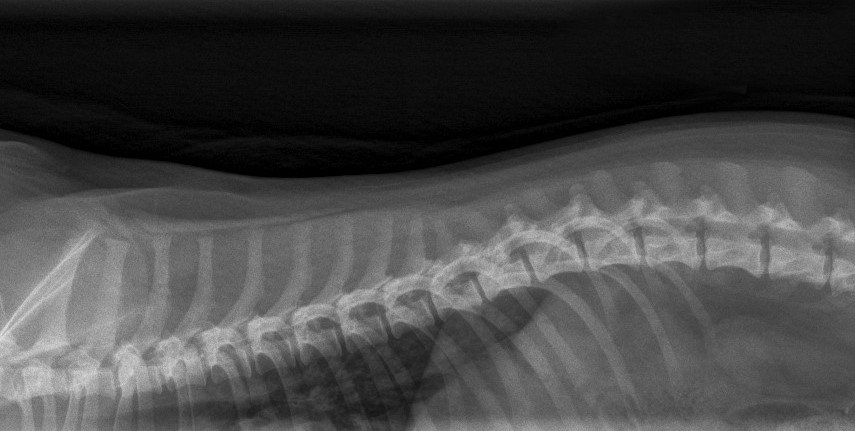
The PDSA says a vet may suspect IVDD on examination, but further tests usually confirm it. An MRI scan is the best method because it shows the spine, nerves, bones and discs in detail, though it is usually only available at specialist hospitals. X-rays show some changes but not the spinal cord or nerves. Blood tests, a spinal tap or a CT scan may also be used.
What vets generally do about it
According to the PDSA, milder cases are usually managed without surgery, with pain relief, strict rest and physiotherapy, while severe cases usually need surgery, which is often successful especially if done within a few days of signs starting. The PDSA says that in some severe cases the kindest option may be euthanasia. It is a major decision, so speak to your vet about risks, recovery and costs. The PDSA warns that specialist care and spinal surgery can cost several thousand pounds, so our pet insurance guide is worth reading before you need it.
Living with it and prevention
Once your vet has advised, the PDSA describes strict rest for several weeks in a crate or small space, with only short lead-controlled toilet trips and no jumping, running or stairs. Non-slip floor coverings and soft bedding help, and vets may recommend hydrotherapy and physiotherapy. Exercise must be reintroduced very gradually under the vet’s plan. Recovery can take weeks to months, and dogs with mild signs generally have a good outlook if strenuous activity is avoided, while severe cases may have permanent paralysis, pain or incontinence.
The PDSA has no dedicated prevention section, but advises a healthy weight and researching a breed’s health before you get a dog. Back and joint problems are also covered in our guide to arthritis.
Related conditions
You can browse the full list on our dog illnesses and conditions A-Z.
Specialist help
For Dachshund owners and breeders, the Kennel Club and Dachshund Health UK run the IVDD Scheme for Dachshunds. It uses X-rays of dogs aged 24 to 48 months to detect calcified discs and gives each dog a grade from 0 to 3, with higher grades indicating greater risk. Ask your vet whether it is relevant to your dog.
Sources
- PDSA: IVDD / slipped disc in dogs
- The Kennel Club: IVDD Scheme for Dachshunds (all varieties)
Frequently Asked Questions
What is the difference between IVDD and a slipped disc?
The PDSA says IVDD is the most common cause of a slipped disc in dogs, where a degenerated disc moves out of position and presses on the spinal cord. Injury can also cause a slipped disc.
Which dog breeds are prone to IVDD?
The PDSA names Dachshunds, French Bulldogs, Shih Tzus, Bulldogs, Pugs, Pekingese, Beagles, Basset Hounds and Cocker Spaniels. Other breeds can be affected too.
Can a dog recover from IVDD?
The PDSA says dogs with mild signs generally have a good outlook, while those with severe signs have a poorer one and may have permanent paralysis, pain or incontinence. Your vet can explain what to expect for your dog.
Is IVDD an emergency?
The PDSA says to contact your vet immediately if your dog is in severe pain or signs appear suddenly. For any back pain or wobbliness, speak to your vet.
This page is general information, not veterinary advice. If you are worried about your dog, speak to your vet. Written by Georgiana & Figo, who are dog owners, not vets. Have a look around Calmshops for everyday dog essentials.